


Beauty is important. It inspires, uplifts, and sets the tone of a civilization. And, of course, it is pleasing. Such is why it was long cultivated by Western man.
Yet it no longer is. Instead of cultivation, our culture is marked by the degradation of prole drift, the term coined by Paul Fussell in his book Class to describe the tendency of culture in post-death of the WASP "American democracy" to gradually eschew high culture and slowly adopt whatever the prole class enjoys, likes, and does.1 This can be seen in everything now and is a change as dramatic as it is deleterious. In this article, I will describe the sort of culture prole drift replaced, and why prole drift is so disastrous for America.

Listen to the audio version of this article here:
![[AUDIO] Prole Drift: The Aesthetic of a Dying Civilization](https://substackcdn.com/image/fetch/$s_!DiMg!,w_140,h_140,c_fill,f_webp,q_auto:good,fl_progressive:steep,g_auto/https%3A%2F%2Fsubstack-video.s3.amazonaws.com%2Fvideo_upload%2Fpost%2F210777824%2F2df131f2-a7d5-494e-ae81-a123eef9a85a%2Ftranscoded-1786466054.png)
Before We Became Idiocracy
It was once assumed that beauty, like other virtues—honor and bravery, namely—matter.s Even in the Dark Ages, warriors wore beautiful bands of gold and silver upon their arms and incredible helmets upon their heads as they clashed in feuds with similarly bedecked warriors.

As the Dark Ages became the Middle Ages, this trend was cultivated into ever more ornate tapestries, armors, and castles. And of course the incredible cathedrals for which the era is known.
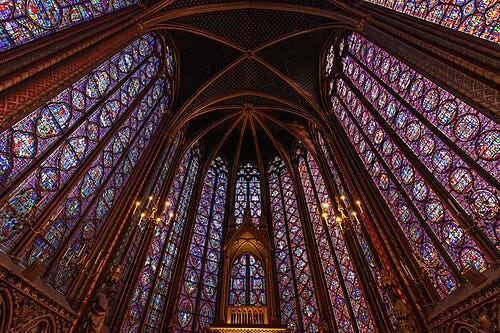
As the Middle Ages became the Renaissance, and then the Renaissance became the modern period, this only intensified. Castles became country houses, palaces were redesigned to impress, and grand public squares with glorious monuments were once again constructed as artists honed their craft and began creating those grand portraits of the Baroque Age that are still stunning and impressive. If you’re interested in these architectural trends, I wrote about them here:

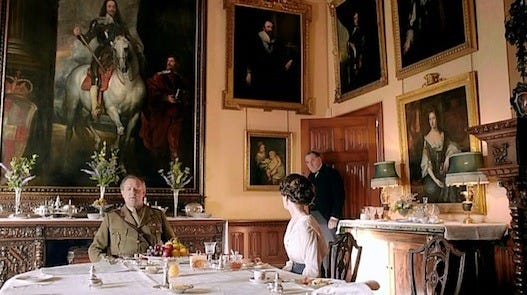
Over this period, one which saw regular ascent up the ladder of material prosperity, large amounts of wealth were reinvested not just in comfort and security but in beauty. This was true of private life and public life, and was true of the colonies as they developed as well, as Bushman covers in The Refinement of America: Western man did not just want to be comfortable; he wanted to surround himself with cultivated beauty that inspired and uplifted.
This was an essentially aristocratic trend, regardless of where it occurred and what classes it benefited. The landed elite of Britain led the way in using refined, restrained, but radiantly beautiful forms of art and architecture to improve their lives, and soon this spread across the Anglosphere and its dominions. The Georgian country homes of the Virginia gentry, the sharp townhomes of the Northerners, and the still-gorgeous plantation homes of the Deep South were some of the great examples in America, but similar trends were exported to such places as the Indian Raj. As Lawrence James covers in his Raj: The Making and Unmaking of British India:
The public buildings of the Mughals . . . were expressions of their authority, reminding the onlooker of his place in the scale of things. Wealth went hand in hand with political power; the elaborate and intricate marblework, jewelled inlays and painted panels which decorated mosques and palaces announced their patrons and owners as men of infinite richness. The British were more cautious about this sort of ostentation. Sir Edwin Lutyens, the mastermind behind that complex of official buildings which was to form the heart of ‘imperial’ Delhi, considered traditional Indian architecture too florid and therefore unsuitable for a regime whose chief characteristics were integrity and firmness. Like other, earlier architects of the Raj, he preferred to assert its supremacy with solid stonework and severe classical motifs, which was understandable given that they and their patrons saw Britain as the new Rome. The fashion had been set in the early 1800s by the Marquess Wellesley, who believed that the dignity of a Governor-General of Bengal required a colonnaded mansion in the contemporary Georgian neo-classical style. Opposite his austere but imposing Government House was a triumphal arch surmounted by a vigilant imperial lion, which soon became a popular roost for Calcutta’s cranes, vultures and kites.
The same sort of thing was true of the Astana of the White Rajahs of Sarawak, the colonial architecture of British Hong Kong, and even the planter homes of the West Indies: the sort of beauty cherished at our peak was the sort of beauty built and cherished by the landed elite of Britain and the classes like it that flowered with Albion’s seeds around the world.
The townhomes of New York, the quaint villages of New England, the country seats of the tobacco barons—even when built by new men with new money, or modest men of modest means, there were always certain precepts inherent in their design and construction. Wealth was to be insinuated, but not displayed in gross or showy fashion as the Mughals that James describes would have done. Gems dripping from the walls, overly ornate frippery as part of everyday wear, and all the other sorts of unpleasantly gaudy displays that signify a certain sort of wealth were to be kept away. In their stead would stand refinement mixed with restraint.
Architecture wasn’t an oddity; it was representative. This same trend dominated Anglosphere culture for centuries, for with the exception of a very brief Baroque interlude when the Whigs took power in the late 1680s, it was the culture of the British landed elite, and they set the tone. Further, as that landed elite was emulatable in the colonies and open to new men who proved themselves domestically, it was relatively popular, and so this same trend was true across culture and class.
The working men of yesteryear had a nice suit to wear on days off to show they too were part of the ascent, the middle class tried to mimic the habits and manners of the gentry (the upper middle class was long the class that could, but had to work to do so), such things as coats of arms and knighthoods were cherished and quested after in both America and Britain, and so on. Both JV Beckett in The Aristocracy in England and David Cannadine in The Decline and Fall of the British Aristocracy cover this remarkable trend in some depth: the British landed elite lasted so long into modernity because it made itself attractive in terms of everything from aesthetics to beliefs, and so the upwardly mobile segments of society, particularly the politically influential middle class, sought to emulate it.
Society was cultivated rather than organized, and such was done with an upward and uplifting focus. While this might not have been true in every specific, and some certainly found this state of things annoying or oppressive, it was generally true and increasingly made for a generally pleasant society. As Bushman notes, even many frontier towns developed shaded walkways for citizens of all sorts to promenade on during their Sunday afternoon walks, for such was how they showed that they were refining themselves even in the relatively harsh conditions in which they lived.
That was what a society looked like when, even if not aristocratic, it held the aristocratic view of culture to be superior. And this cultivation carried with it benefits besides beauty, namely an elite that was an upper class and had a sense of noblesse oblige. As de Oliveira notes in his Nobility and Analogous Traditional Elites:
“As in Europe, in the colonies land ownership was the surest and swiftest means to attain social status and thereby enter the ruling circles of society. It was not long before groups of families, interrelated by marriages, were recognized as local authorities . . . Little by little this elite acquired prestige, wealth, and power. Concomitantly, it refined its tastes and manners, acquiring culture and that sense of public duty and noblesse oblige proper to the upper classes. In this way a local aristocracy was born.”
Because the culture was cultivated rather than degraded, much good came out of it. Men were taught from birth to behave with honor, virtue, and dignity. They were taught what that looked like at each level of the class ladder, a ladder up which they probably climbed during their lives. They were taught the importance of dressing well, behaving as gentlemen, and refining their world so that it was more pleasant and more uplifting. This applied to even such minor things as speaking well. As Thomas Nelson Page notes in Social Life in Old Virginia Before the War: “Thackeray, Matthew Arnold, Lawrence, and other visitors whose English passes current, declared after a visit to America that they found the purest English speech spoken in Virginia.”
That is the sort of culture that once characterized our civilization, and it was built by an understanding that the greatest man is he who masters himself and uses that self-denial and self-mastery to cultivate himself into a man whose life and noble deeds are worthy of emulation. Men like George Washington and Robert Lee characterized this. Born into somewhat modest circumstances, they chiseled away at themselves—George Washington even wrote a book on how to cultivate genteel manners—until they were men whose self-mastery was renowned and who could and did go on to live great lives that generations of Americans viewed with immense admiration and respect.
Prole Drift
Then that world was destroyed, and Western man stopped believing not only in himself, but in the civilization of which he was a part. As Pat Buchanan put it, “Somewhere in the last century, Western man suffered a catastrophic loss of faith—in himself, in his civilization, and in the faith that gave it birth.” British historian AJP Taylor, in his The First World War and Its Aftermath, argues that this spiritual crisis came in the wake of the Great War. I tend to agree, though the Depression and the FDR era certainly didn’t help.
Regardless of when exactly the moment of decline began, by the late-1960s it was clear that Western civilization was changing for the worse. Instead of being a civilization on the ascent, one built and buoyed by visions of greatness, we would be one on the decline, haunted by its past and lacking confidence in the future. “Climate change” replaced industry. Detente replaced anti-communism. Civil Rights replaced hierarchy. The Great Society replaced Apollo. And prole drift replaced high culture.
The degree to which prole drift “won” since Fussell wrote Class in 1983 is astounding. In fact, many who review the book—for example, Scott Alexander—have trouble even understanding some of the comments he makes on everything from flowers to physiognomy to dress because so much culture has been lost as (nearly) everyone has adopted the beliefs, opinions, and habits of the lowest common denominator.
Take, for example, this very related chart Russell Lynes for LIFE in 1949 made of what the various classes enjoy, much of which is quite close to what Fussell argues:
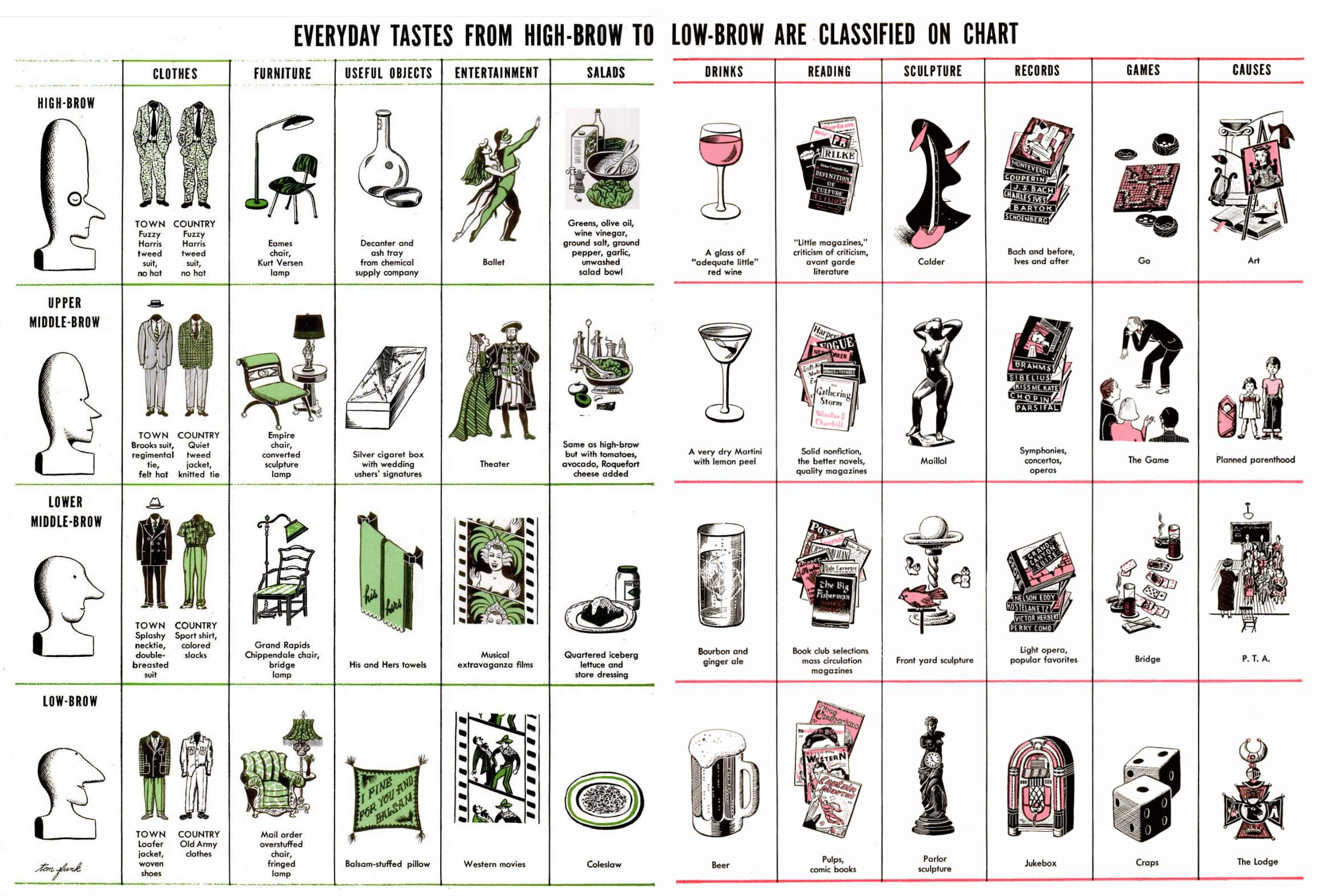
Who today, other than the eccentric (including yours truly) wears tweed, or even has an understanding of town and country apparel? Who thinks of sculpture, or listens to Bach? A few people, presumably, but most of that is dead, and so long since dead that the question itself sounds ridiculous and Quixotic.
Instead, the teeming horde of people across the income and wealth spectrum listen to the distasteful mix of pop, rap, and country that passes for music while wearing sneakers, non-descript dungarees or gym shorts, and a t-shirt…to everything. Generally, they’ll all be smoking weed as they do so (19 million Americans have marijuana use disorder,2 and marijuana is the lowest of low-class drugs other than perhaps crack and meth), and pit bulls will be everywhere.
There are, of course, rare exceptions: highly exclusive places generally popular with more conservative and wealthy types that remain somewhat decorous and pleasant, and feature more labs and bird dogs than pit bulls. But that is a very limited carveout. Even in those aforementioned places that are better than others, such things as ties and white-tie events have generally gone the way of the dodo, and orders of magnitude more women with plastic surgery will be out and about, for example. Further, it is a remarkable change to say that only a select few amongst the upper middle and upper class hold onto some remnant of the world their ancestors once built, and the vast majority across the class spectrum wear pajamas or underwear while in public. That is not the way things used to be, as Fussell shows. Overall, everything has declined substantially. As one reviewer put it:
Anyways, back to taste, the striking thing to me is that these distinctions are all collapsing, as increasingly large numbers of Americans all listen to the same music, watch the same YouTube shorts, and read the same tweets. Fussell was already tuned into this back in his era, and called it “prole drift”: the tendency in the United States for all classes to drift downwards over time. Perhaps we can explain it via the barber-pole theory of fashionability spinning in reverse, with the highest classes emulating prole tastes to shock the middles, who eventually can’t help themselves in aping what they now perceive to be high. I think you see something like that process in many places, here’s a concrete example: underclass guys like NWA invent gangster rap → very posh kids shouting rap lyrics ironically → midwits embracing rap-inflected cultural products like Hamilton and Beyoncé completely sincerely. The middles and the uppers are doing very different things here, but at the end of the day everybody is listening to rap.
But it isn’t just the proletarianization of all media (obviously supercharged by the internet and by porn), simultaneously there’s a loss of dynamic range on the high end. A couple paragraphs ago I jokingly parsed out the differences between the NYRB and the LRB, and once there would have been a lot of people laughing along. Today there are many fewer such people. Classical music once provided countless opportunities for snobbery and meta-snobbery, but these days when I attend a concert the average age is about 85. It’s even worse in the universities: say what you like about the boomer professors, they may have hated their civilization and wanted to destroy it, but they at least understood what they were trying to destroy. In contrast, the new generation are, as Helen Andrews once memorably put it, “pretty dumb”
Indeed, it has gotten so bad that the common joke online is that “millennial culture is vulgarity culture”, and the Afrophilia of America’s established elite has made this worse, adding the habits of the urban African underclass to the prole drift phenomenon.
The constant need of some to curse, swear, and be vulgar to show “authenticity” is one of the clearest signs of this prole drift. It shows one is giving in to impulse and acting based on emotion, rather than exhibiting self-mastery, self-restraint, and cultivation of the sort that defined the old world at its best. Yet worse, the need to performatively do so shows that not only is such vulgarity now accepted because we have all drifted towards the bottom, becoming more foul-mouthed than sailors centuries ago, but not doing so is seen as a shocking level of snobbery.
Similarly, the faux “authenticity” and “relatability” of politicians is a sign of how advanced this process is. In a world of great men, who wants a vulgar everyman who can barely mutter curse-filled half-sentences as a congressman? Better to have a great man who represents the civilization at its best, a scholar and a fighter like Teddy Roosevelt. Once we had the Lincoln-Douglas debates. Now, partly in consequence of how those went, we have Hillary Clinton wave around a bottle of hot sauce to try to convince a black mob to vote for her. Or, perhaps, they’ll just embrace millennial culture and curse up a storm to show authenticity.
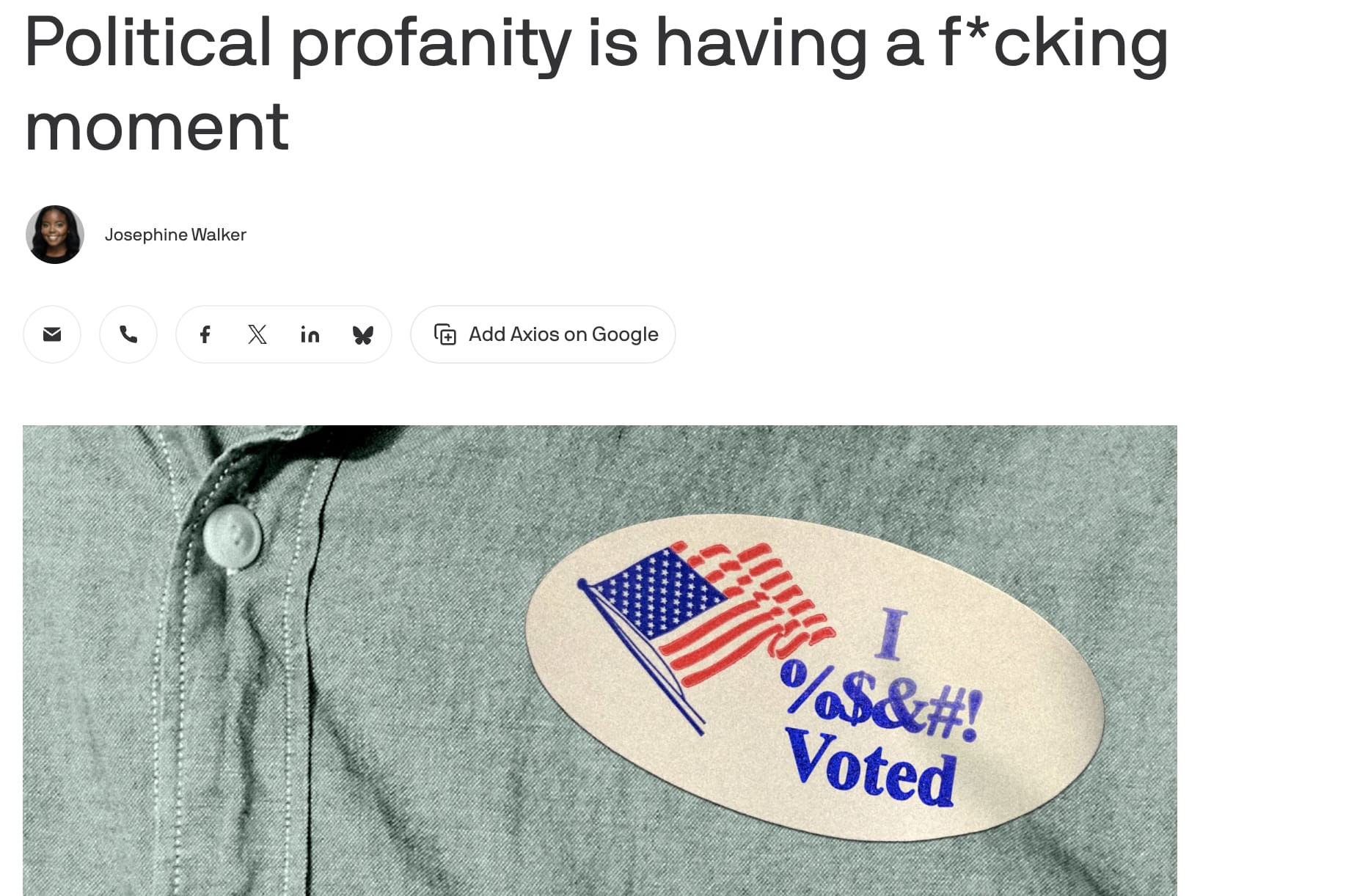
The democratic populace is even worse, embracing a befuddling mixture of lowbrow and incoherent theories, the most clownish candidates, buffoonish policy positions (if they care about policy at all), and all the rest that we’ve come to expect. Much as how dress and decorum show prole drift means most acting on instinct and emotion rather than reason and cultivation, our political process, even on the right, is increasingly characterized by “chimping out”, which is essentially just being Third Worlders but with marginally different theories in mind. It’s the worst aspects of Peronism, the internet, and daytime TV fused into one. The left is even worse, as it is both far more vulgar, even less informed, and holds even worse and more emotion-driven positions.
This reinforces the worst instincts amongst politicians. If one has to suck up to the worst among us to get elected and achieve anything of public note, it is difficult to remain cognizant of higher life and better things beyond that wretched horizon of Cheetos puffs and Kool-Aid pineapple. It’s easier to just clamber down and embrace the decline, becoming one with the surly and unruly mass that serves as the basis of democratic power. The “Insane Clown Party”, as Scott Greer calls it, has become the “right’s” way of doing this. There’s nothing rightist in being buffoonish examples of democracy at its worst, but nevertheless it is where a certain segment of the non-progressive types—both politicians and voters—are headed; that’s political prole drift, and it is making us worse as a nation and a people, as is prole drift generally.
Similarly, vice is encouraged and omnipresent, and when pushed back against, the uniform response is “just let people enjoy things”. Never is it considered that perhaps they ought be encouraged to enjoy different things than the most deleterious ones imaginable, and that a virtuous and duty-oriented elite would think itself duty-bound to encourage as much. Instead, we focus on the tax receipts and profits garnered in the short term by ruining lives for the long term.

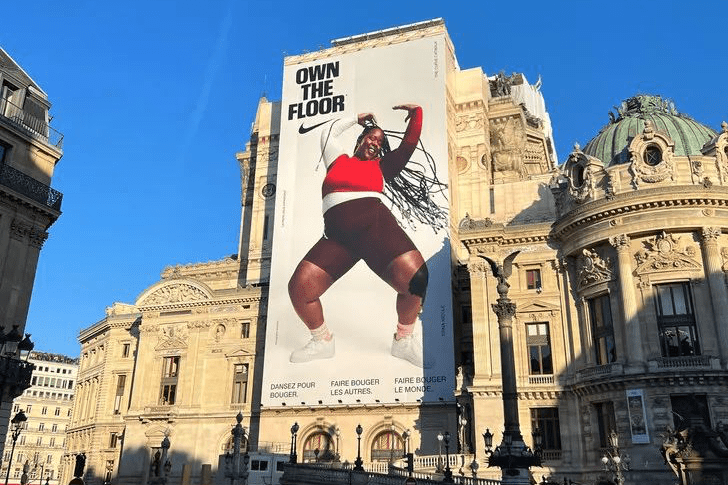
If one had to choose a picture summarizing where we now are, Nike’s “Own the Floor” poster being displayed in front of the Paris Opera House, one of the most externally and internally beautiful of Old World structures, is a good choice. In the ruins of what was once a high civilization, we have an obese woman in her underwear waving her cornrows around as the ad copy glorifies her taking up space at the expense of others. Welcome to vulgar chic, the terminus of the prole drift express.
Importantly, this process is not just about aesthetics. It is what a dying civilization looks like. As Charles Murray notes in his fantastic book Coming Apart: The State of White America, 1960-2010:
Toynbee took up the processes that lead to the disintegration of civilizations. His argument went like this: The growth phase of a civilization is led by a creative minority with a strong, self-confident sense of style, virtue, and purpose. The uncreative majority follows along. Then, at some point in every civilization’s journey, the creative minority degenerates into a dominant minority. Its members still run the show, but they are no longer confident and no longer set the example. Among other reactions are a “lapse into truancy”’—a rejection of the obligations of citizenship—and “surrender to a sense of promiscuity”—vulgarization of manners, the arts, and language—that “are apt to appear first in the ranks of the proletariat and to spread from there to the ranks of the dominant minority, which usually succumbs to the sickness of ‘proletarianization.’
The shock of recognition that I experienced in 2001 came because of the adoption by the middle class and upper-middle class of behaviors that used to be distinctly lower class. When Tipper Gore, the wife of senator and later vice president Al Gore, attacked the incontestable violence and misogyny of rock and rap lyrics, why was she so roundly scolded by so many of her social and political peers? Why were four-letter words, which formerly were seen by the upper-middle class as déclassé, appearing in glossy upscale magazines? How had “the hooker look” become a fashion trend among nice girls from the suburbs? How had tattoos, which a few decades ago had been proof positive that one was a member of the proletariat, become chic?
Toynbee would have shrugged and said that this is what happens when civilizations are headed downhill—America’s creative minority has degenerated into a dominant minority, and we are witnessing the universal next step, the proletarianization of the dominant minority.
Importantly, much of that civilization-wrecking prole drift has come because those who pass for the new upper class—which Murray defines as essentially our very successful haute bourgeoisie, particularly those elements of it involved in media and like opinion-shaping sectors—refuse to do their duty and try to encourage others to emulate their good qualities.
As he notes, they have a great many bad qualities, from being rapacious cosmopolitans to being insufferable leftists, but at least they generally avoid bastardy, obesity, and jail. Instead of encouraging others to follow them in that, they just let everything decline out of apathy, an apathy that perhaps comes from the weed they’re smoking thanks to prole drift. Describing this lack of confidence, Murray notes:
That’s what I mean by loss of self-confidence. The new upper class still does a good job of practicing some of the virtues, but it no longer preaches them. It has lost self-confidence in the rightness of its own customs and values, and preaches nonjudgmentalism instead.
Nonjudgmentalism is one of the more baffling features of the new-upper-class culture. The members of the new upper class are industrious to the point of obsession, but there are no derogatory labels for adults who are not industrious. The young women of the new upper class hardly ever have babies out of wedlock, but it is impermissible to use a derogatory label for nonmarital births. You will probably raise a few eyebrows even if you use a derogatory label for criminals. When you get down to it, it is not acceptable in the new upper class to use derogatory labels for anyone, with three exceptions: people with differing political views, fundamentalist Christians, and rural working-class whites.
And so our civilization is dying for lack of anyone willing to stand up for it. Once we cultivated ourselves towards greatness, and those straining at the forefront demanded all civilized men follow them in it, picking up what the Rhodesians called the civilized man’s burden and doing their part to make the world a more beautiful, refined, and virtuous place. Perhaps there was a bit of “whig history” embedded in that notion, but it was nevertheless a noble mission that did much to make things better over time.
Now, we don’t do that. Instead, we wallow in the muck of the Global Favela while worshipping the idol of indolence and the false god of equality. We’re all becoming chimps, for our world is one that deems becoming a chimp to be amongst the highest goods, and to be certainly more moral than the alternative of demanding excellence and striving upwards. The result is a lack of leaders, and a general lack of anything inspirational in the world around us. Such is the world created by prole drift and the feckless elite.
For those interested, here is my article on how we can reverse this, and why we must:

Read here how you can do and be otherwise:


One interesting thing to observe is that many people long for the benefits of the older world and actually enjoy engaging with it, but they appear unwilling to acknowledge the costs involved. They remark that they like a certain club but wish it didn’t have a dress code or that a school is great but is “too exclusive.”
It will take the rewiring of the minds of an entire generation for more people to understand that those policies are fundamental, not decorative. But the issue is exacerbated by a highly corrupt non profit sector and a civil rights regime that attack any institution defies their nihilistic mandates.
We could outlaw drug use. We could have schools with high standards. We could ban gambling, and we could take down the porn industry.
But the most powerful forces in our society have convinced the masses that the gentlemen of 1776 and 1787 risked being tried for treason to defend citizens’ right to be slaves to vice. That lie has caused widespread degradation, and the result is that the only way to escape from our polyglot hellhole is through increasingly costly lifelines.
One winter day a couple of years ago, I was at one of the few remaining stores in my local dying mall, when I saw an older woman who actually made me stop and take a breath. She was well-dressed: wool beret, sweater, blazer, wool skirt, boots and matching handbag. The clothing was old but well-cared-for and timeless. She looked elegant and dignified.
What stopped me was that she was dressed the way people (mostly) used to dress when they went out for a day of shopping. You know: in church clothes. In 1980, this lady’s manner of dress and good posture (also patience) were standard issue in public. I realized that we had very gradually slid down the mountain to Slob Town. It was not all at once.
Anyway, I stop and think of her from time to time, because in 2023 or whenever it was, she really stood out, but in 1980, she would not have.