


Welcome back, and thanks for reading. After two quite long articles on the decline and fall of both America’s WASP aristocracy and the British landed elite, I wanted to send out a shorter one as something of a break from that long, dense content. So, here is a shorter one on something I find interesting. I hope you enjoy it. As always, please tap the heart to “like” this article if you get something out of it, as that is how Substack knows to promote it!
It is impossible to escape a feeling of decay when going about public life in any Western nation. Where once there were clean parks, beautiful stone buildings, and healthy-looking people who put in effort to look refined and dignified, now we’re surrounded by monstrosities, slovenliness, and intentional ugliness. This is why pictures and videos from the past are so immensely radicalizing, as I have written about before.
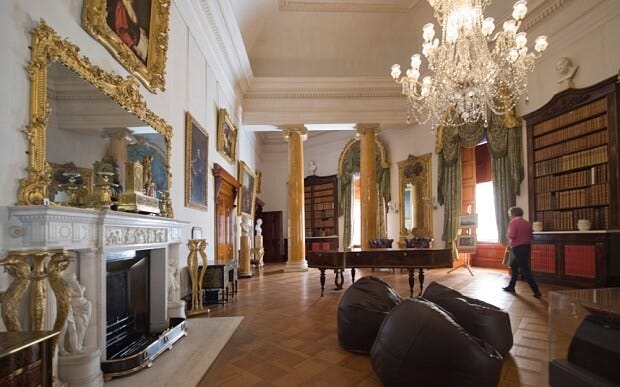
Even when building beautifully is attempted now, something generally seems off. The spirit that led to the creation of beautiful things once—a pulsing surge of civilizational confidence and vitality—isn’t there now, and so new attempts at beautiful buildings or the like generally seem wrong. They’re too gaudy, for one. Further, all the little things that used to go into such structures—molding, portraiture, furniture, and so on—isn’t what it used to be. Either it’s stuck in a past environment that no longer exists—Chippendale furniture, for example—or it is modern and so looks inappropriate and ridiculous when contrasted with the generally Palladian or Neo-Classical structure it has been put. The National Trust trying to make the Ickworth House library more “accessible” by replacing the old furniture with beanbag chairs is one of the more entertaining examples.1
It applies to more than just architecture. Clothing is beset by a similar problem: that which is new looks awful, and that which is old looks like playing dress up. The Space Force tried designing a formal uniform that looks both refined and futuristic. Instead, it looks ridiculous. On the other hand, those few events that still involve morning dress—afternoon weddings in Britain, for example, such as that of the Duke of Westminster—tend to look like kids playing dress up, as the top hats are symbols of a refined but dead past. It’s better than being slovenly, of course, but is still a dead form that no longer is possessed of the vitality that once made it great.

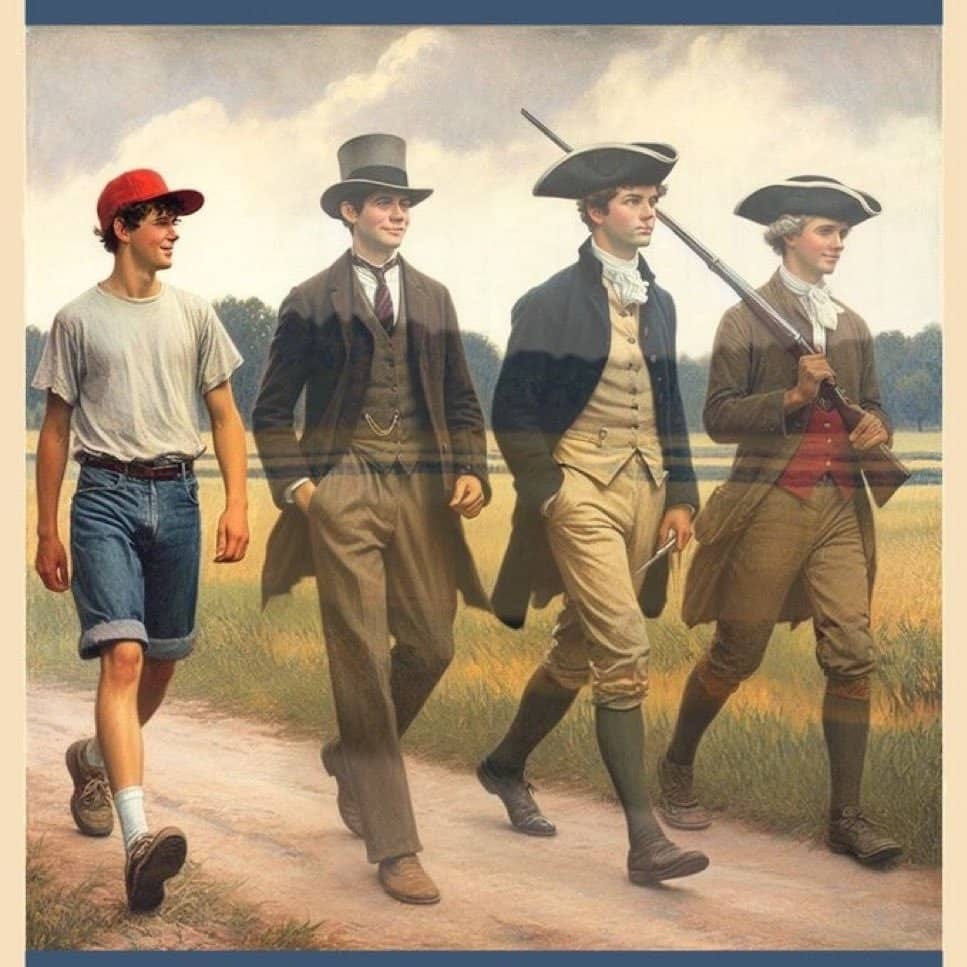
That is to say, we have stagnated. Where once there was a long tradition of things changing with the times but retaining their basic forms and refinement as they did so, that fell off a cliff in the early 20th century. Over the centuries that preceded 1913, the frock coat and tricorn hat came into being out of the essentially medieval dress of the Tudor period, and then changed little bits at a time before eventually becoming the top hat and morning coat. In much the same way, evening dress changed, with the tail coat eventually coming about and then being replaced with the tuxedo—essentially a tail coat with the tails cut off—coming about as people got more casual. Women’s dress changed similarly, as did military uniforms and other sorts of wear, such as the suit.
But then all of that evolution and change suddenly reached a dead halt, and remained frozen in amber as it was before the Guns of August. The suit of today is essentially the same as that of 1913, though it tends toward being slimmer-fitting and most reject the waistcoat. Morning dress, tails, and the tuxedo remain the same as they were over a century ago, though much more rarely worn. Replacing all of that is what would have been considered a state of undress a century ago, with dungarees and undershirts—clothes appropriate for a worksite—generally being the best one can hope to see when out in public. Whereas a century ago even the poor wore suits, to show they were part of the vibrant civilizational upswing, now even the rich wear t-shirts to show that they are just another cinderblock in the wall of the grimy public edifice.
I think that sense of stagnation and discontinuity are shown well by this image:
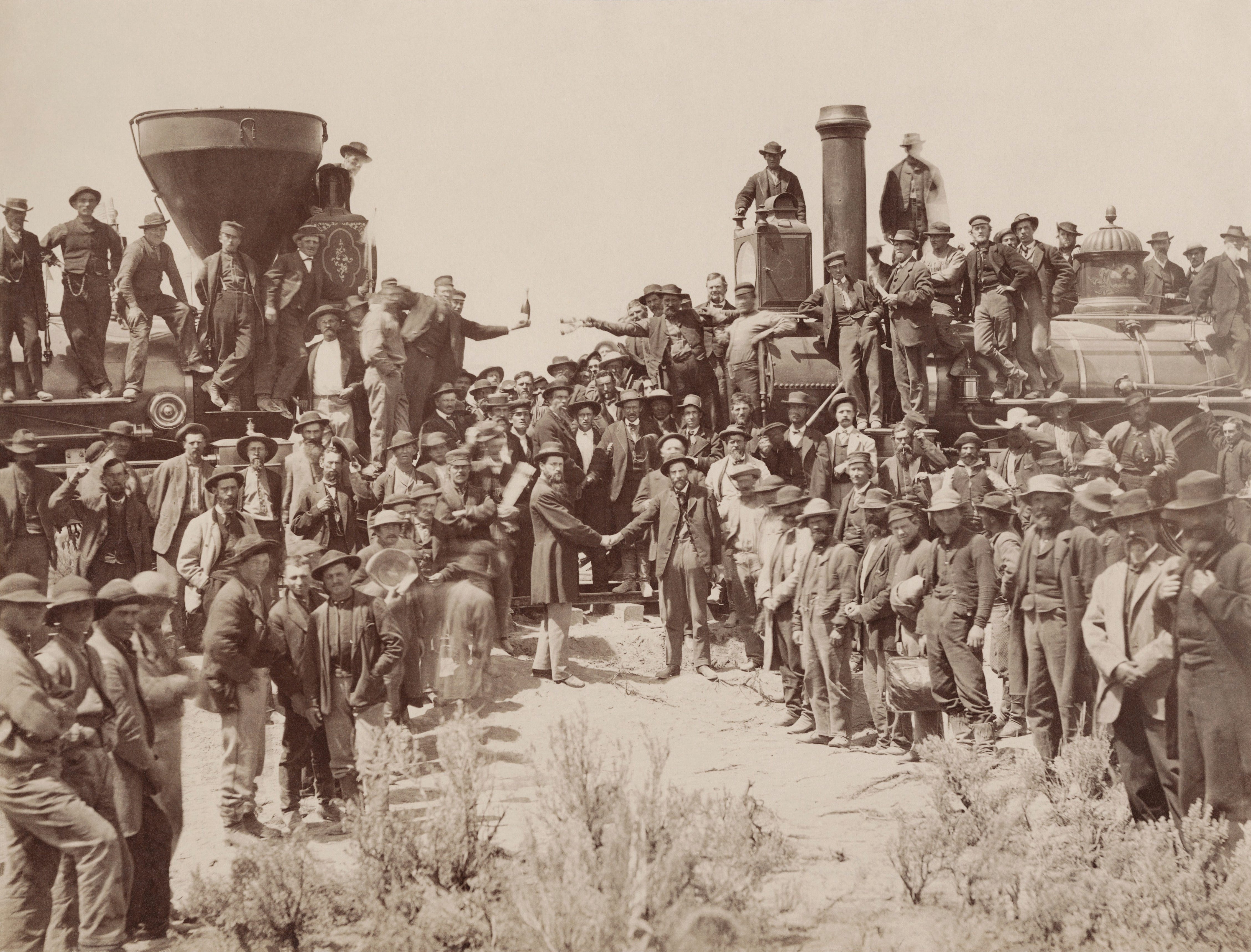
All in all, that comes from the great stagnation we have experienced. Our civilization is no longer moving forward. It is, rather, somewhere between stagnant and dead, and its relics are beginning to smell. No longer are great men like James Brooke conquering faraway lands to spread Western dominions. No longer are great new infrastructure projects crisscrossing our nations—a nuclear-powered renaissance and long-lasting Space Age could have followed the Second World War, but didn’t—and instead we are left with varying forms of now-decaying infrastructure.
It might occasionally look beautifully quaint, but is just that. Other than SpaceX’s Starbase, the first real step forward in many decades, is no longer possessed of the same spirit of civilizational confidence, accomplishment, and exuberance that undergirded the Transcontinental.
In short, where once we had managed to advance while remaining refined, now we cannot. We can keep the refinement by remaining stuck is an old world that is well past its sell-by date, or can try to do something new but know it will be aesthetically far worse than whatever came before it (though likely somewhat more comfortable, as that is all that is prized now).
This is why the historical preservation moment that prevents the creation of new things is so strong. Using the law to keep the houses on Charleston’s Rainbow Row looking exactly as they have since civilization stopped in its tracks a century and a half ago might be expensive, but makes some degree of sense because we all know that whatever would replace them is some modernist abomination that is far worse in every way.
And all of that is before considering the fact that where once there were Westerners, now there are jabbering foreign hordes from all the worst places imaginable. It matters not whether a top hat is in style or not if the head on which it would sit is shaped like a lightbulb and is running a Quality Learing Center.
The fault for this lies, I think, with the Great War. The regimentation imposed by it reordered Western society in a far worse way, and the way the horrible carnage it inflicted killed nearly all the best men of a generation while turning most of their surviving countrymen into embittered, impoverished cynics.
Famed British historian AJP Taylor begins his English History, 1914-1945 with the perfect description of this change:
UNTIL August 1914 a sensible, law-abiding Englishman could pass through life and hardly notice the existence of the state, beyond the post office and the policeman. He could live where he liked and as he liked. He had no official number or identity card. He could travel abroad or leave his country for ever without a passport or any sort of official permission. He could exchange his money for any other currency without restriction or limit. He could buy goods from any country in the world on the same terms as he bought goods at home. For that matter, a foreigner could spend his life in this country without permit and without informing the police. Unlike the countries of the European continent, the state did not require its citizens to perform military service. An Englishman could enlist, if he chose, in the regular army, the navy, or the territorials. He could also ignore, if he chose, the demands of national defence. Substantial householders were occasionally called on for jury service. Otherwise, only those helped the state who wished to do so. The Englishman paid taxes on a modest scale: nearly £200 million in 1913-14, or rather less than 8 per cent of the national income. The state intervened to prevent the citizens from eating adulterated foods or contracting certain infectious diseases. It imposed safety rules in factories and prevented women, and adult males in some industries, from working excessive hours. The state saw to it that children received education up to the age of 13. Since 1 January 1909, it provided a meagre pension for the needy over the age of 70. Since 1913, it helped to insure certain classes of workers against sickness and unemployment.
…
All this was changed by the impact of the Great War.* The mass of the people became, for the first time, active citizens. Their lives were shaped by orders from above; they were required to serve the state instead of pursuing exclusively their own affairs. Five million men entered the armed forces, many of them (though a minority) under compulsion. The Englishman’s food was limited, and its quality changed, by government order. His freedom of movement was restricted; his conditions of work prescribed. Some industries were reduced or closed, others artificially fostered. The publication of news was fettered. Street lights were dimmed. The sacred freedom of drinking was tampered with: licensed hours were cut down, and the beer watered by order. The very time on the clocks was changed. From 19ı6 onwards, every Englishman got up an hour earlier in summer than he would otherwise have done, thanks to an act of parliament. The state established a hold over its citizens which, though relaxed in peacetime, was never to be removed and which the second World war was again to increase. The history of the English state and of the English people merged for the first time.
Further, in his The First World War and Its Aftermath, Taylor notes the spiritual confusion and damage wrought by the Great War:
The most serious blow inflicted by the war economically was to men's minds. not to their productive powers. The old order of financial stability was shaken, never to be restored. Depreciated currencies, reparations, war debts, were the great shadows of the inter-war period - all imaginary things, divorced from the realities of mine and factory.
Where once there had been stability that allowed high civilization to flourish—particularly stability with currency and safe investments that allowed the upper orders to build beautiful things that would last, and a stability of spirit that encouraged refinement and advancement—disorder and instability characterized what followed. Even where Bolshevism didn’t win a revolution, there was inflation-driven instability brought about by fiat currency, social instability brought about by an unleashing of postwar passions, two depressions in one decade, and impossibly high taxes that made doing much of anything difficult.
Hence why what continuity there had been amidst the freshness of continual change—the sort of gradual change epitomized by dress and architecture over the Georgian, Victorian, and Edwardian periods—suddenly stopped in 1913, and was replaced by either a stagnant and hopeless attempt to hold onto what had been or the shrug and slouch towards comfort-driven slovenliness that has characterized most things. Before then, civilization was still intact and vibrant, whatever its problems. After then, no one believed even in what remnants of it existed, despite even the fact that things got more prosperous in most places after the war. What had been great was dead, and a deep sense of ennui meant that nothing good took its place.
It is from that situation that I think our stagnation comes. Civilization means having and maintaining standards, but also adapting as advancements come so that things don’t get stale. We lost our ability to do so with the Great War, and are yet to recover it. Perhaps Musk’s monomaniacal drive to bring back the Space Age will help us recover it. If we want to get back on track, that’s what we need.
If you found value in this article, please consider liking it using the button below, and upgrading to become a paid subscriber. That subscriber revenue supports the project and aids my attempts to share these important stories, such as the recent one on Civil War, and what they mean for you.
A friend is a conservative professor of history. He also has written several biographies on the Founders. His view is that WW1 destroyed Western Civ and we’re living through the detritus. Hard to argue with.
I know that religious leaders on all sides had always told soldiers that "God is With Us", but saying that right before high explosives and mechanized warfare unleashed Hell on Earth was, I believe, the beginning of the end for the old religious denominations. They survive but are hollowed out. This loss of faith contributed to the degradation of society which you wrote about so well.