


I know we are due for a paid article. I am working on one on building a counter-elite, but did not think it was ready for publication, so I wrote a shorter free one about something more timely instead. I will get the paid one to you next week, once it is of the requisite quality to be worth your time, and hope you understand. Thank you for your time, and your support. -Will
IT IS always a temptation to an armed and agile [young scholar]
To call upon a [white] neighbour and to say:–
“We invaded [your house] last night–we are quite prepared to fight,
Unless you pay us [EBT] to go away.”
And that is called asking for [Dewayne]-geld,
And the [scholars] who ask it explain
That you’ve only to pay ‘em the [Dewayne]-geld
And then you’ll get rid of [Dewayne]!
It is always a temptation for a rich and lazy [white man],
To puff and look important and to say:–
“Though we know we should defeat you,
we have not the time to [beat] you.
We will therefore pay you [EBT] to go away.”
And that is called paying the [Dewayne]-geld;
But we’ve proved it again and again,
That if once you have paid him the [Dewayne]-geld
You never get rid of [Dewayne].
It is wrong to put temptation in the path of any [young scholar],
For fear they should succumb and go astray;
So when you are requested to pay up or be molested,
You will find it better policy to say:–
“We never pay any-one [Dewayne]-geld,
No matter how trifling the cost;
For the end of that game is oppression and shame,
And the [white man] that plays it is lost!”
-Rudyard Kipling on the Dane-geld, Edited by Will
You can listen to the audio version of this article here:
![[AUDIO] The Dewayne Geld Must End](https://substackcdn.com/image/fetch/$s_!qmC1!,w_140,h_140,c_fill,f_webp,q_auto:good,fl_progressive:steep,g_auto/https%3A%2F%2Fsubstack-video.s3.amazonaws.com%2Fvideo_upload%2Fpost%2F200772139%2F0598b04f-828d-46a5-a94a-eba5f36eaa79%2Ftranscoded-1780670852.png)
America’s Dewayne Geld Crisis
Take a moment, and consider the ends to which your tax dollars are funnelled. Then think about in what ways, if any, those uses are of the slightest benefit to you.
There is the defense budget, of course. It—primarily the Navy and Air Force, the more expensive components—is of some benefit to Americans when it succeeds in keeping trade lanes open. Social Security and Medicare can at least be justified as concepts, even if the way in which they have been managed is quite poor. I much prefer the somewhat privatized Singaporean method of mandating personal savings for retirement and healthcare rather than pouring it into a public pot. But, generally, the idea that those too old to work shouldn’t live in penury is a sensible one. Highway spending is tolerable, though that should, at this point, be left to the states. So long as it is not spent on researching some nonsense like transgender poetry in Ancient China, the federal research and development budget is generally of some use; much like Social Security, it must be reformed, but is at least not a terrible idea.
Then there is the remainder of federal spending.
Nearly a trillion dollars go toward Medicaid, which does not benefit America’s industrious citizenry in the least, as it exists for the benefit of the underclass, and that has largely meant that it is stolen by Somalis, Haitians, and the like. About a fifth of immigrants and over 50% of black and Hispanic children are enrolled in Medicaid.1 About 30% of blacks and Hispanics overall are enrolled in Medicaid, compared to about 15% of whites.
In any case, there’s much more to the welfare state than Medicaid. “Income security” spending is another three-quarters of a trillion dollars; this provides SNAP/EBT to the seething urban underclass, and pays for programs like Section 8, which is the means by which criminals are put in your neighborhood. The SNAP use rate per capita is even more stark than Medicaid: roughly a quarter of blacks are on it, compared to about 7% of whites, while Hispanics are also significantly overrepresented on the Dewayne-geld: EBT Edition rolls.
The cost of the federal civilian bureaucracy is about $600 billion; as this bureaucracy primarily has been used to inflict productivity-killing regulations on the country, to foist the immense burden of Civil Rights law upon us, and to tax us to pay for such blessings of liberty, it too goes in the “does not benefit me” pile.
Combined, these various ways of funneling cash to the underclass together cost well over $2 trillion per year. The federal deficit is somewhat less than $2 trillion per year, meaning it would be gone if we didn’t engage in this spending on the underclass. So, the interest on the federal debt can also be counted in the “does not benefit” column, as it wouldn’t exist but for the safety hammock of the welfare state and the bureaucracy that manages it. And that hammock is primarily filled not with hard working Americans temporarily down on their luck, but with Third World migrants and multi-generational, native-born problem-causers, both of which groups are lumped in as “Dewayne Geld recipients”.
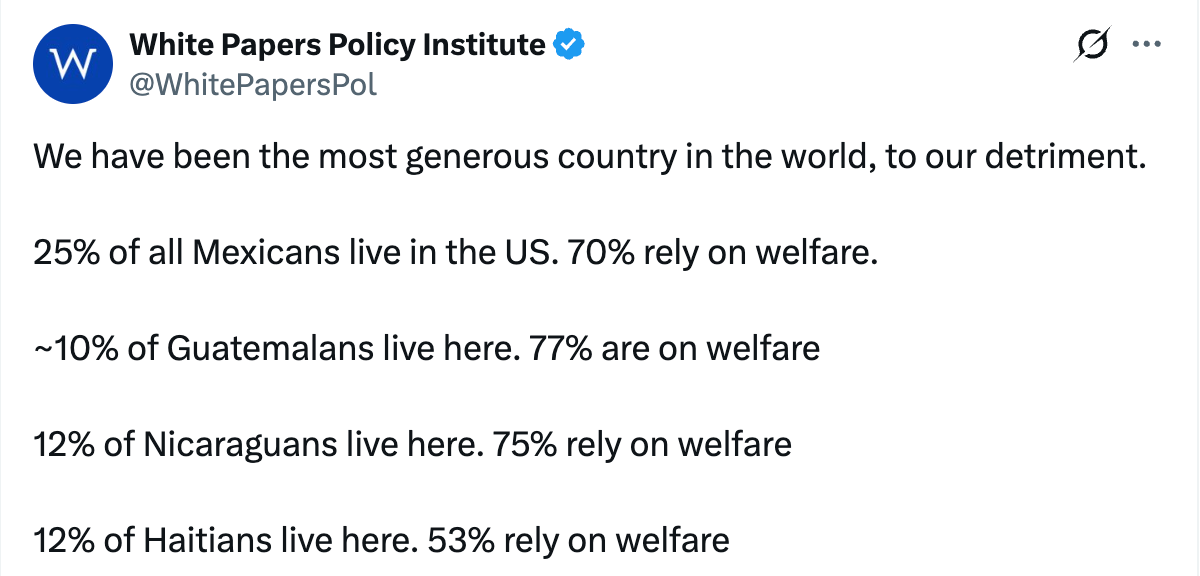
But it is even worse than it appears at first glance, for the existence of the welfare hammock makes its own weight heavier. The subsidization of the teeming underclass that relies on it means that the underclass continues to expand, both through natural means and immigration, and to produce more public charges as it does so, which then worsens the spending problem and thus the debt, deficit, and interest problem. So, to continue paying for it is to make the problem worse, day by day.
So, why do we continue paying the Midgaard Serpent to eat its own tail, and to grow ever larger and more threatening as it does so?
Well, as I’ve written about before, we do so because much of our public policy consists of paying the Danegeld.
Whether in Inner City America or abroad, our courage-lacking rulers have decided to follow in the dubiously honorable footsteps of Æthelred the Unready and simply make ever more generous payments out of the public treasury in the hopes that doing so will keep the raiders away long enough for them to be someone else’s problem.
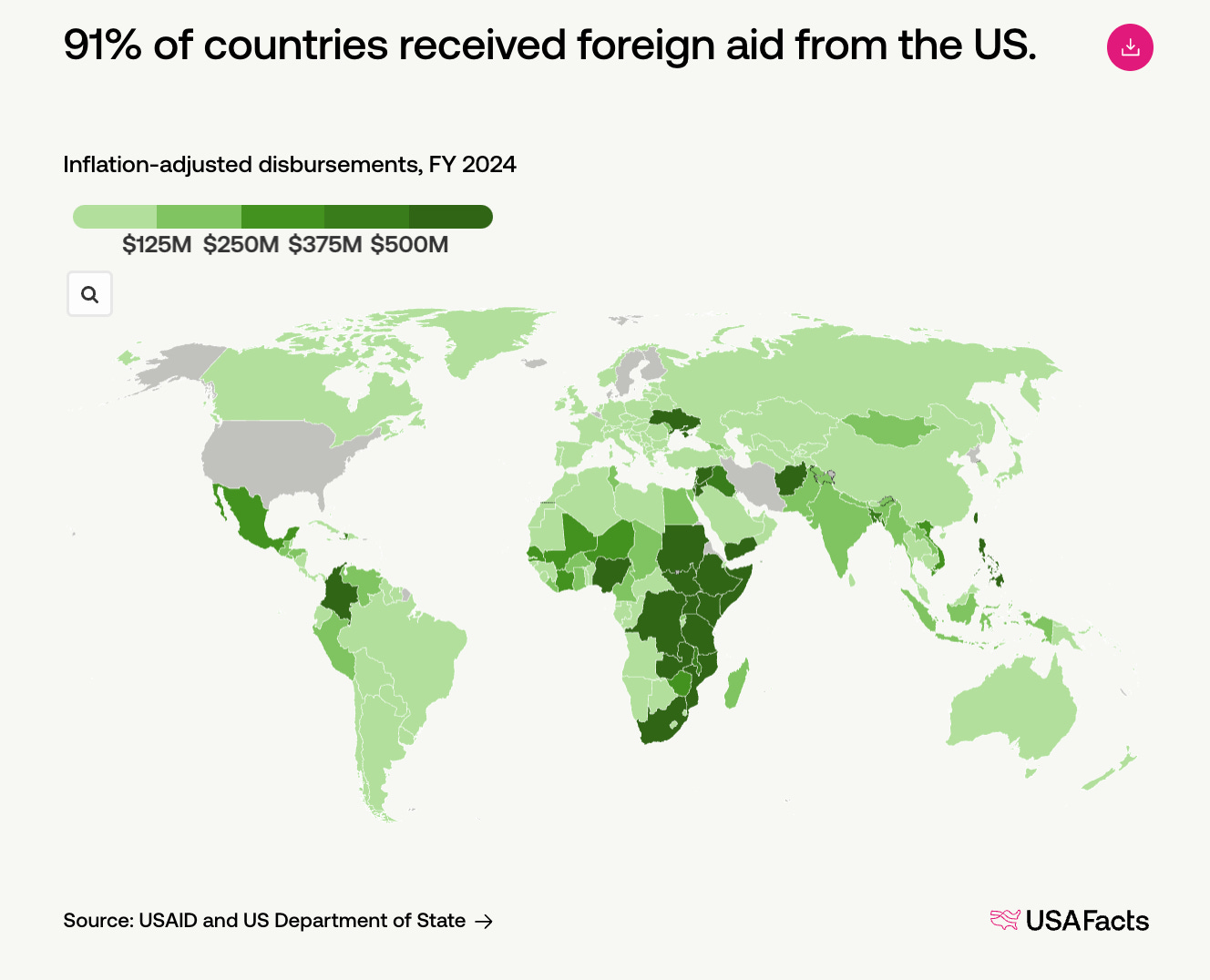
And so America gives foreign aid of one sort or another to 180 countries, including ones like Mexico that have only heaped costs upon us, instead of just straightening out those countries like Mexico with which we must deal (Pershing had the right idea,2 as did the United Fruit Company3).
More importantly—and more expensively—it also means that much of American domestic policy consists of one Danegeld wealth redistribution scheme or another, which is indeed how these policies are justified to the public: “We have to pay the Dewayne Geld, or there will be riots! Just think of the unrest!”
The question of why the riots would not just be put down, at relatively limited cost compared to the trillions we spend every year on theoretically preventing them, is never answered. The obvious answer, however, is the same one behind why Æthelred the Unready made those payments to King Sweyn Forkbeard and Olav Tryggvaso: cowardice.
Our regime lacks the spine necessary to simply put down riots and ensure they don’t happen again, and so we get the immense costs of the Dewayne Geld program. Solving that spiritual problem, as I’ll discuss below, will be critical to ending the monstrosity of our Dewayne Geld regime, which I’ll also describe below.
Kool-Aid Pineapple
The most bizarre, fever-dream-like, and utterly infuriating instantiation of the Dewayne Geld and what it has wrought, at present, is the viral “Kool-Aid Pineapple” trend, which is an EBT scam at its most ridiculous.
This is the process by which Dewayne Geld recipients launder food stamps into cash by selling each other ridiculous “plates” out of illegally operating restaurants. In the past, this meant selling “plates” of comfort food for cash, after having bought the ingredients using EBT/TANF/etc. Here’s an explanation for how the general “plates” and EBT fraud scheme works4:
But absurdity builds upon itself, and so the “plates” concept has transformed from meaning the buying and selling of taxpayer-subsidized plates of real food (without reporting income, of course), and has become the buying and selling of sugar, Kool Aid, and (sometimes) Hennessy-infused jars of pineapple spears. Note, at the beginning, the “these go for $20 a pop” line. Much like “plates”, it’s just Dewayne Geld laundering.
So, each working American has close to half of their income confiscated by the regime so that it can pay for:
The provision of EBT/TANF/WIC to an urban underclass, which is money laundered into cash by the trade in this sugary slop, as the ingredients are bought with EBT, and payment is sometimes accepted in food stamps.
The subsidies for corn farmers that make the corn syrup often used in this sort of junk inexpensive.
The Medicaid programs that care for these enterprising entrepreneurs and their customers after years of guzzling pineapple soaked in corn syrup and Hennessy catch up with them
The law enforcement apparatus that tries and generally fails to keep them in check, as the Dewayne Geld has tended towards increasing crime since it was begun with the Great Society of LBJ
The vast and invasive federal and state bureaucracy that collects and distributes the Dewayne Geld
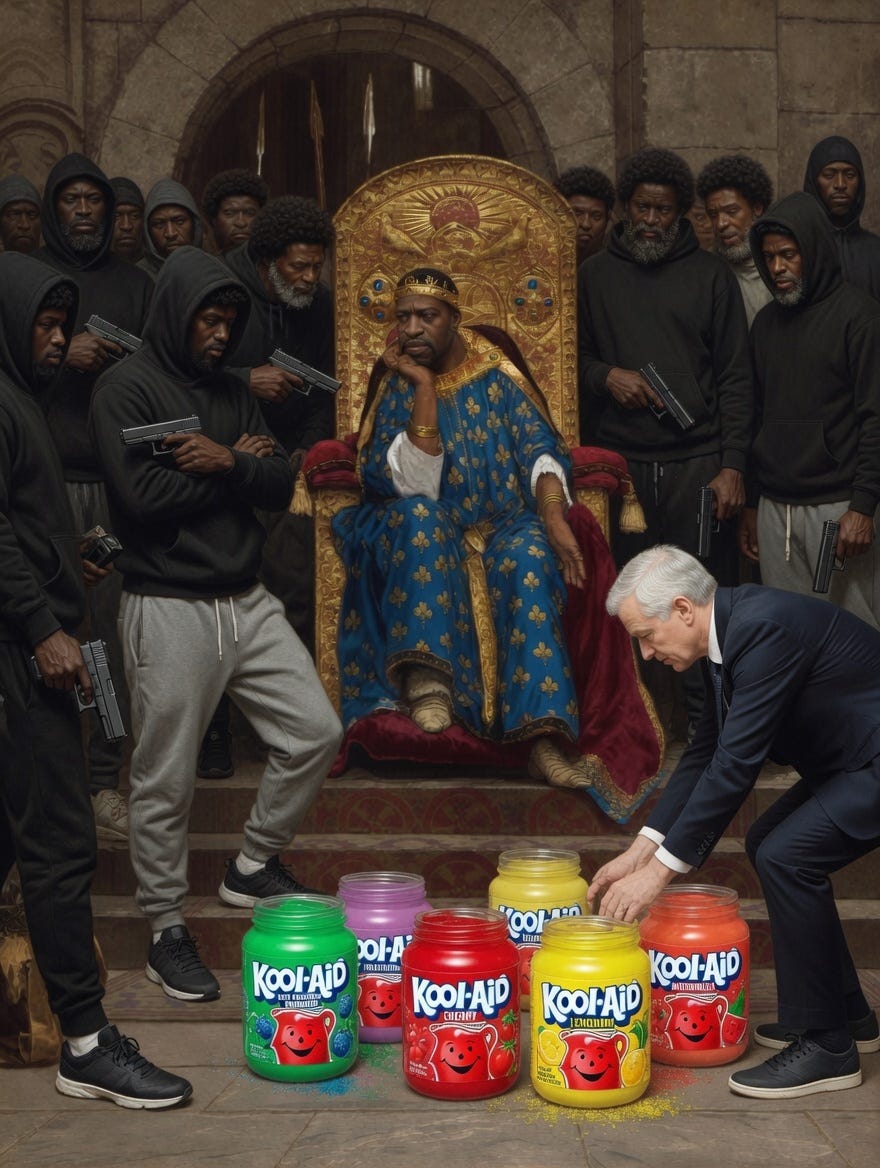
Such is a distinctly unappetizing prospect that can best be visually portrayed as this5:
And why is this allowed to happen?
Well, with the Dewayne Geld as with the Dane Geld, we are told that, even if expensive, it will lead to a lowering of tensions and limitation of violence, and so it is in the end preferable to having it out and just doing what it takes to tamp down on disorder.
So, has the violence ended? Did the Danes stop acting as Danes?
Hardly. A few examples will hopefully suffice, but if not, review our article on the relative death by homicide rates in American cities compared to active war zones.

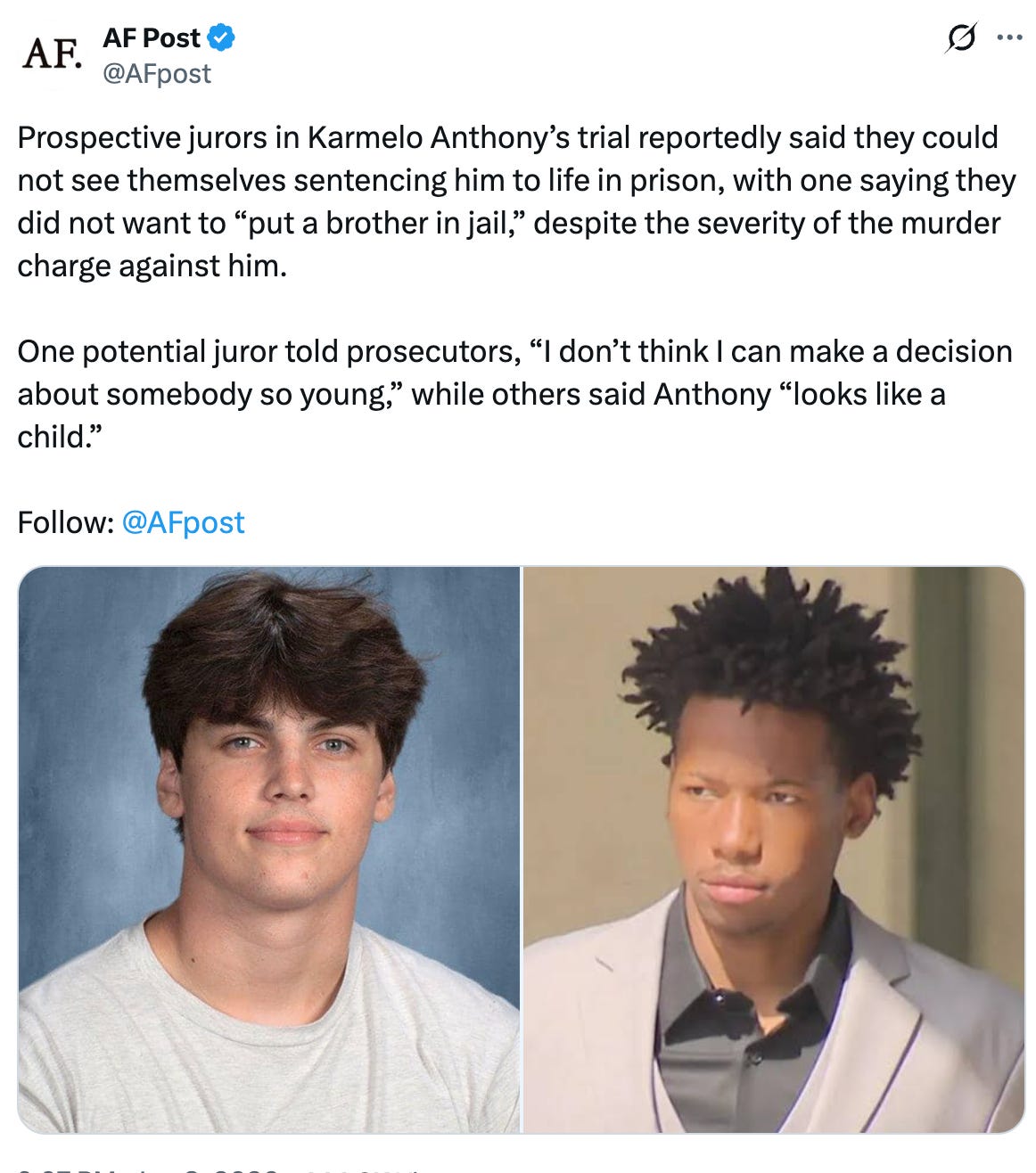
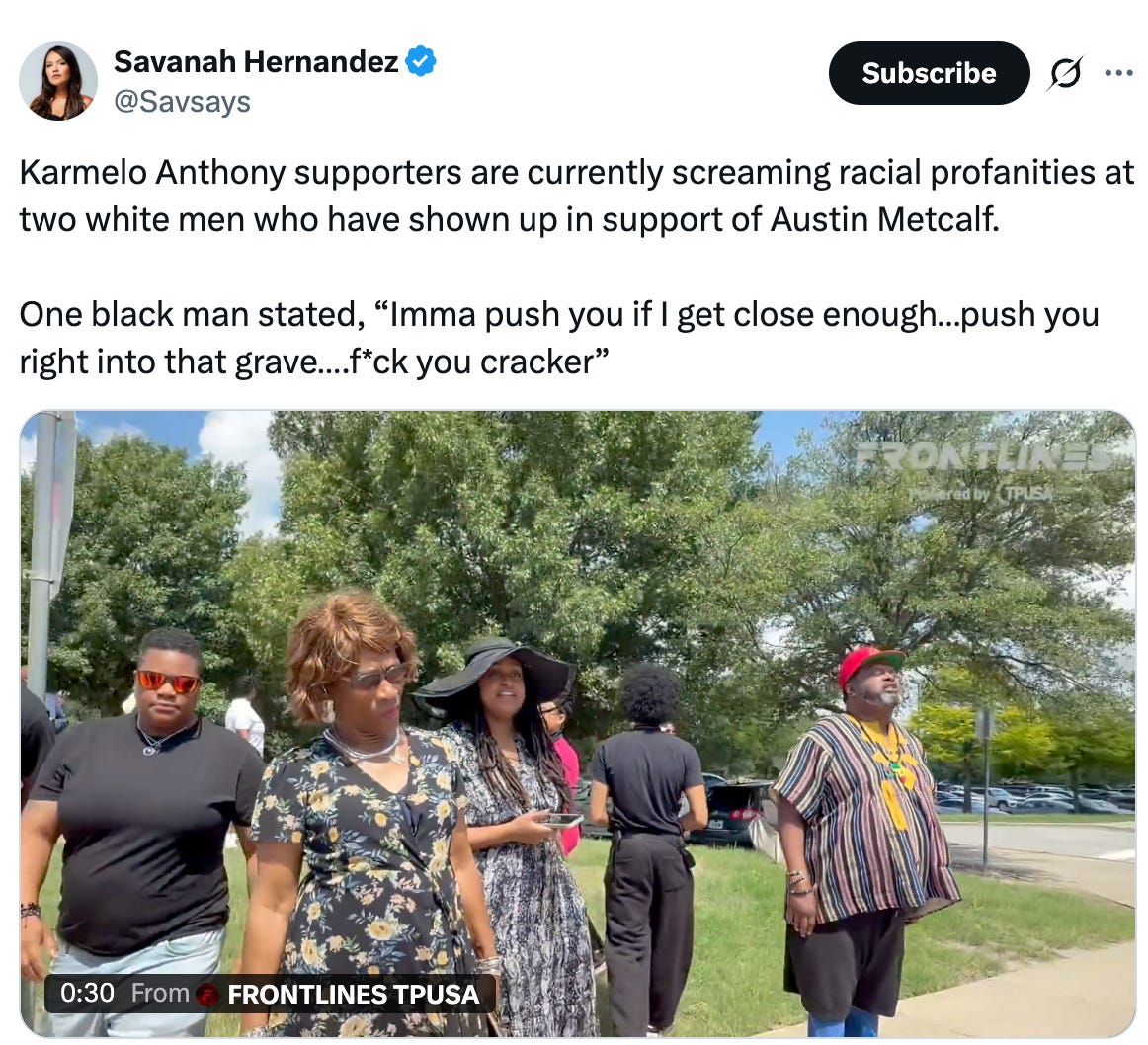

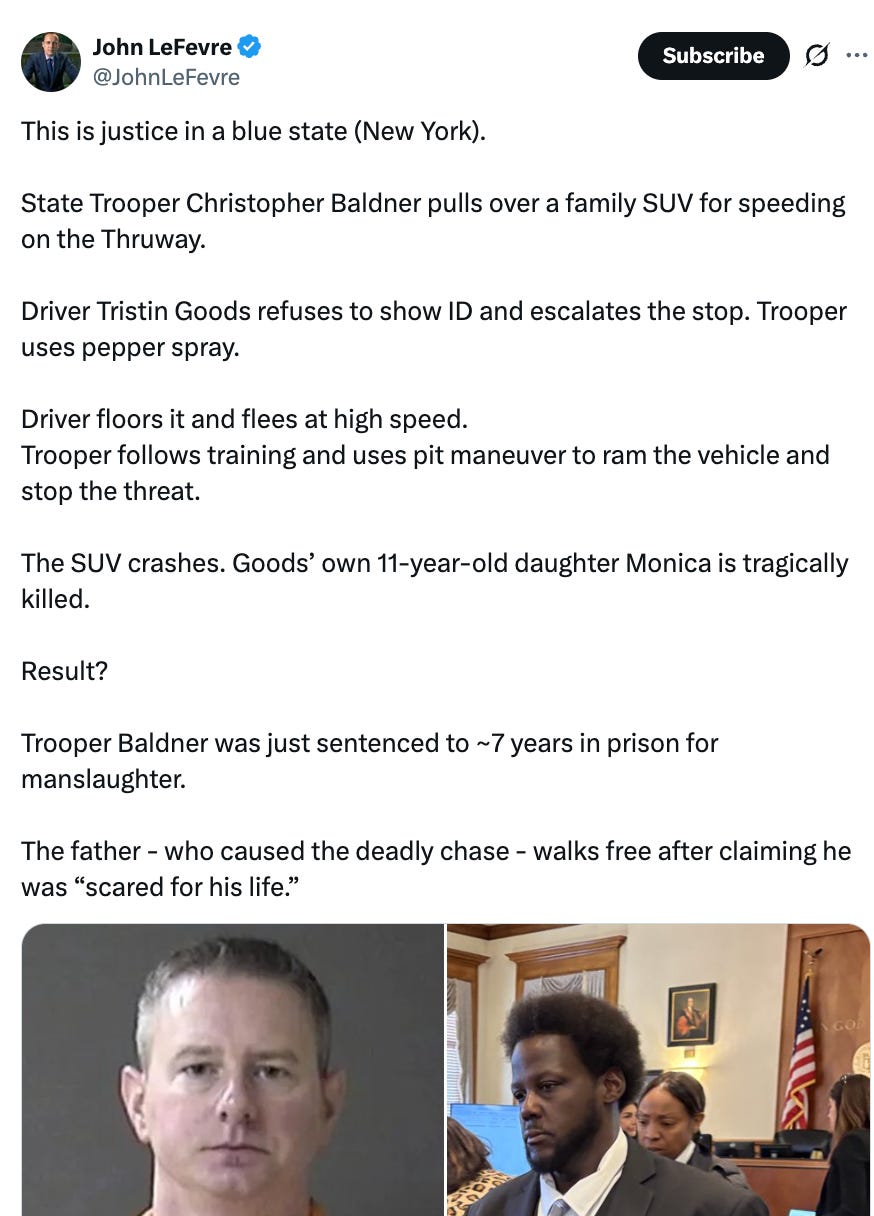
As Kipling noted, the wages of paying the Danegeld are not peace, but more Danes, more suffering, and more claims issued upon your geld by the Danes. Or the Dewaynes, as it were.
And so we are stuck in a bizarre and infuriating situation where the surplus produced by the productive is skimmed off the top to pay the Dewayne Geld and for the bureaucracy that administers it. In exchange, we get not peace, but more and more public disorder and crime, which makes it ever more difficult to produce the productive surplus that allows for the Dewayne Geld to be paid in the first place.
Time to Stop Paying the Dewayne Geld
It is time for us to stop paying the Dewayne Geld. It’s gone on for too long, is too expensive, and produces nothing but misery. It inflicts immense harm on net taxpayers. In being the principal cause of the ever-expanding public debt, it is the ruination of the nation. It also leads many who could otherwise be law-abiding citizens astray, tempting them like a Siren song into yeast-like lives of petty criminality and purposelessness.
But getting rid of it, and restoring the honor, glory, and functionality of the nation in so doing, will require a substantial mindset shift.
Anglo-Saxon Britain was conquered because it had devolved to the point that it preferred to try to pay its enemies off, whatever the cost, rather than fight them.
First, Cnut the Dane came, saw, and conquered in the aftermath of Aethelred the Unready’s disastrous reign, and then came William the Conqueror and his Normans. They never left, but nor did they ever pay the Danegeld. Instead, excellence-oriented people that they were, the Normans used the taxes they collected to fight wars of conquest, to remain noble warriors, and to build great castles that still dominate the landscape.
As they did so, they “drilled” the Anglo-Saxons over whom they ruled into being something greater once again. Into being a people worthy of the name, into once again being great explorers and conquerors who eventually took Britannia’s flag and planted it in the Earth everywhere from Newfoundland to Sarawak, the Chesapeake to Ceylon. Once their spirit was changed so that for nearly a millennium they were unwilling to pay the Danegeld, the English were a great people who combined the virtues of the Anglo-Saxons and Normans alike, conquering and settling as they spread across the Earth and brought it under their Dominion.
Yet further, their spirit restored, they stamped out evil practices rather than tolerating them or paying the natives to stop. The clearest example is that of General Sir Charles Napier when he found, in the Raj, that the natives liked to set their widows on fire. Did he let them do it? Did he pay them off to stop, in the hope that there wouldn’t be riots if only enough gold was handed out? No. He constructed a gallows, and dared them to test his will. They were cowed, as such ignoble savages always are, and no violence was necessary, nor were widows burned.
Be it so. This burning of widows is your custom; prepare the funeral pile. But my nation has also a custom. When men burn women alive we hang them, and confiscate all their property. My carpenters shall therefore erect gibbets on which to hang all concerned when the widow is consumed. Let us all act according to national customs!
Such stampings out of illegal, immoral behavior can occur when those in charge have spines made of steel rather than spaghetti.
Then the Great War broke their spirit,6 and now they are once again willing to pay the Danegeld. The result is the Grooming Gangs, the horrific murder of Henry Nowak7, and all the rest…and those who commit such evil actions are almost always subsidized by the British taxpayer.


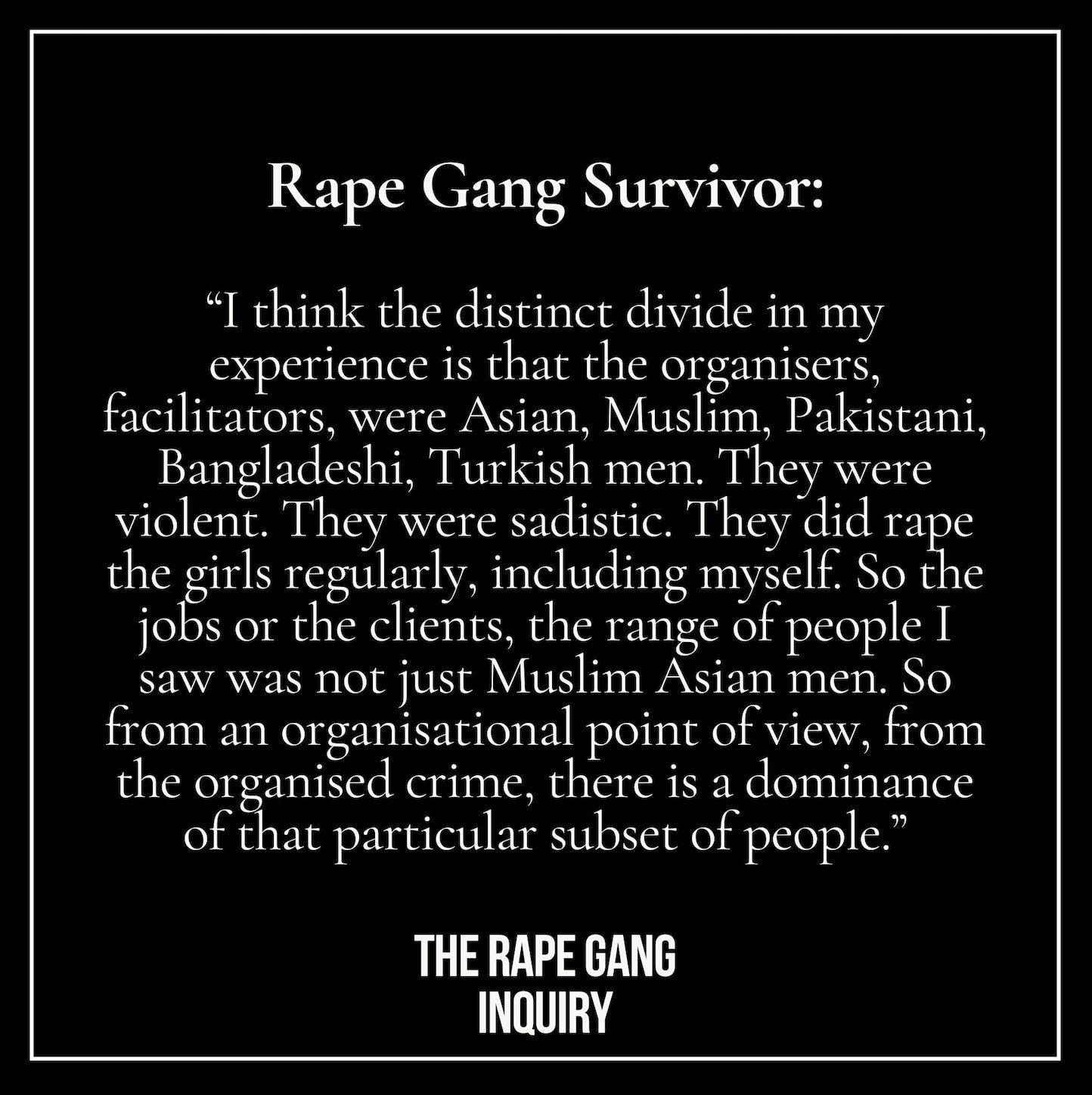
If America is to get over its Dewayne Geld problem, or if Britain is to get over its Paki Problem, the spiritual transformation required will be akin to what Albion saw between 1066 and the Tudors. We must witness once again the turning of a people from those who wish only to, as Thomas Carlyle put it, be “A gluttonous race . . . capable of no grand combinations; lumbering about in potbellied equanimity”8—something that sure seems to be true of our day, even if a harsh characterization of the Anglo-Saxons of William’s—into a great, capable, and heroic one that has a spine of steel and is capable of whatever harsh reprisals and stern chastisements are necessary to scour the barbarians into compliance.
That will not be an easy task, nor a particularly pleasant one. Even the Empire at its height saw Liberals protesting on behalf of the bloodthirsty savages against whom the pith-helmeted heroes fought, something that was as true of Jamestown as of Rhodesia in the 1970s, the last outpost of empire.
But it is nevertheless necessary. Such a transformation—a drilling of a people into a sort of chivalric hero Lewis describes9—is the only path out of paying the Danegeld. The arrival of William and the spirit he brought with him is what kept the Danes and their sort away for a millennium, up until the Pakis were invited in. The same sort of spiritual change is needed now, so that we stop falling prey to the myth of the noble savage, and instead learn that the savage is always ignoble at his core, and must be defeated rather than paid off, come what may in terms of unrest when we do exactly that.

If you found value in this article, please consider liking it using the button below, and upgrading to become a paid subscriber. That subscriber revenue supports the project and aids my attempts to share these important stories, and what they mean for you.
Also, consider checking out my history channel, such as this video on Captain John Smith, the first great American adventurer, and one who understood how the Indians needed to be treated:


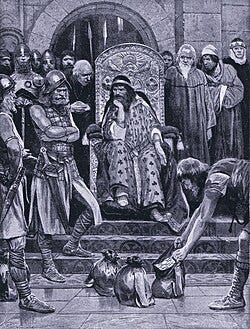
For reference, this is the famous image of the Dane geld being paid by the Anglo-Saxons that the included meme is based on:
As AJP Taylor notes in The First World War and Its Aftermath, the Great War spiritually broke the peoples of Europe.
John Carter wrote about it well here:

This comes from Volume 1 of his History of Friedrich II, Also Called Frederick the Great
England itself, in foolish quarters of England, still howls and execrates lamentably over its William Conqueror, and rigorous line of Normans and Plantagenets; but without them, if you will consider well, what had it ever been? A gluttonous race of Jutes and Angles, capable of no grand combinations; lumbering about in potbellied equanimity; not dreaming of heroic toil and silence and endurance, such as leads to the high places of this Universe, and the golden mountaintops where dwell the Spirits of the Dawn. Their very Ballotboxes and suffrages, what they call their ‘Liberty,’ if these mean ‘Liberty,’ and are such a road to Heaven, Anglo-Saxon highroad thither--could never have been possible for them on such terms. How could they? Nothing but collision, intolerable interpressure (as of men not perpendicular), and consequent battle often supervening, could have been appointed those undrilled Anglo-Saxons; their potbellied equanimity itself continuing liable to perpetual interruptions, as in the Heptarchy time. An enlightened Public does not reflect on these things, at present; but will again, by and by. Looking with human eyes over the England that now is, and over the America and the Australia, from pole to pole; and then listening to the Constitutional litanies of Dryasdust, and his lamentations on the old Norman and Plantagenet Kings, and his recognition of departed merit and causes of effects, --the mind of man is struck dumb!
CS Lewis wrote:
“The word chivalry has meant at different times a good many different things, from heavy cavalry to giving a woman a seat in a train. But if we want to understand chivalry as an ideal distinct from other ideals, if we want to isolate that particular conception of the man, comme il faut (as it should be), which was the special contribution of the Middle Ages to our culture, we cannot do better than turn to the words addressed to the greatest of all the imaginary knights in Malory’s Morte D’arthur. ‘Thou wert the meekest man’, says Sir Ector to the dead Launcelot. ‘Thou were the meekest man that ever ate in hall among ladies; and thou were the sternest knight to thy mortal foe that ever put spear in the rest.’ The important thing about this ideal is, of course, the double demand it makes on human nature. The knight is a man of blood and iron, a man familiar with the sight of smashed faces and the ragged stumps of lopped-off limbs; he is also a demure, almost a maidenlike, guest in hall, a gentle, modest, unobtrusive man. He is not a compromise or happy mean between ferocity and meekness; he is fierce to the nth and meek to the nth. When Launcelot heard himself pronounced the best knight in the world, ‘he wept as he had been a child that had been beaten’...The medieval ideal brought together two things which have no natural tendency to gravitate towards one another. It brought them together for that very reason. It taught humility and forbearance to the great warrior because everyone knew by experience how much he usually needed that lesson. It demanded valour of the urbane and modest man because everyone knew that he was as likely as not to be a milksop. In so doing, the Middle Ages fixed on the one hope of the world. It may or may not be possible to produce by the thousand men who combine the two sides of Launcelot’s character. But if it is not possible, then all talk of any lasting happiness or dignity in human society is pure moonshine.”
From the book "The Tall Men" by Will Henry -
At this, Ben scowled. Damn the flat-hat fools. There was one thing they never learned. That was never to let any Indian outfit, made no difference how friendly they let on, come into your camp. Give them food, blankets, tobacco, anything you had--but never camp room.
Great book. Great movie.