


Become a paid subscriber to listen to the audio version of every article. Listen to this one here:
![[Audio] The Architecture of American Renewal](https://substackcdn.com/image/fetch/$s_!KhbC!,w_140,h_140,c_fill,f_webp,q_auto:good,fl_progressive:steep,g_auto/https%3A%2F%2Fsubstack-video.s3.amazonaws.com%2Fvideo_upload%2Fpost%2F208360434%2F2bbc8499-45b7-44b6-81a9-df48b3f204d2%2Ftranscoded-1784913886.png)
An era is defined by its architecture, as the architecture represents its spirit—the highest aspirations, inclinations, and beliefs of its people.
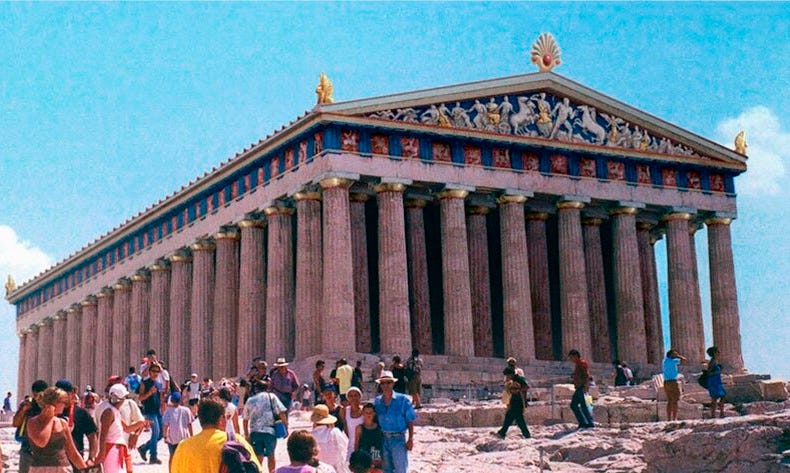
The spirit of Classical Greece, as Adrian Goldsworthy observed in his fabulous Athens and Sparta, could be seen in the Parthenon of Athens. It was a showing of the excellence of its architects, the excellence and wealth of the city that built it, the premier status of that city’s empire, and the restless sense of competition that undergirded that civilization.1
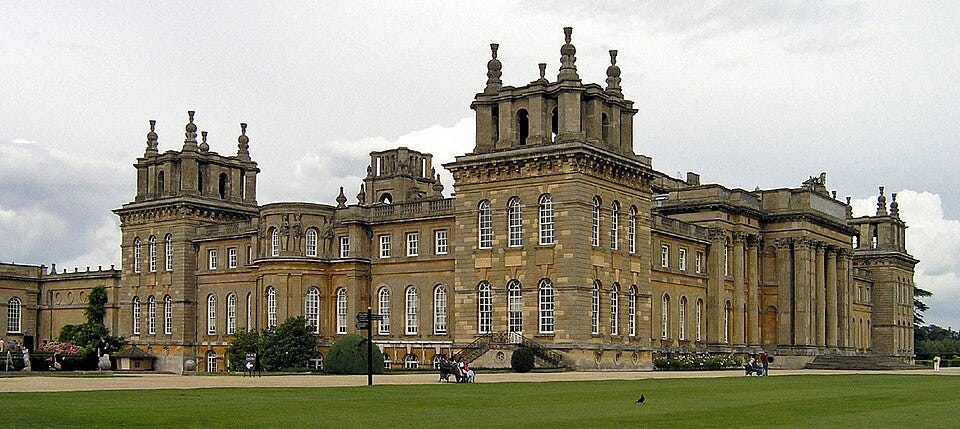
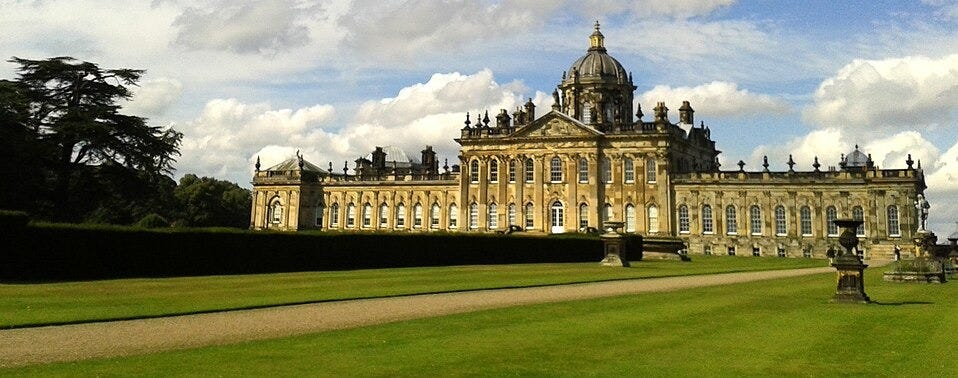
When the British state rose beyond the feuding of the late Medieval through Stuart years, it celebrated with a burst of Baroque country house building that reflected the triumphant nature of the Whiggish Aristocracy in control and the newfound wealth that came with peace.2
Both Blenheim and Chatsworth, two of Britain’s most famous country seats, and both of which are gargantuan Baroque palaces, were built in this period. The splendor, the expense, the immense craftsmanship—all of it represented the vital energy, sudden affluence, and solidity of those who ruled after the Glorious Revolution. Yet further, they reflected the fact that the ruling aristocracy was proud, capable, and still jealous of its privileges and authority:3 only he of ancient blood and windfall wealth could build something like Blenheim or Castle Howard.
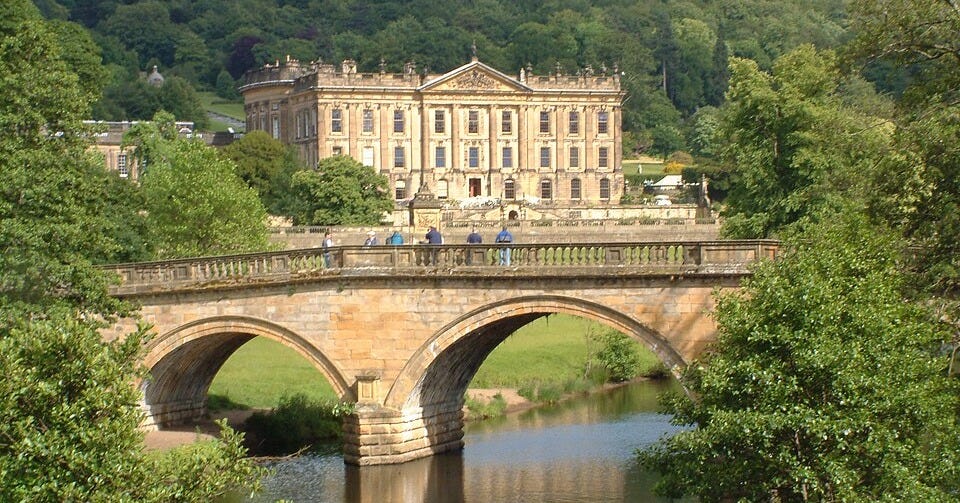
As the years wore on and the empire became both less newfangled and more solid, the styles changed. Georgian architecture is beautiful, tasteful, and restrained. So too is the closely related Palladian and Neo-Classical architecture, probably the most famous of the country house styles.
In public and private architecture alike, the solid and stable built world of the Tories was more restrained, in better taste, and meant to portray patrician self-confidence, contentedness, and rootedness rather than show off new wealth or enhanced position.4 Theirs was a world built by gentlemen, and the restrained yet glorious taste of it reflected that.
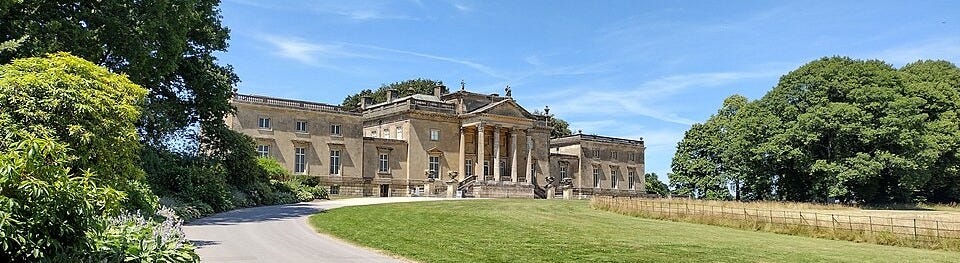
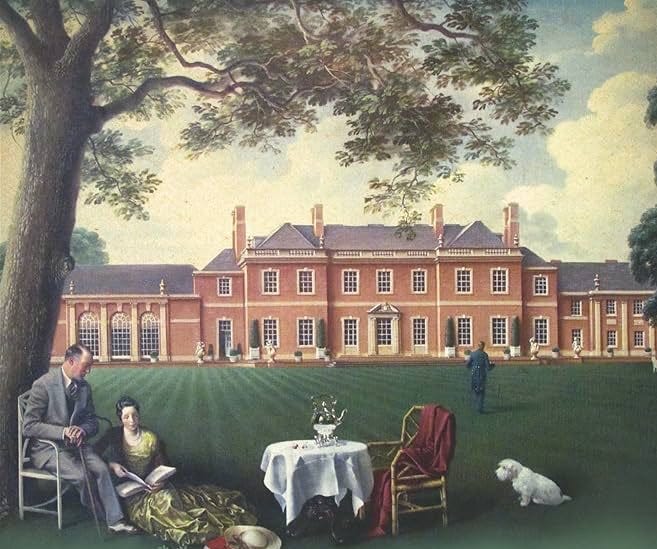
This is true of empires as well as states. As Andrew Lambert notes in his Seapower States, sea-based empires used the visual propaganda and spirit building of complexes and structures so splendorous and monumental as to be “maritime temples” to encourage a “consciously crafted identity” that supported the unique type of civilization required for a maritime empire.5
From the circular harbor of Carthage to the Dam Square of Amsterdam,6 seapower states were intentional about how they turned the riches of seaborne empires and the trade that accompanied them into monumental visual reminders of that success. The form reflected not just the reality—wealth—but the spirit and its unique attributes as well.
The Architecture of American Decline
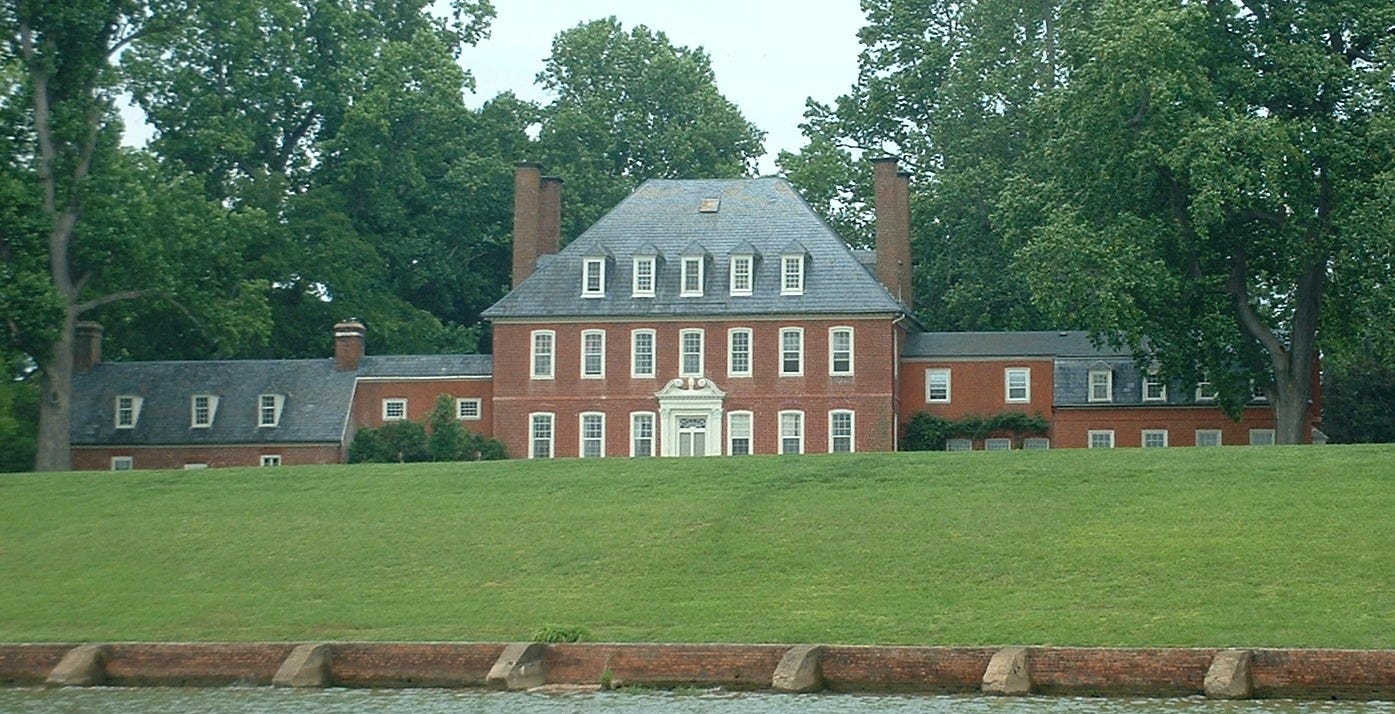
For many centuries, particularly in the plantation house-based world of the Southeast and old Anglo-Dutch world of New York, America followed a similar trajectory. When Virginia’s Golden Age came, planters built great homes like Westover and Stratford Hall to display their immense riches and remind observers that they were here to stay.
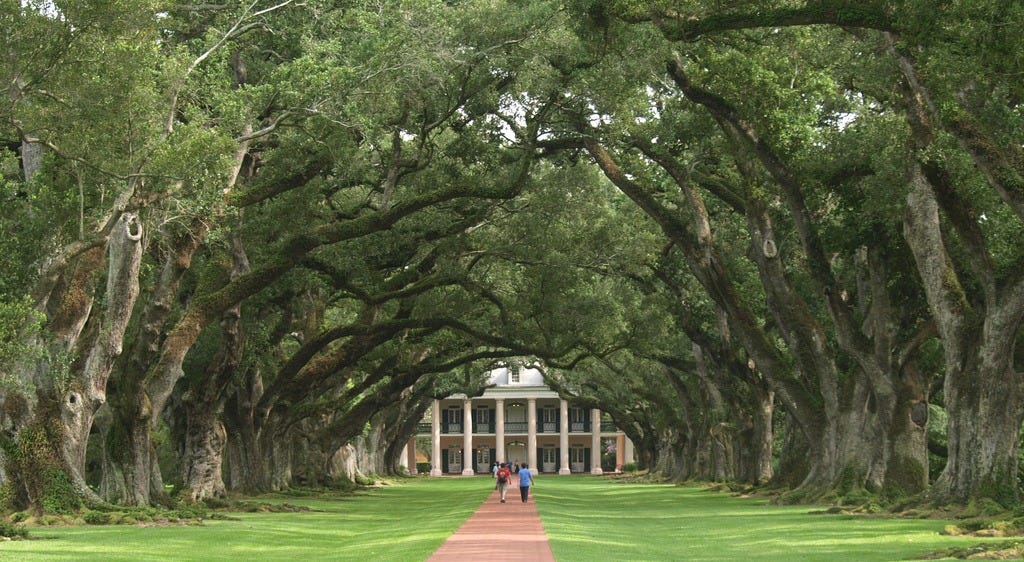
As King Cotton plucked his crown out of the Deep South’s dirt, he too raised monumental palaces hidden behind screens of live oaks and the Spanish moss that dangled from them.
When War came and those houses burned at the hands of Sherman and Sheridan, it was the industrial North’s turn to set the architectural tone. The Livingstons and their peers in the essentially feudal Hudson River Valley constructed vast complexes lining the river, gazing down from overwrought and generally tasteless splendor at the mere mortals on the river below; the money soon left their hands, as did their homes.7
The Valley faded as even those who survived turned to The City rather to their rent rolls to maintain the lifestyles they so enjoyed.8 Joining them in the City were all those who revelled in the new wealth, speculative greed, and piled-up riches of the post-bellum years.
The Carnegie partners, the Vanderbilts, the Astors, and dozens of others—400 all told, famously—wanted to put on a show, and so lavished fortunes upon townhomes as the Whig oligarchy of Britain had once lavished it upon country homes. These were perhaps in poor taste—older, Anglophile families like the Morgans certainly thought so9—but the palaces of the Vanderbilts, the Astors, and their contemporaries reflected the booming prosperity of the Gilded Age in which they lived.
Wealth was being built at a feverish pace, and its accumulators spent it in a similarly feverish fashion, with much of that spending poured into architecture that reflected the times in ways good and bad. The American public—generally apt to see itself as “temporarily embarrassed millionaires” rather than a proletariat10—vicariously revelled in the splendor, riches, and extravagence of the age.
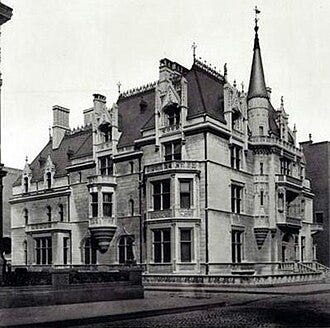
Speculative bubbles are apt to pop, and the popping of the Gilded Age bubble brought with it hard times and hard feelings. Much of this was eventually fixed by President McKinley, but the architecture changed. No longer as exuberant or extravagant, the Neo-Classical, Federal, and even Art Nouveau (though this was primarily European) architecture that characterized the late Gilded Age was far more restrained, far more beautiful, and far more tasteful than that which preceded it. Much as in Britain almost two centuries earlier, a respite from garish opulence and tawdy extravagance led to a better society and architecture that reflected that improvement.
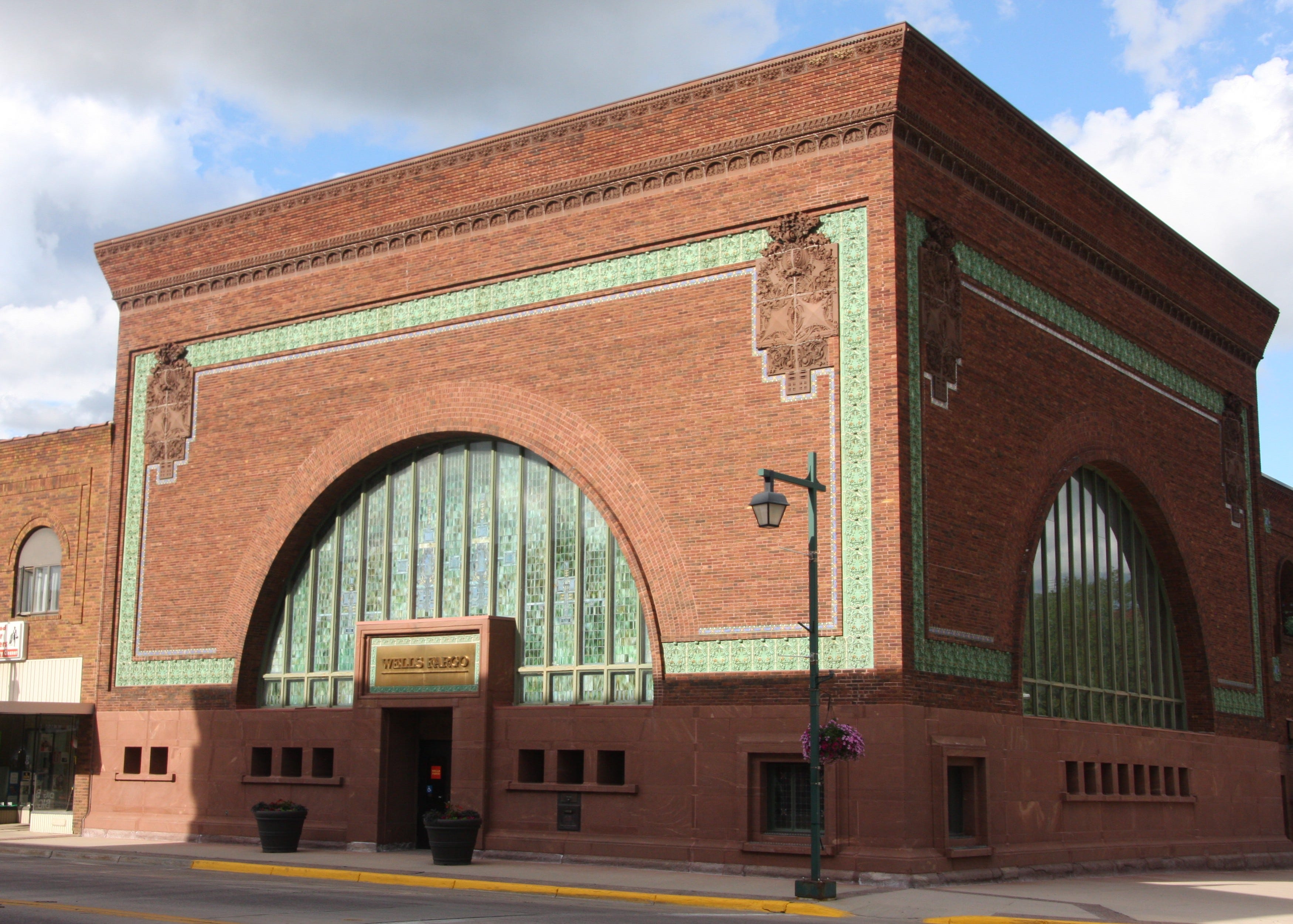
Similar changes came as the Gilded Age gave way to the Progressive Era. Increased government involvement in the economy meant the business environment was more restrained, and the social environment was as well. The days of Astor’s 400 had passed, and been replaced with the steady financial responsibility of men like Andrew Mellon and John D. Rockefeller, the industrialist motivated by noblesse oblige like Henry Ford, and the budding managerial revolution.
This was to be an age of engineers abetted by capital, not capital abetted by engineers. Mellon’s Alcoa Aluminum, the great hydroelectric dams, Herbert Hoover’s rise to fame as a world-renowned engineer,11 and more all spoke to engineering excellence and its preferences, with the prosperous capitalists—many of them heirs—taking a backseat and often distracting themselves with leisure or speculation as the managers and engineers took over the companies.
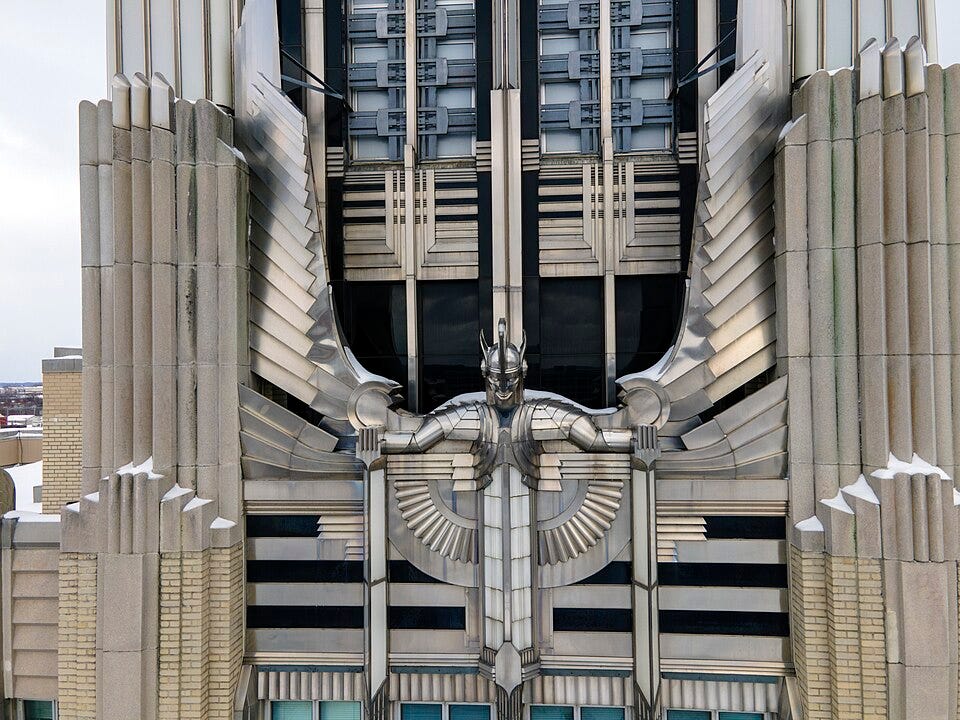
The architecture changed as well, becoming a style that best represented America’s takeover by engineers: Art Deco, a style that glorified the Machine Age and attempted to turn its preferences and materials into architectural beauty that represented a new type of vitality, energy, and prosperity.
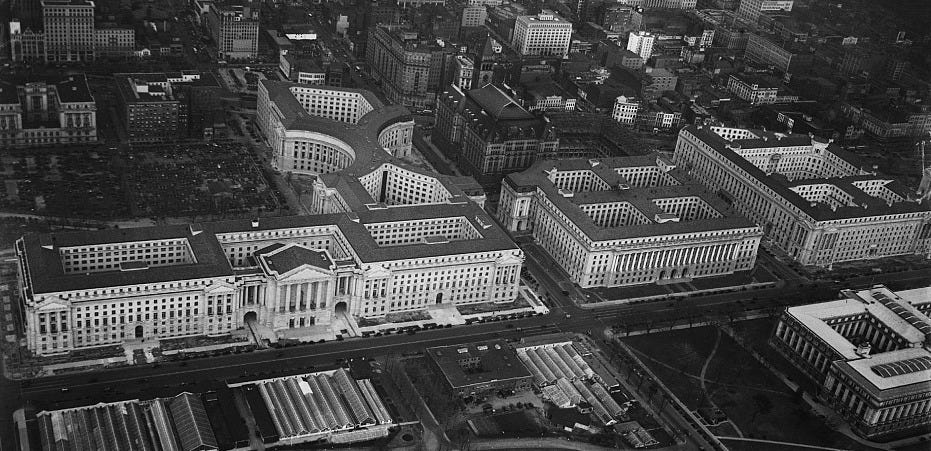
This era saw a mix of styles, as most do. The old guard, men like Andrew Mellon, attempted to use the wealth of the period to clothe America with marble as Augustus had done to Rome. Preferring Neo-Classical architecture, with its restraint and Classical beauty, Mellon tried to use his Federal Triangle project to turn DC into a grand capital city on the Roman pattern,12 updated for modernity. He partially succeeded, but was stymied by the pressures and poverty of the early Depression.
The new guard, meanwhile, built in the Art Deco style and did so in a grand way. Rockefeller Center, the Chrysler Building, and the Empire State Building were all incredible undertakings and built in such a style. So too were the great buildings of the new industrial cities, places like Chicago and Detroit that had risen from dirt to prosperity because of the Machine Age.
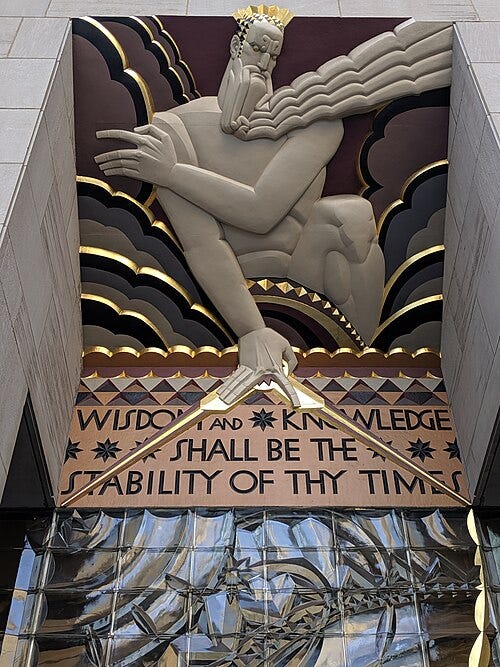
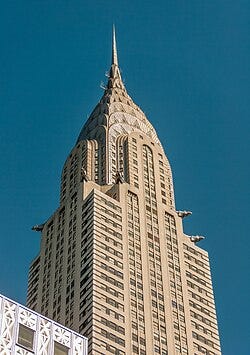
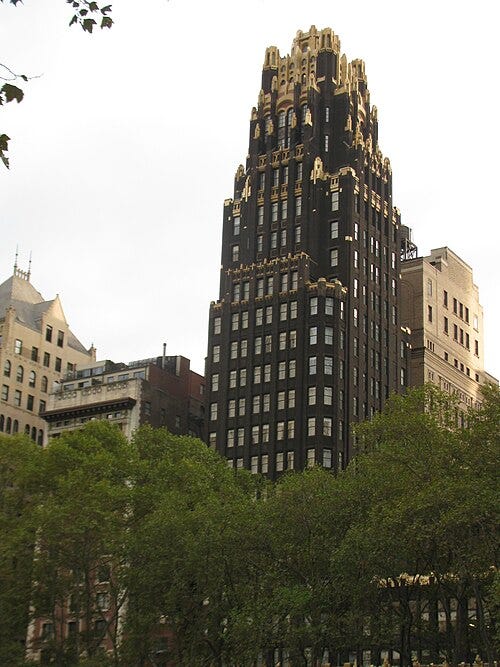
Such was the trend in America. Things were changing, but following traditional patterns. As we became more prosperous and that prosperity stretched back into only foggily remembered times, opulence and exuberance faded into taste, restraint, and beauty. America had always been built in emulation of Rome, and Mellon’s Neo-Classical building would have done literally that in the seat of empire—DC—while our commercial cities remade themselves in a distinctly American style (Art Deco originated in France but was fully adopted and adapted in America) of any grandeur: Art Deco. It could have been a beautiful age.
Then came the Depression, and with it the horrors of FDR’s regime and his spiritual successors. Grand building projects rooted in taste and beauty faded away. As Cannadine notes in his Mellon, the Federal Triangle project was hurled into the dustbin and replaced with that which we know much of FDR-era DC as: gloomy and utilitarian buildings that sit glowering beneath the cityscape, reflecting the dismal bureaucracy they were built to serve.
Modernism and Brutalism, horrific styles designed to disconcert and depress in the name of “efficiency,” dominated the building projects of this era. Office complexes were raised to serve a vastly enlarged bureaucratic workforce, and the sullen nature of those concrete cubes were as much a reflection of that horrid bureaucracy as Blenheim had been of Marlborough.
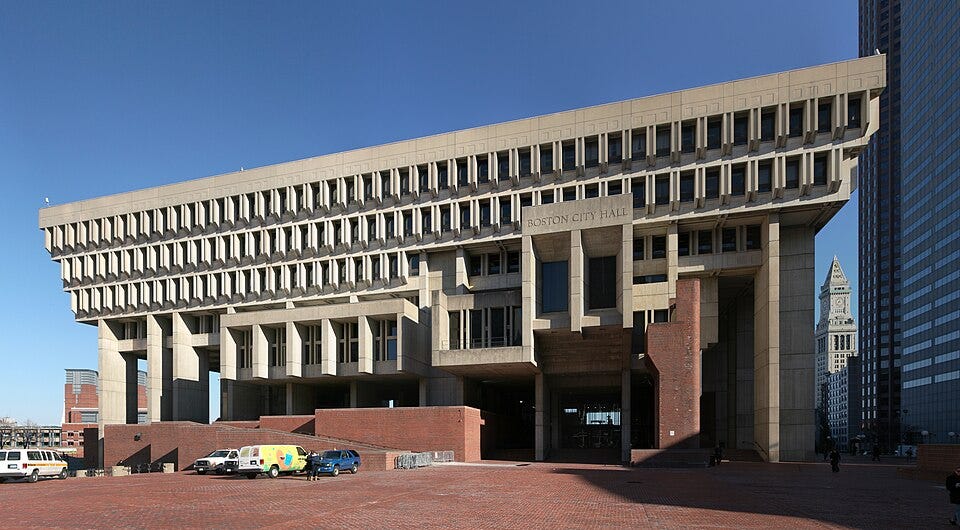
Such continued for year after year. It was a bureaucratic age that lasted for decades, and whether Robert Moses paving over old buildings and replacing them with highways and concrete towers or Detroit being obliterated by white flight as prosperity was replaced with race communist anarchy, the beauty that had been flowering was crushed. Detroit obliterating Immaculate Conception Church after ethnically cleansing the Polish community from the area was reflective of this period.13
Paired with this bureaucracy was war upon the old forms and the men who built them. In Britain, beautiful country houses that had defined the zenith of Anglo civilization were seized and destroyed by a spiteful regime. In America, the city palaces of the Gilded Age families became white elephants thanks to similarly extortionate tax policies, and were mainly destroyed or sold off to become museums and hotels, fading relics of a different era.

By the 1980s, America was muddling out of the architectural malaise that had existed since FDR. But, with taste obliterated by two generations of predatory taxation, stifling bureaucratic tyranny, and prole drift (the gradual drift of everything, culturally, towards that which most appeals to the lowest common denominator)14, what once was remained firmly in the past. America didn’t pick back up with Neo-Classical and Art Deco; it picked back up with…the strip mall, McMansion, and glass tower.
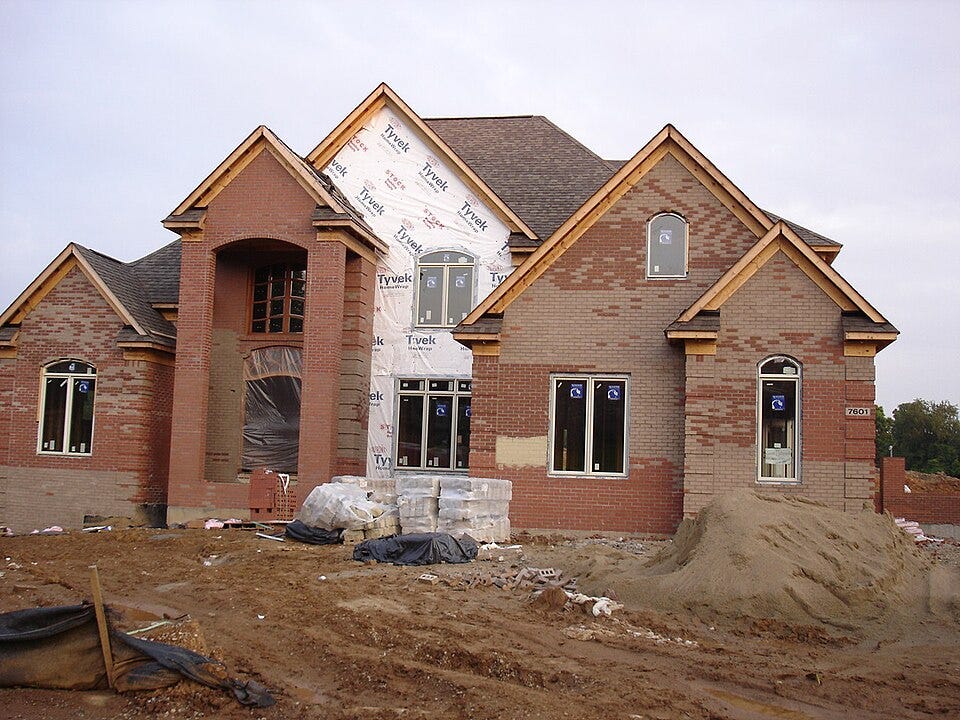
All are essentially Corporate Memphis in architectural form. An attempt to offend no one, to state nothing, to represent nothing other than cosmopolitan homogeneity and its bland discontents while being as comfortable as possible.
Hence the general uniformity in “architectural anarchy” of McMansions everywhere from Houston to Atlanta, San Francisco to New York; rooted in nothing, they are a haphazard and internally disquiting mix of everything, boiled into one pungent soup. What attempts there were to transcend this cultural grey goo, as Tom Wolfe ruthlessly parodies in both Bonfire of the Vanities and A Man in Full, were all in poor taste.

Such was the state of things for many years, another generation or two of hubris and opulence made all the worse by their being utterly divorced from past traditions and their organic outgrowths; at least Alva Vanderbilt’s monstrosity was trying to represent something, gaudy as it was.
But then something shifted. Perhaps, as with the crashes of 1873, ‘84, and ‘93 reigning in excess and producing beautiful Neo-Classical architecture, it was the crackup of the supposed “masters of the universe” and titans of tech in the DotCom Crash and Great Financial Crisis. Perhaps it was just general disgust with the architecture of nothingness.
Whatever the case, it culminated in President Trump issuing an Executive Order on architecture in his first term.15 Under the EO, new federal buildings were to be built in beautiful, traditional styles. Namely Neo-Classical, Greek Revival, and Federal, along with regionally appropriate styles like Spanish Colonial and Georgian. None were to be built in the Brutalist or Modernist styles. As the order noted, Brutalism and Deconstructivism are “ugly and inconsistent” with American civic dignity. Predictably, this set off cries of “fascism” and the like. Only a fascist would dare surround himself with beauty rather than dismal squalor.
Biden, predictably, rescinded the order and demanded ugliness to fight fascism. “A dumpy pile of concrete will teach them to dare oppose technocratic, neo-liberal mass democracy,” one can imagine a McKinsey-trained, transgender Biden staffer shouting before wandering off to steal some traveller’s luggage.

Now the beauty orders are back, this time with his “MAKING FEDERAL ARCHITECTURE BEAUTIFUL AGAIN” EO.16 And it was passed early enough that we will get to see some results. In fact, the first one is already planned: the new federal courthouse in Chattanooga, TN, will be built in a variation of a style called Greco-Deco. Relatively new, particularly this variation of it, the style merges strict and symmetrical proportions of Classical Greek and Roman public buildings with the bold, geometric reliefs of Art Deco.
It fuses the two things that are greatest about Heritage America—our intentional classical roots, and our bold desire to always surge onwards and upwards. It mixes boldness with tradition, grandeur with taste, style with severity. Yet further, the square fluted columns—themselves an example of how Greco-Deco mixes severe Art Deco styles with Classical design elements—are crowned with custom capitals inspired by the iris, Tennessee’s state flower. Here’s a mockup of it:
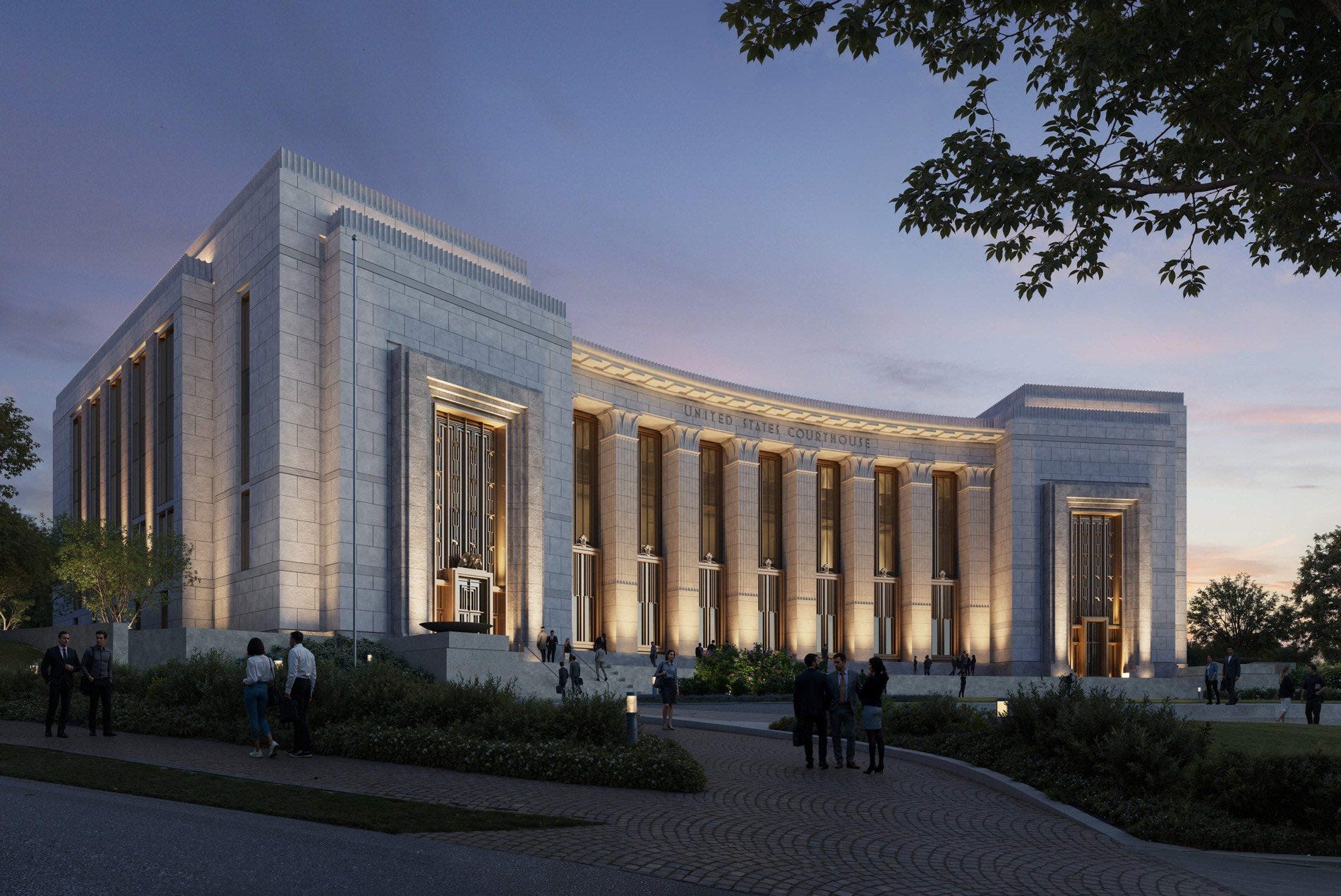
This is the architectural style of American renewal. It is new, bold, severe, and dominating while also being beautiful and a way of tying us to tradition. It is powerful, and so CNN is already calling it fascistic;17 a slur we’ll have to get over to move forward.
If this century is to be ours, this is the style for it, much as Palladian architecture was the perfect form for its day in Britain, and the Georgian country seats of the Virginia gentry were perfect for their world.
This building, this new courthouse, located in a relatively conservative city in a deep red state, is a shot across the bow of the architectural regime that has existed since FDR. It is not just a return to beauty, but a symbol that the damning chains of equality and humility enforced at bayonet point that have so long held us are being broken and will not be reforged anew.
The striking grandeur, stone solidity, and seamless blend of old and new are complemented by little elements—such as the state flower—to tie it to a specific place rather than blend it into globalist cosmopolitanism’s desire for utter homogeneity in the name of offending none, and those elements combine to stand as a stone-built rebuke of the now-fading order.
They are a sign that renewal is upon us, if only we can build it, and that the upswing is here. The malaise is over. The anarchy is over. The disorder has been overcome by blocks of monumental stone, and ugliness vanquished by men with taste imposing their will on the world to make it a beautiful and ordered place.
Architecture always has meaning. It cannot be faked, for it is a reflection of the soul and its state. The meaning of this is that things are looking up for America, and greatness can be reforged if only we grasp the opportunity. Either Greco-Deco will grace the surface of Mars, or endless variations of the Obama Library will blight the Earth. The time to choose is here.

As he puts it:
Nothing happened in a vacuum or was a question of pure ideas, and not even the Athenians were conducting a theoretical experiment into the ideal constitution and society. Instead, they were trying to work out how their city could become as powerful, prestigious, and rich as possible, competing with other communities when it came to trade and military dominance. The theorising came later, and the reformers who shaped these political systems were concerned with the here and now and with the immediate future, with no real thought for what others might think two and half millennia later. Athenians celebrated their democracy because Athens flourished and became strong under it. In the same way, the Athenians' greatest and most famous monument, the Parthenon, celebrated the glories of their city and its democratic system, not some abstract sense of Hellenic culture. While in design and decoration this monument-at which we still marvel today-drew upon concepts and taste shared with other Greeks, it was meant to parade the glory of the Athenians as greater and better than everyone else.
As noted by Lawrence James in Aristocrats:
Always the aristocracy were straining after the sublime. It was achieved through the satisfaction of the senses and the engagement of the intellect. Beyond the house, the eye and the mind were pleased by prospects of nature brought under human control to provide agreeable walks and idyllic vistas. Inside were paintings, sculpture, ornaments and collections of rarities and curios which aroused the imagination and stimulated conversation. The ensemble of house, contents and grounds were the highest expression of a civilisation which promised to surpass its Greek and Roman prototypes.
The great house and its surroundings were statements of political and economic power. They represented stability, the security of property, dynastic continuity and dominance of the landed interest. All were underpinned by the Glorious Revolution of 1688-9, which had ended fifty years of political discord and uncertainty to discourage building on a grand scale. Aristocratic confidence returned and expressed itself in a grandiose manner; Chatsworth, Castle Howard and Blenheim celebrated tranquillity restored and the Whig ascendancy.
As Winston Churchill notes in his Marlborough:
For two hundred years, during which the sway of Britain became world-wide, we were ruled by an oligarchy. Although the population was but an eighth of its present numbers, there were probably under Anne twenty persons of consequence and of independent standing who had to be considered for every one who counts to-day. On every side were magnates, authorities, and institutions conscious of their rights and duties, and resolute to defend them on every occasion.
As Lawrence James notes in The Iron Duke:
All that today we most admire about eighteenth-century Britain, its architecture, music, landscape gardens, literature and scholarship, owed their creation to the patronage and taste of gentlemen. Their country houses still dominate the countryside and convey that same sense of eminence, pride and certainty about one’s position in the world which distinguish the faces portrayed by Gainsborough.
Wellesley inherited this patrician self-confidence and cultivated a sense of reserved self-possession. This was founded on his unshakeable conviction that only men of his temper were fit to govern Britain. He told Croker in 1833 that ‘the aristocratic influence of the landed gentry’ was the only guarantee of just and honest government. Furthermore, he insisted that the Anglican clergy, who were ‘the best educated gentry in the country’, were the natural disseminators of ‘piety, morality, good manners and civilization’.
Lambert notes:
Britain, like Athens, Carthage, Venice and the Dutch Republic, became a seapower by actively constructing a cultural identity focused on the sea. This process was driven by political choice, as the men in power used state funds to build sea control navies and the bases they required, ensuring ships and structures conveyed the core message of seapower, through naval and terrestrial architecture, carefully chosen names and religious affiliations. They built maritime temples, which served as prominent seamarks and navigation beacons, and embellished their public spaces with the art of seapower – creating distinctive cultural forms to express their divergent agenda. This consciously crafted identity spread beyond political elites and interested parties: it flowed into popular culture, pottery, coins, graffiti, books, printed images and by the 1930s cinema. That many of these outputs were sponsored, endorsed or otherwise sustained by the state emphasises the national significance of the project.
Lambert notes:
The Parthenon complex, Carthage’s Circular Harbour, Amsterdam’s Dam Square and massive naval magazine, along with the highly elaborate approach to London along the Thames – the Fortress at Tilbury, the Dockyard at Woolwich, crowned by the Baroque magnificence of Greenwich Palace – addressed the same agenda. All five seapower states created architectures of maritime power, aggressively connecting maritime trade, naval might and secular identity.
Clare Brandt, describing the family’s downward trajectory in her The Livingstons: An American Aristocracy, notes:
Across the lawn from Clermont, in the Chancellor's house, stewardship was also on the rocks. The widowed Robert L. Livingston, an affectionate but improvident father, was paying for his daughters' winters in town and his sons' tours of Europe by selling off land. Generous to a fault, he loaned money to friends and relatives with no prospects and invested in abortive business ventures. Meanwhile, the Chancellor's magnificent mansion was becoming decidedly shabby.
…
Of these splendid nineteenth-century Livingston riverfront establishments, Rokeby and Montgomery Place were the grandest of all (too grand, some of their owners' cousins might say, preferring simpler pleasures). But at the moment of their greatest glory many of their cousins' estates were tumbling into degradation and ruin, most notably the once preeminent Chancellor's house. The Livingston mansions on their narrow shelf of the Hudson's east bank—having lost, as it were, their ballast: the vast inland acres of Livingston Manor-seemed more in danger than ever of tipping into the river. It may have been emblematic that the ironworks at Ancram, once the cornerstone of the family's financial edifice, was sold in 1845 on foreclosure.
Brandt notes:
No Livingston was in a better position than Johnston to appreciate that American society and business were undergoing a process of fragmentation.
Old business alliances, formed over generations of kinship and mutual trust, were being replaced with short-term arrangements of simple expediency; and dynastic marriage, based on communal interest and mutual affection, disappeared in favor of the mariage de convenance. In short, the values of family were giving way to the demands of the profit motive. New people and new wealth rubbed at society's old outlines until they threatened to disappear. Because Johnston was himself a part of this new world and in many ways a participant in the process, his appreciation for what was being lost was all the more poignant-and he was prepared to defend his place in the old order, tooth, nail and pedigree. Johnston Livingston existed, reasonably successfully, in two worlds.
First and foremost, he was a Livingston of Livingston Manor (the fact that the manor no longer existed was, in the social context, irrelevant). Secondly, he was a realist, who sensed much more clearly than his Clermont cousins the way the economic winds were blowing. He launched himself into the business world outside "Livingston Valley" in order to maintain his estate and his position in Livingston Valley.
This is covered some in The House of Morgan. JP Morgan, wealthier than many (though far from all) of the Gilded Age’s new men, detested the gauche style of the new city palaces. He preferred his outwardly restrained, though internally opulent, brownstone.
“John Steinbeck once said that socialism never took root in America because the poor see themselves not as an exploited proletariat but as temporarily embarrassed millionaires.”
― Ronald Wright, A Short History of Progress
Herbert Hoover: A Biography covers this some and is quite good
Covered well by John Carter here:

Paul Fussell came up with this term in his magnificent book Class
John Slaughter has a great article on it:

“According to Kevin D. Murphy, a professor and chair of history of art at Tennessee’s Vanderbilt University, the new design evokes a version of 1930s classicism ‘associated with fascist states.’”
https://www.cnn.com/2026/06/12/style/chattanooga-courthouse-trump-federal-architecture
I must say however, that I do enjoy all the pseudo-medaeval, Renaissance and Gothic hybrid constructions so common in the age of the robber-barons. Some contain components sailed brick by brick over from Europe, reassembled in impossible configurations. Gilded Age architecture does have a certain haunted, yet noble character, particularly in semi-abandoned mining districts in the Far North. A red imitation castle constructed from Jacobsville sandstone overlooking a copper-green lake at the bottom of the ancient mine now overgrown with lodgepole pines is the face of the Lost Cause of the North
Really excellent. Thanks for a great read and a resounding battle cry.