


Listen to the audio version of this article here:
![[AUDIO] How We Can Reject and Reverse Prole Drift](https://substackcdn.com/image/fetch/$s_!IVSI!,w_140,h_140,c_fill,f_webp,q_auto:good,fl_progressive:steep,g_auto/https%3A%2F%2Fsubstack-video.s3.amazonaws.com%2Fvideo_upload%2Fpost%2F215567743%2F1ab0d453-3962-46ba-bbf5-f6a184aac781%2Ftranscoded-1789337653.png)
Pictures and videos from the past are radicalizing. That is not just because they show a different world. It is that they present a picture of a very different world that is nevertheless one we still see glimmers of today, and thus is a world we still could have if only we had better defended that which used to exist. We still have many of the buildings it created, from the country houses of England to the magnificent Art Deco skyscrapers of America. We even still have some of the clubs, social events, and so on that the men of those days started.
Yet everywhere there is an odor of decay. Clubs aren’t quite the same when the dress code grows lax, and more and more wives show up with dyed hair and plastic surgery alongside fat husbands with spotty beards wearing rumpled, untucked shirts. Art Deco buildings can be awe-inspiring, but are noticeably less so when some vagrant sits out front of them blasting mumble rap on a Bluetooth speaker as he hawks counterfeit luxury goods. Modern art is added to older architecture to create the same dispiriting, disquieting effect.
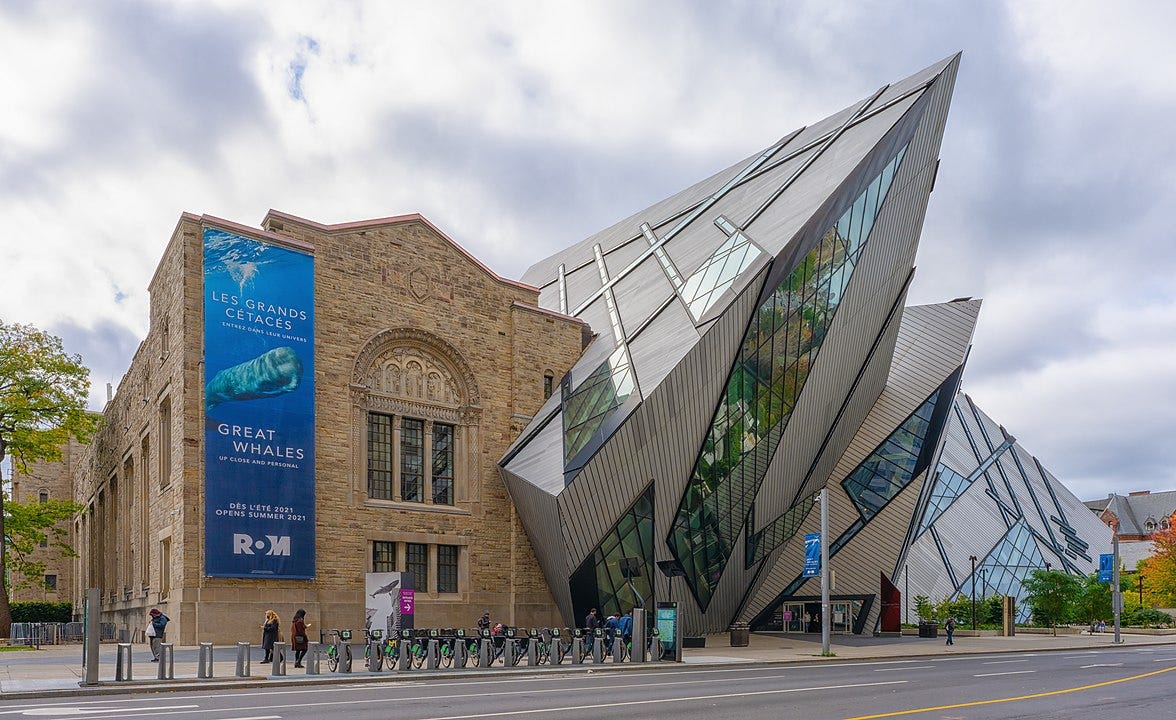
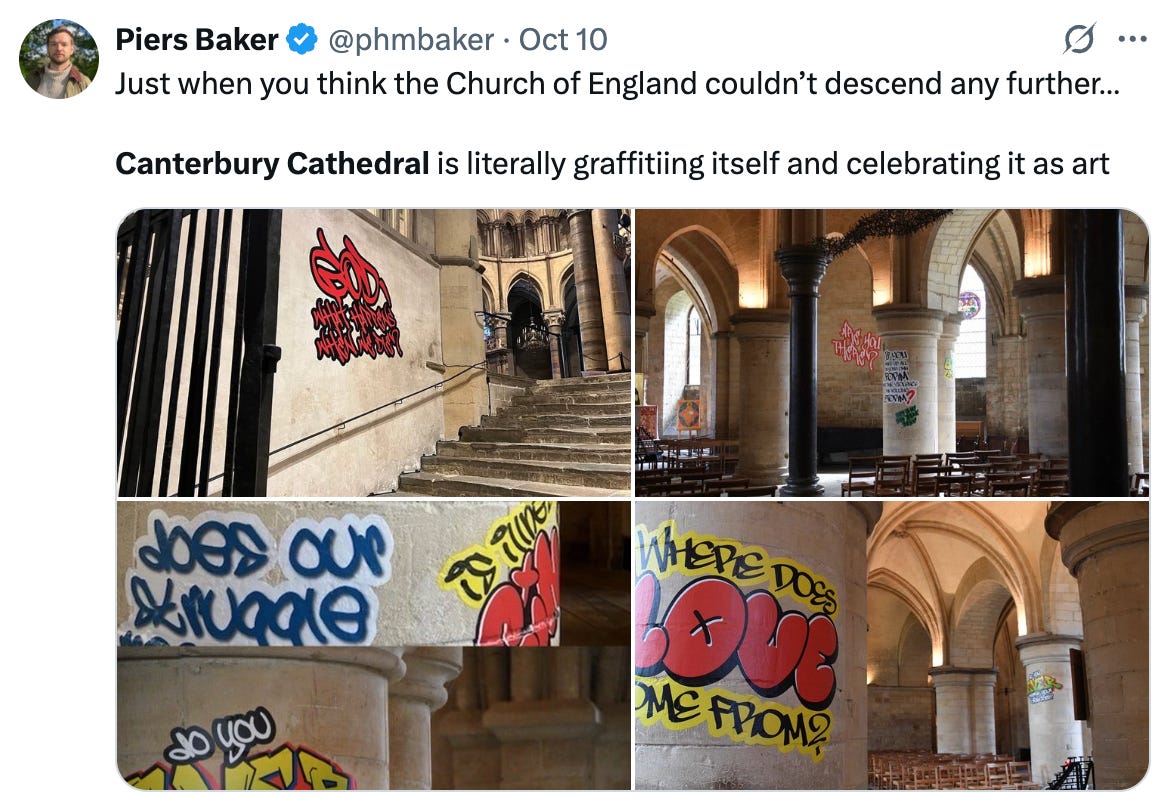
And that is the decline present in those few places that have tried to hold onto the old world somewhat.
Most have just given up, as one can be reminded of by taking a trip to any American mall or airport. It is chaos rather than order, slovenliness rather than beauty, and comfort rather than cultivation that have won out. Waistcoats went the way of the dodo and suits are following them, while pyjamas and tracksuits grow ever more omnipresent.
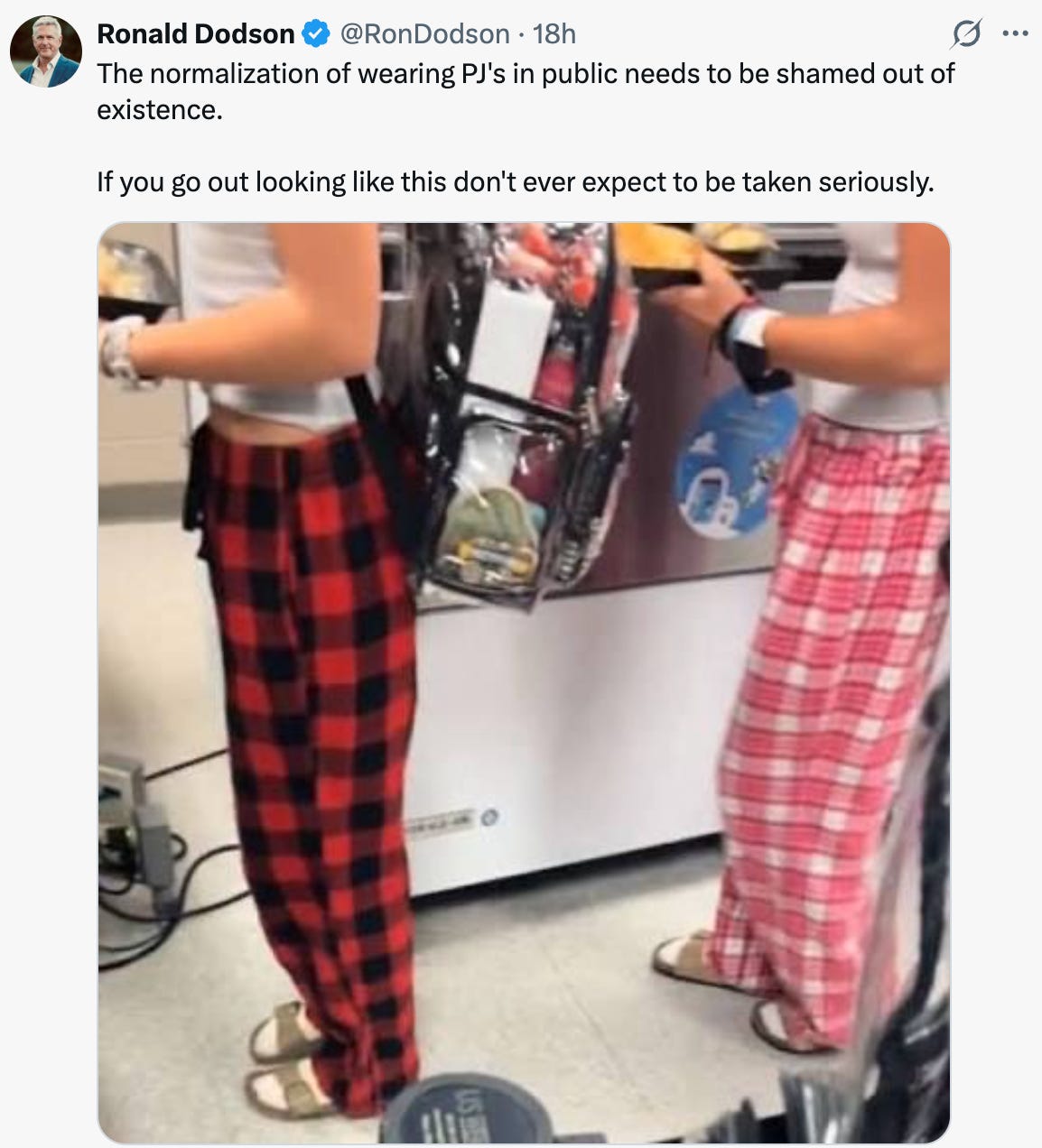
Paired with that is a vague sense of “self-expression” being important, but only being something one can accomplish by shocking observers. Hence the proliferation of men in cargo shorts and graphic tees waddling around next to women barely clothed in spandex or pyjamas and covered in piercings and tattoos. Not quite the world that used to exist, at least out in public.

This is the world of prole drift, as Paul Fussell wrote about in Class, as I recently covered in some depth.
In response to that article, many asked me how I think we can fight back against prole drift and either ameliorate it or reverse it.
The simplest answer is this: prole drift is the process by which base impulses are put before the little things that build and maintain civilization. Comfort, a gaudy desire to tastelessly display riches, and unrestrained lust drive much of the degradation in aesthetics, spirit, culture, and morals that we now face. The proper response, then, is to find ways to reject that and to do the opposite. To put refinement, cultivation, and order first. Or, to put it more bluntly, to put that which must be developed before primal instinct and base urges.
That is a very broad agenda, and could be achieved any number of ways. In this article, I’ll give five concrete examples and explain why they are important, in the hope that the general mindset behind them and explanation of them proves useful in helping readers push back against prole drift in any way that they are able.
Rejecting and Reversing Prole Drift in Five Steps
1. Bring Back Beauty
As I discussed in my recent article on George Washington’s rules of civilized behavior, Washington is a marble-like figure who stands out as a different sort of man. Whereas others are personalities or personages, if even that, Washington was one of Plutarch’s men and was recognized as such in his day, as he still is in ours. He and his dignified face—an expression he cultivated and was very intentional about holding—stand out across history as being one of the last great examples of a republican aristocrat of Classical days brought to life.
Aiding him in cultivating the dignity that he had to acquire to become so remarkable was the exceedingly intentional approach he took to his appearance. He always ensured his clothes were appropriate, properly tailored, accentuated his form, and helped him create the impression of being a topping man who was excellent in every way; Leftists still hate him for this meticulous approach1 to his outward appearance, as it smacks of rejecting the anthill in which they want us all to live. And so they denigrate him and his style, claiming he was merely vain and self-obsessed.
But it was not vanity that drove Washington. For example, after the War for Independence, he made a point of wearing American broadcloth to support American industry. The silks and satins of Europe were certainly nicer, but showing his patriotism through his dress in a dignified way (he would have found an American flag t-shirt repulsive) was important to him. But even then, what he wore was finely tailored, well-fitting, and exceedingly dignified. He understood that “The purpose of fine dress and living is to project taste, beauty, order, care, and hierarchy out into one's community, that they might be inspired to pursue the same virtues,” as Johann Kurtz put it in Leaving a Legacy.
While few were as meticulous as Washington, that concept was generally understood in his world. Richard Henry Lee made sure to use his appearance for dramatic effect during his speeches, the British redcoats maintained their stifling woolen uniforms in hellishly hot environments like India to impress the natives, and Sir James Brooke famously used his flag and yachting uniform to impress the natives of Sarawak into submission.
Today, most lack such an understanding. Now, dress and appearance are generally seen not as a way of projecting uplifting virtues and creating a certain positive environment, but as a way to indulge in self-expression while being as comfortable as possible. Hence the proliferation of graphic tees and sweatpants in the airport.
That decline in the general appearance of society is one of the clearest visible signs of prole drift, as it is the very attitude the old world rejected wholesale.
In the past, participating in the elevation of society through maintaining a dignified appearance was seen as a near-sacrosanct duty of every civilized person. Dr. Ronald Moore put it in From White Gloves to Tattoos: How America Lost Its Public Grammar: “From the late 19th century through much of the 20th, American society operated with a common assumption: Public life requires elevation. Clothing was not merely personal—it was participatory. One dressed not only for oneself, but for the world one inhabited.”2
What’s more, this attitude applied to more than just dress. As Nasaw writes of this period in The Chief, Harvard gentlemen were taught that it applied to everything from fine art to furniture. To those men, “A well-ordered, well-decorated, and artfully furnished residence was an antidote to the disorder in the world outside. It soothed the soul, mended the spirit, and improved the character.”
That matters. Beauty is under assault, and is fading as ever larger segments of society succumb to prole drift as it applies to dress and appearance, forgetting that “beauty is one of the chief battlegrounds of the West,” as Chase Davis notes in Offensive Christianity.3
To indulge in one’s appearance-connected appetites—which in terms of dress typically means to embrace some mixture of comfort, sloth, and encouraging unrestrained lust—is a dereliction of duty. That duty is to set the standard. To uplift. To elevate those around, and show “the unity of virtue and status, duty and reward.”4
So, how can that be done?
For one, simply dressing well in a way appropriate to the environment is key, as I wrote about in the two articles below. The general rule of thumb is that dress ought always be as refined as is appropriate, without giving way to vain frippery. It should be dignified, fit well, and be uplifting rather than looking terribly out of place.


The same attitude ought be applied to everything else related to appearance, with the basic idea being this question: does the environment and impression that you have created serve as a beautiful antidote to disorder that uplifts rather than confuses, disconcerts, depresses, or shocks? If so, you are succeeding.

But that is just at the individual level, and more must be done. After all, this is an all-of-society problem related to behavior and appearance in the public sphere. So, look for ways to push back against the decline in decorum of dress and appearance in public life that has come with prole drift. Here are a few examples
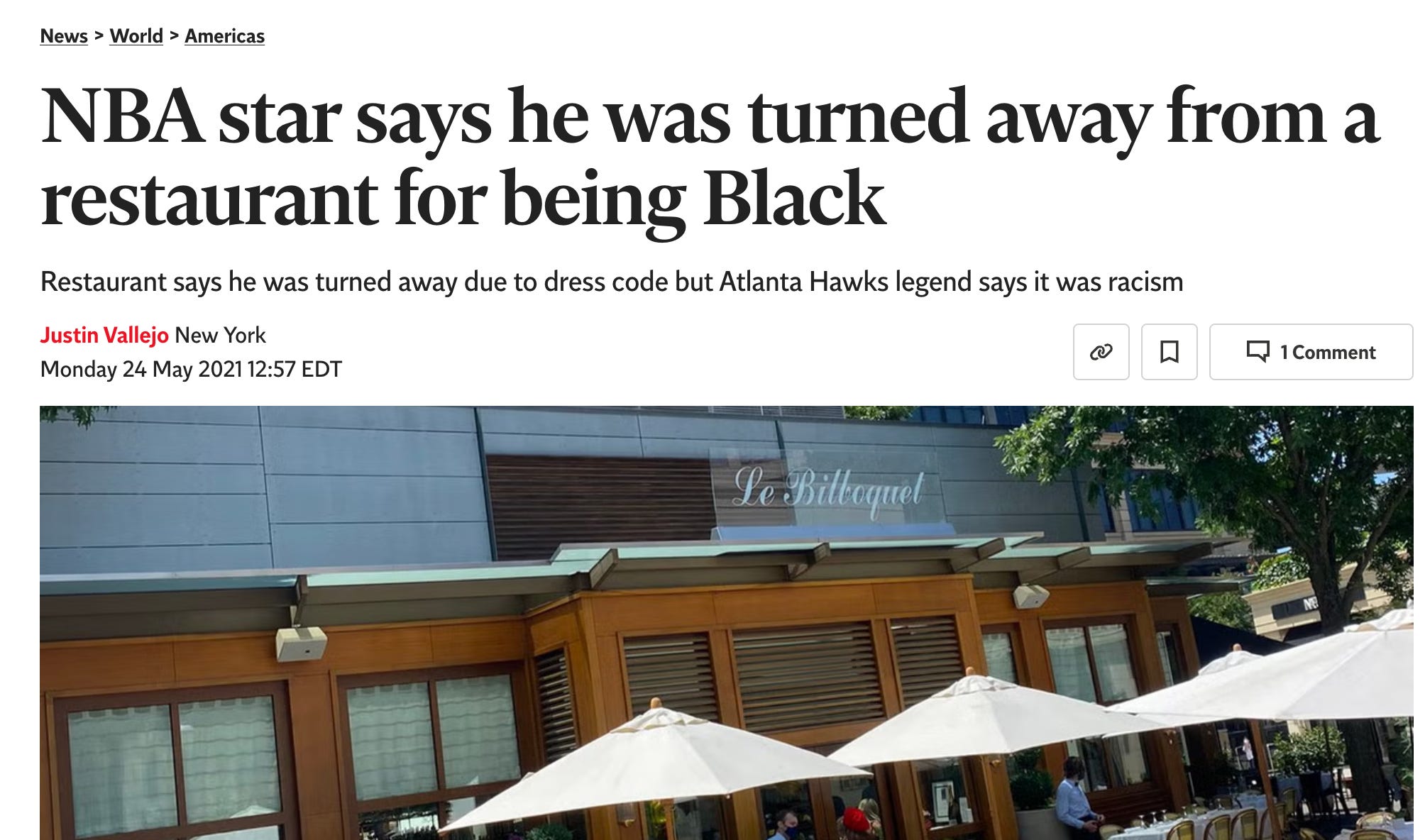
Are there restaurants in your area with a dress code, such as coat and tie, that they still enforce? If so, patronize that place! Are you a member of a club that has a nice dining room rather than just another grill in a bar with TVs showing sports? If so, patronize the nice dining room! Is there a church that still preaches the Gospel faithfully and encourages parishioners to wear their Sunday best? If so, attend it! And, of course, both encourage your friends to do so as well and appear appropriately as you do so.
What nice things are left that still contribute to a sense of victory over disorder and cultivated beauty rather than base comfort are rare. When they enforce the rules, they are often accused of “racism”, or something similar. If we do not patronize them and support them in their defense of the rules of decorum, they will fade away…as has already happened, to a great extent.
So, in conclusion, do the modern versions of what Washington spent many of his 110 rules describing. Avoid tattoos, dress well, stay well groomed, and support those places that still help cultivate such an environment. Failing to do so is to allow prole drift to continue winning a monumental victory in the public sphere, and to prevent that, we all must be the change we wish to see in the world.
To see the remaining four suggestions and the explanations for them, please become a paid subscriber. As a reminder, if you become a paid subscriber, you get access to: every article, audio versions of every article, the transcripts of my history videos, and the ad-free versions of my history videos. Please consider becoming a paid subscriber to support my work, if you are not already. Thank you!
