


Welcome back, all, and thanks for reading! The past few articles have been somewhat depressing, so I wanted to stick to something lighter for this one, and probably will for Friday’s as well. So, I hope you enjoy this, and get something out of it. As this is a book I always recommend, I figured explaining why I always do so would make for a good article. If you’d like a deeper dive into a historical subject, check out my recent, ~1 hour long The Old World Show episode on Captain John Smith, the adventurer, Turk fighter, and explorer who is America’s first great hero. As a reminder, paid subscribers get access to ad-free versions of those episodes, along with an article version of the episode, and audio versions of these articles. Thanks again for reading!
![[AUDIO] The One Book I Always Recommend](https://substackcdn.com/image/fetch/$s_!ZM0X!,w_140,h_140,c_fill,f_webp,q_auto:good,fl_progressive:steep,g_auto/https%3A%2F%2Fsubstack-video.s3.amazonaws.com%2Fvideo_upload%2Fpost%2F198443307%2F0ca25e9a-fbcd-4dc6-bdb6-944f3ae26cac%2Ftranscoded-1779213333.png)
One significant challenge on the right is developing and promoting an attractive and positive vision of the world we wish to establish.
The tactics used to arrive at a better future aren’t hard to discern; they existed for most of our history and are still generally in use in Singapore. Capital and corporal punishment, relatively low taxation, limited regulation of business activities and practices that aren’t anti-social, placing limitations and safeguards upon mass democracy, and the like, all work quite well at creating a situation more conducive to human flourishing than that which we now have.
But that is only part of the battle. Hanging criminals, euthanizing pit bulls, and cutting death and income taxes is well and good, but hardly the end goal. Those are mere tactics used to arrive at it, and to create the sort of high civilization that is conducive to human flourishing. One that is beautiful, charming, vital, and refined. One in which the great can excel, and achievement is praised rather than damned. One full of the James Brooke-style swagger that comes with civilizational confidence, and the individual excellence to make such swagger something other than a stunt.
Such is not the civilization we now have. Instead, we are a civilization characterized by the sort of people who kneel before the golden casket of an overdosed fentanyl addict because career criminals and race communist hucksters demand as much.
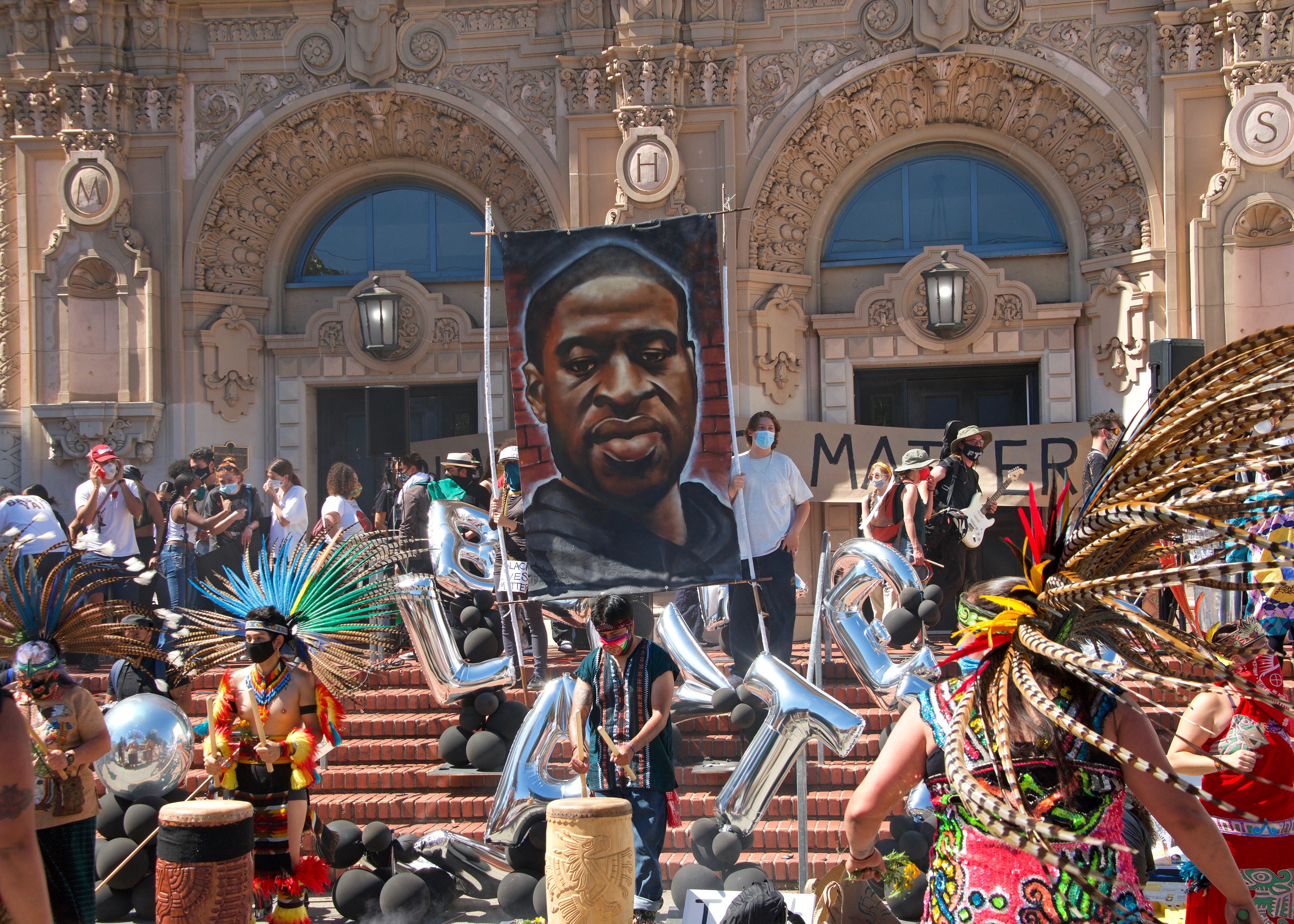
Such a civilization is not one capable of colonizing Mars, or even building a railroad in California. The civilization that used to exist could do so, but not the one that now exists. Yet further, even if we can identify what issues there are that prevent us from doing so, we largely struggle to articulate what the corrected world could and would look like…other than that it could build railroads, hang criminals, and so on. The spirit, vitality, aesthetic, and general “vibe” are all missing and difficult to describe.
Such is a problem, for presenting an attractive and positive vision of towards what we ought be headed is as important an aspect of politics as the tactics used to get there, if not more so. If we just mindlessly put one foot in front of the other, it’s unlikely we’ll end up where our hearts wish to go. As with everything, intentionality and direction are required—not whims and unrefined instinct.
It is for that reason that, whenever there is an opportunity to do so, namely when book recommendations are asked for or the opportunity otherwise arises, I strongly recommend people on our side of politics read Charles Emmerson’s fantastic 1913: The World before the Great War.
In it, Emmerson does something fantastic. He uses 23 cities across six continents to paint a picture of what the world was like before the Great War destroyed our civilization. For those interested, here are those cities, organized by subject as he organizes them in the book:
Europe’s Imperial Capitals: London, Paris, Berlin, Rome, Vienna, and St. Petersburg.
The American Metropolises: Washington, D.C., New York, Detroit, Los Angeles, and Mexico City.
The Global Frontier & Empires: Winnipeg, Melbourne, Buenos Aires, Algiers, Bombay, Durban, Tehran, Jerusalem, Constantinople (Istanbul), Peking (Beijing), Shanghai, and Tokyo.
Importantly, he doesn’t do so from a place of premonition, pointing to all the little signs that war was to come. Nor does he do so from a place of scolding leftism, criticizing the Old World for its flaws and supposed hypocricies, as Barbara Tuchman largely does in The Proud Tower: A Portrait of the World Before the War, 1890-1914. Instead, he paints an attractive picture of a world that, despite its flaws, was a beautiful, confident, and vital one.
As he puts it, “A European could survey the world in 1913 as the Greek gods might have surveyed it from the snowy heights of Mount Olympus: themselves above, the teeming earth below.” What his work shows is why that was, and what sort of world that looked like in practice.
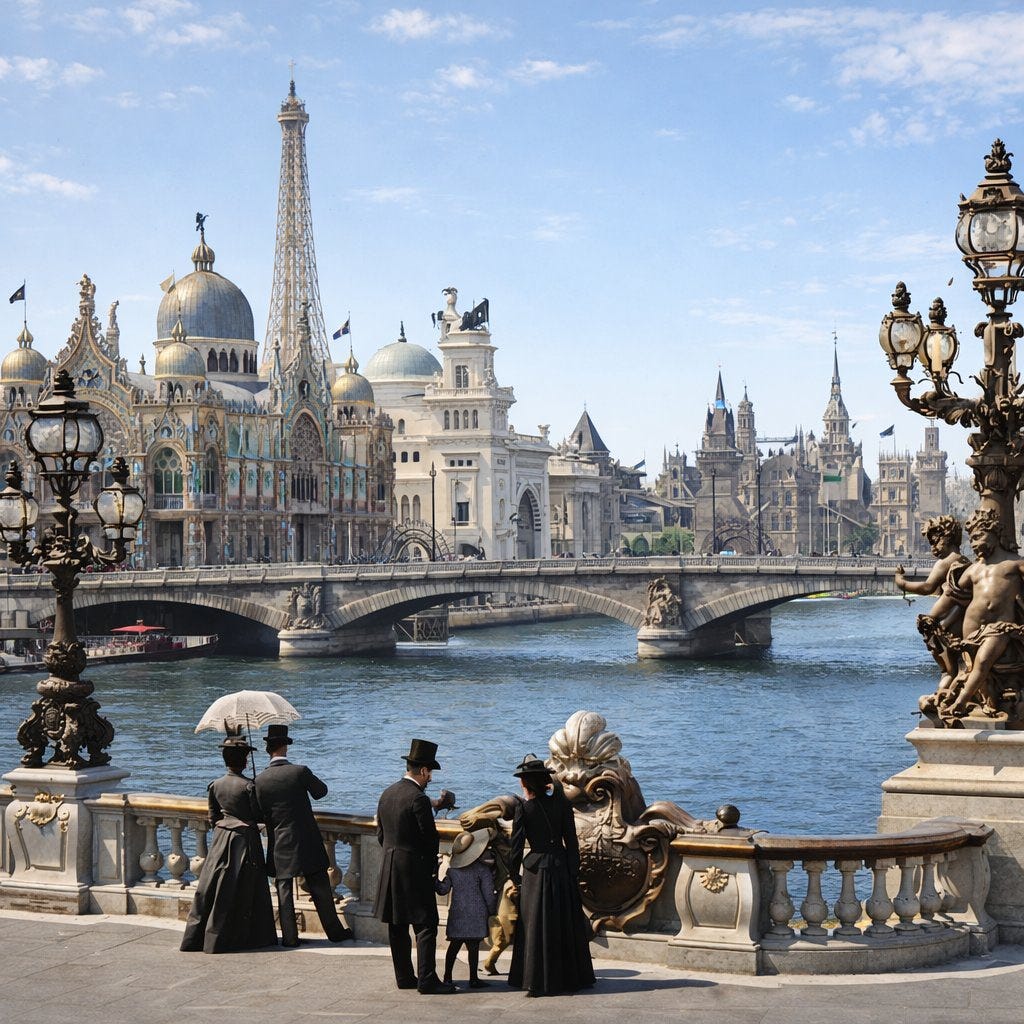
What one gets is a vividly painted picture of a different sort of life. One in which the best men were largely the ones in charge. One in which those best men used what power they had for the benefit of their nations, their colonies, or even just their cities. One in which the sort of people who thrived were the ones who were prudent, capable, and intentional about putting their talents to good use. One that hummed with the pulse and spirit of its own explosive vitality at the same time as it remained focused on civilizing itself and using cultivation and refinement to continue marching in the right direction, that of prosperity and human flourishing.
Notably, this worked. The rich got richer of course, but so too did the workers. As Russel Kirk notes: "During the first sixty years of the nineteenth century, the income of the laboring classes, per capita, rose so greatly that by 1860 it equalled the total income of all classes in 1800—as if, in 1800, the entire wealth of Britain has been divided among the laboring people. And the process has continued. In 1880, the income of the laboring class alone was equal to the income that all classes had received in 1850." Similarly, he notes of the remainder of the century: "The year of Queen Victoria's death, 1901, also marked the end of Victorian economic progress. Real wages, rising fairly steadily since 1880 (increasing by a third, altogether, during twenty years reached a plateau shortly after the turn of the century." Meanwhile, civilizational refinement continued apace, and it was in this world that many of the architectural and artistic marvels we still gawp at and view as clear examples of high civilization came into being.
It was not a world for a welfare class to enjoy a life of repose funded by taxpayers, nor a place for either the dissolute or incompetent. It was a world largely without a safety net, one in which even the high and mighty could find themselves out on the street after a few poor financial decisions. It was a harsh world, one as uncompromising in its treatment of surly colonial natives or the domestic improvident as it was rigorous about its architectural and artistic principles. Such was not a place for the horrors of modernism and Brutalism, nor the egalitarian mindset that led to them. It was a world of excellence and greatness, not a den of equality.
And out of that stern and rigorous application of civilizational standards—principles, policies, and norms that required excellence and prudence for continued success—came practically everything we now find useful. Electric lighting.1 The car. Structural steel.2 The toilet and modern sewage infrastructure. The airplane. The telephone. The radio. The railroad. Recoilless artillery, high explosives, and smokeless powder—along with the revolvers, repeaters, and Maxim guns that utilized it and allowed flying columns of Europeans to conquer the world.3
In case after case, practically everything on which we now rely was invented then. Those inventions came because the great men behind them knew that such innovations would be rewarded by the market, by their patrons, and sometimes even by public honors. And so Armstrong got a title,4 Edison became a national hero,5 the Wright brothers remain synonymous with American ingenuity,6 and the building of the transcontinental was covered with the same ecstatic attitude sports are today.7
It was a period of triumph over natural forces, spurred along by the sort of men who knew they could accomplish such things. knew they should accomplish such things, and so did them.
This spirit is a driving focus of Emmerson’s work. Whether the rebuilding of Chicago and the Great Columbia Exposition in it,8 the incredible development of Argentina that made it one of the wealthiest nations in the world, the quick turning of Japan from nothing into a world power, or any of the other magnificent achievements of the day he covers, theirs was a civilization that did and built great things.
That is less the case now. We’ve made a few great innovations—the Space Race, nuclear power, and the internet—but even those show the weakness of our day compared to theirs.
The internet has been a great productivity booster, of course, but the other two have seen their benefits foregone and promise dimmed by an unwillingness to make use of them fully because to do so would be to reject egalitarianism and instead boldly advance into a bright and promising future. It would have meant becoming great again, and that was deemed unacceptable.
We could have been building nuclear power plants on Mars; instead, we’re debating whether generational layabouts on EBT should get to buy Pepsi with their food stamps.
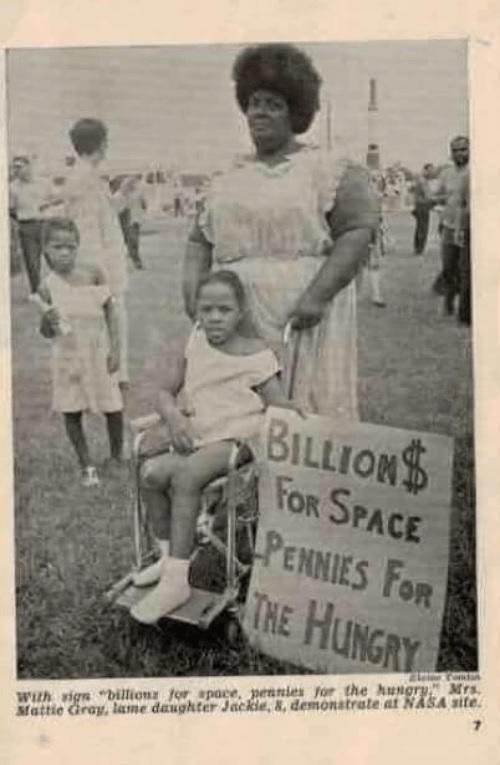
Such is the central difference that Emmerson’s work indirectly identifies, and why I recommend it so highly and so consistently. It is a beautiful portrait of what was that sparks thoughts of what could be, if only we would return to its precepts, namely the putting of excellence before equality.
The world he describes was one with a better vector than ours. It was headed in a better direction, at a much more rapid pace. Ours has made improvements in comfort and calories over theirs, to be sure, and tinkered with what they invented and built, but the direction is all off, as is the pace at which we innovate or do great things. Were they to have our technology, they would be multiplanetary. Were we to be stuck with theirs, we’d probably be back to using candles instead of electricity by now.
Yet further, theirs was a world that balanced that immense productivity and advancement with tradition, hierarchy, beauty, and all the other aspects of rightist civilization that make such a world as the one we wish to create one in which life is worth living.
Kings remained in charge on the continent. The Lords were losing power, but still the driving force in society, particularly socially, culturally, imperially, and militarily. Architecture was more beautiful and refined than ever, as was art. Crime was a non-issue in most places. Order was present in the colonies as well as the Metropol. Pageantry, dignity, grace, and sophistication marked public display of the great and the state, and they created a lasting impression of the period.
Somehow, electric light and the gargantuan steamship—along with all that brought them into being—merged well with country society, royal society, and the rest as it had always been.
This meant also that the up-and-coming economic titans, men like JP Morgan9 and Andrew Mellon, were pushed into acting like gentlemen rather than corporate raiders, at least when in public, which created a substantially less unpleasant business environment than today, at least on its face. There were standards of behavior that had to be followed to fully participate in society, whether in business or in the Royal court or anywhere in between, and that made for a different world. One that was a good bit more dignified, genteel, and restrained, at least on the surface,
And then, of course, an Austrian archduke got shot by a disaffected loser, and that bright flame of high civilization died in the Great War. Now we have the income tax, rampant criminality, and DEI programs.
But a different world used to exist. Before the rot, egalitarianism, anarchy, and the like, there was a world that did quite the opposite and was excellent in so many of the ways that mattered. It existed in America, in Europe, in the colonies…civilization, which is always a fragile thing, was cherished, cultivated, and protected rather than wrecked and robbed in the name of the equality of man.
What Emmerson does is paint a picture of that world so vivid it feels real. That is priceless. It is a picture of the sort of world we could create, if the policies we need to enact are indeed enacted. That’s no small thing, and makes it quite worth reading. That’s why I always recommend it.
If you found value in this article, please consider liking it using the button below, and upgrading to become a paid subscriber. That subscriber revenue supports the project and aids my attempts to share these important stories, and what they mean for you. You can also support this publication at no cost to yourself by clicking here and ordering 1913: The World before the Great War, as I get a slight commission.
Also, consider checking out my history channel, such as this video on Captain John Smith, the first great American adventurer:
Empires of Light: Edison, Tesla, Westinghouse, and the Race to Electrify the World is a great book on this
The Savage Wars: British Campaigns in Africa, 1870-1920 is a great book on this
The Wright Brothers by David McCullough
A positive book on this is Nothing Like It in the World by Ambrose
A more negative one is Railroaded by White
Both are good
A really great book on Chicago in this era is Nature’s Metropolis
The House of Morgan covers this quite well
I recall H. L. Mencken, in one of his essays, argued that Imperial Germany in 1890-1913 was the height of human civilization. Don't know if I'd agree on Germany, but the Western, European world assuredly was at the height of it's power. Been downhill since then; WWI killed it all.
The vision of what this civilization might have achieved if left uninterrupted for a thousand years is what I aspire to depict in my fiction writing so I will definitely be reading this.