


If you are a paid subscriber, you can listen to the audio version of this article here:
![[AUDIO] Everything Is Expensive Because Civil Rights Made the Commons Illegal](https://substackcdn.com/image/fetch/$s_!iKYt!,w_140,h_140,c_fill,f_webp,q_auto:good,fl_progressive:steep,g_auto/https%3A%2F%2Fsubstack-video.s3.amazonaws.com%2Fvideo_upload%2Fpost%2F199767188%2F6cb9808e-bc07-49b1-b345-56a94cff672d%2Ftranscoded-1780072735.png)
Houses are expensive, and homes in gated neighborhoods are eye-wateringly expensive. Private schools are expensive, and ever more so. Delta tickets cost more than Spirit Airlines did, when Spirit survived…and an increasing number of companies are trying to extend forms of private air travel to the upper middle class. Backyard pools are increasingly prevalent despite their expense, and the obvious inefficiency. Vacation spots that aren’t a status symbol amongst Knockoff Gucci Slides Americans are extortionately expensive. If you like eating out, hopefully your restaurant is miles away from a “teen takeover” destination…and expensive enough to maintain a dress code that keeps out certain sorts. On and on it goes, from malls to planes, streets to trains: life in public spaces is an often hellish, and almost always unbearable experience
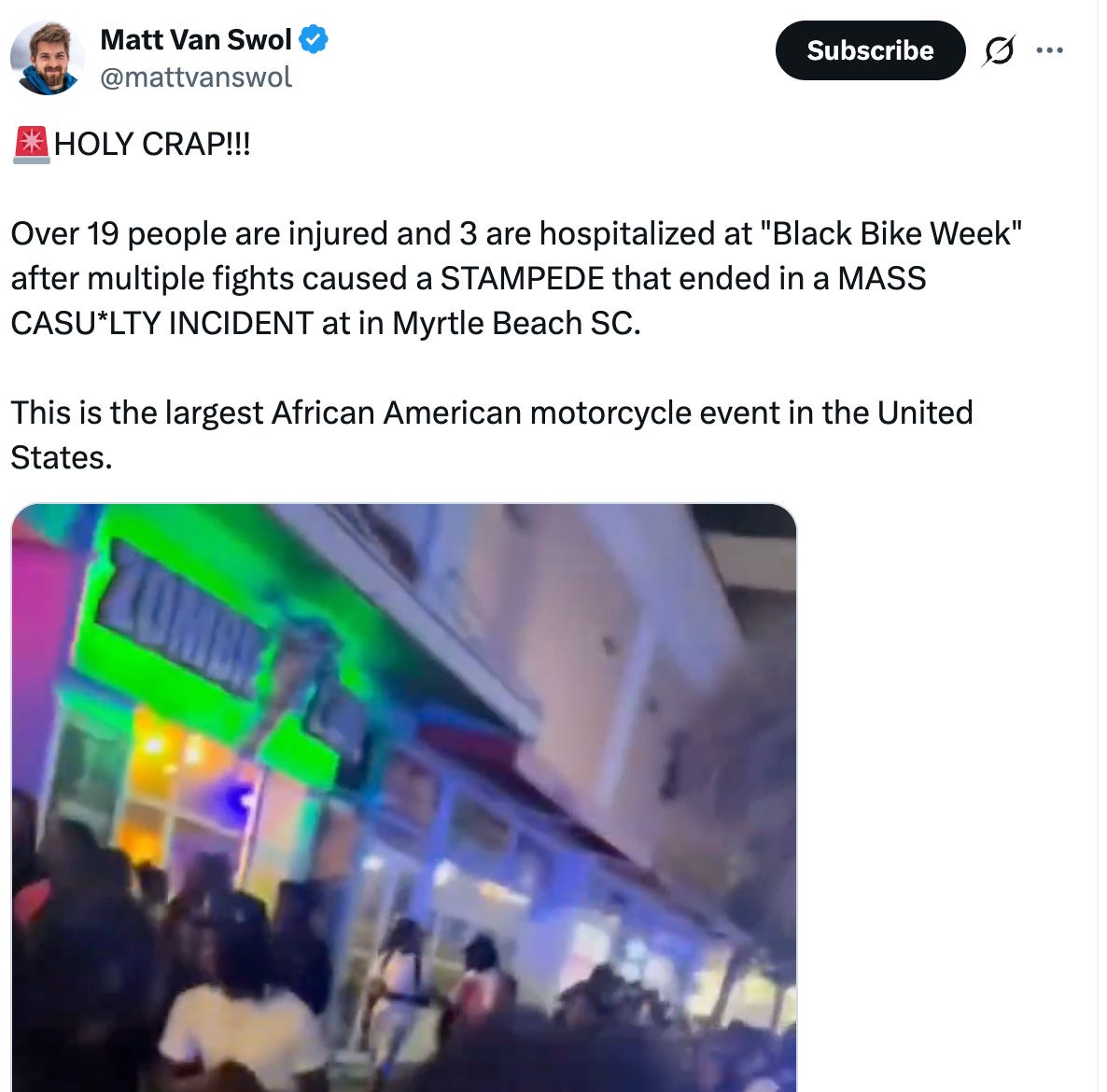
Where once there was a nice and well-maintained commons—a public park, a public school, a form of public transport, or a shared pool—now there is instead a disaster zone in the shell of what was once the public amenity, and an extortionately expensive private alternative. One can choose to live life behind the gate, or to face the consequences of being without it, amongst the barbarians.
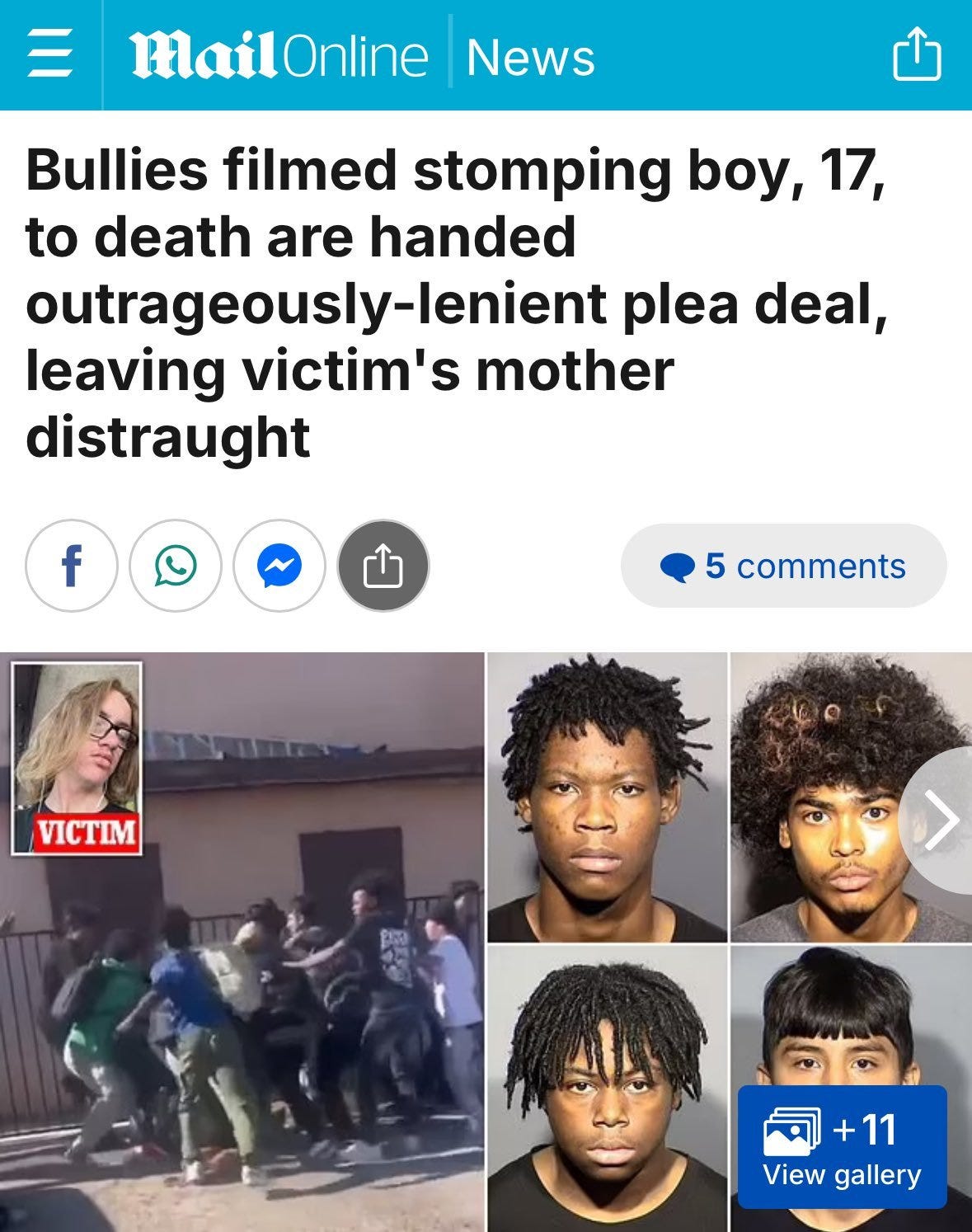
Don’t want your kid to get stabbed to death by some “high school bully” the school refused to punish for disparate impact reasons? Well then, you can shell out tens of thousands of dollars a year to a private school that—infuriatingly—has a scholarship program for diversity, or quit your job and try to homeschool your kids.
Want to go for a swim without being surrounded by Joe Biden’s friend “Cornpop” and his cronies? Have fun paying for one in your backyard, or for a club that has one…and hopefully that club is a “nice” or “good” one…and we all know what that means.
Want to let your kids run around for a bit at the park without worrying about some “schizophrenic” vagrant trying to murder them in between puffs on a crack pipe? Enjoy the private park in your gated neighborhood, and that $600,000 mortgage.
The Commons
The situation is much the same in every case: the world that used to exist was, despite its relative poverty, more than capable of providing reasonably high-quality public amenities in exchange for tax dollars. The state provided, protected, and maintained the Commons, using the tax dollars it collected to do so.
This was the case with schools, parks, public transport, and all the rest. The standards that maintain and compose civilization were upheld, and so that which was provided as a public good could be generally relied upon and enjoyed by the taxpayers who paid for it, even if the upper class preferred private alternatives.
So, one could take the bus, train, or subway to work and be generally confident that it would both get there on time and lack the stabbings so prevalent today. One could let one’s kids roam around the neighborhood, even if it was an urban one, and generally not worry about crime. The parks were family-friendly rather than vagrant-friendly. The schools were quite good.
And best of all for the growing American middle class and upper working class was that there was no real added expense, other than the nominal fee for public transport. The slight amount of taxation necessary to pay for these amenities was spent wisely on everything from the building of them to the police-led protection of them, and so the direct cost of, say, having access to a nice park was quite low.
Further, the secondary costs that now characterize everything were not around yet.
For example, there have always been better and worse neighborhoods, but the cost of not being in the posh one wasn’t “potential death” in the way it now is. Now, choosing the wrong sliver of even the right zip code means your kids will face being stabbed to death at school, your house will face constant break-ins, your car will probably be stolen, and a trip to the park is liable to involve more heroin needles and shell casings than footballs or baseballs. Not if you live in the (very expensive) right little spot on the right side of the tracks…but everywhere else.
Similarly, Americans have long enjoyed automobiles, but the safety differential between driving to work and just living near work or taking public transport didn’t used to be existential. That decision was a matter of convenience and paying more to transcend the commons, not a serious decision about personal safety. Now it is. Every day, we are assailed with tales of stabbings, burnings, shovings in front of trains, and so on that happen to those who rely on the services their tax dollars fund.
And so immense secondary costs are imposed. One must have a car and drive it to work, which involves the car itself, gas money, insurance, and so on. One must live in a neighborhood far away from the urban chaos, which involves more expense and inconvenience—and of course public transport isn’t available, for any neighborhood planner with a brain knows it merely gives mobility to the enemy. So massive road infrastructure must be built, and taxes raised to pay for it. And those neighborhoods are limited in number—in no small part thanks to how much of each city is taken over by squalor and ruin—so the cost of houses within them is squeezed ever upwards by those who just want a bearable enough life. To pay for all that, the wife must get a job…which probably requires a second car, and childcare; more expenses, more inconvenience, more unpleasantness…a worse life.
On and on the cycle of inefficient costs goes, and it all could just be avoided if the Commons still existed and was maintained. Townhouses near where everyone socializes and works were once a favorite style of living for even the American upper-middle and upper class, after all! You can walk to work or take the trolley, the kids can walk to school and play around the streets, everyone lives nearby and so drunk driving and the like isn’t an issue with socializing, the tax burden can be lower because the shared costs are lower. That’s more convenient, obviates the cycle of increasing costs, and so long as order is ensured, it’s a great way of living. So, it’s how people used to live, and they relied on the Commons to make their lives nice, avoiding those massive expenses we now find not just common but necessary.
Civil Rights Made the Good Life Illegal
Then came the Civil Rights Act, and the various insanities—the worst of which was disparate impact law—that were inflicted upon the public as part of it. Disparate impact law outlawed private property, as Bennett's Phylactery put it. Or, more specifically, Civil Rights law made the commons illegal.
Suddenly, it became illegal to keep “troublemakers” out of a public park or pool if most of those troublemakers were from a certain demographic group. But if your club is private and has entry criteria that aren’t exclusively racial, then you can just prevent those troublemakers from becoming members of your gated Arcadia. At great financial cost to members, of course. Or you can build a pool in your backyard, and patch together a backyard large enough to act as something of a park, at even greater cost. And everyone who has even the faintest financial hope of participating wants access to those things, which drives up the cost yet further, in a never-ending cycle.
Suddenly, it became illegal to expel “troublemakers” from school if doing so meant the demographic group of which they were a part was being punished at a higher rate than whites. As Virginius Dabney notes in his Virginia: The New Dominion, “the unsettled conditions in the public schools” that came with Civil Rights meant the number of (expensive) private schools skyrocketed by 10% in just one year alone, and 20% in a year in urban zones most harmed by the equalitarian legislation.1 The same sort of story is true of every American city, and increasingly of the suburbs as well. A public school or two might be pretty good, but in a very expensive zip code. Everywhere else, the choice is between a violent zoo and an expensive private school.
Such were the consequences of Civil Rights: the Commons infrastructure on which everyone had once relied was destroyed, and replacing it were the unenviable choices of immense personal danger and an unpleasant life, or the added expense of trying to buy one’s way out of the consequences of the Civil Rights Act.
And, of course, it became illegal to try to maintain the political conditions that could lead to that being pushed back against. The Voting Rights Act required southern states to hand dozens of Congressional seats to radical black race communists in the name of equality. Similar laws, rulings, and regulations vastly expanded the power of urban zones, putting the usual suspects in charge and turning formerly nice places into hellholes.
The results of that became clear immediately: equality brought with it blood in such prodigious quantities that it drenched the country. It’s hard to enjoy a swim when you can hear the staccato of a Glock in the parking lot as “young scholars” express their disagreements over responsibility for scuffed sneakers.
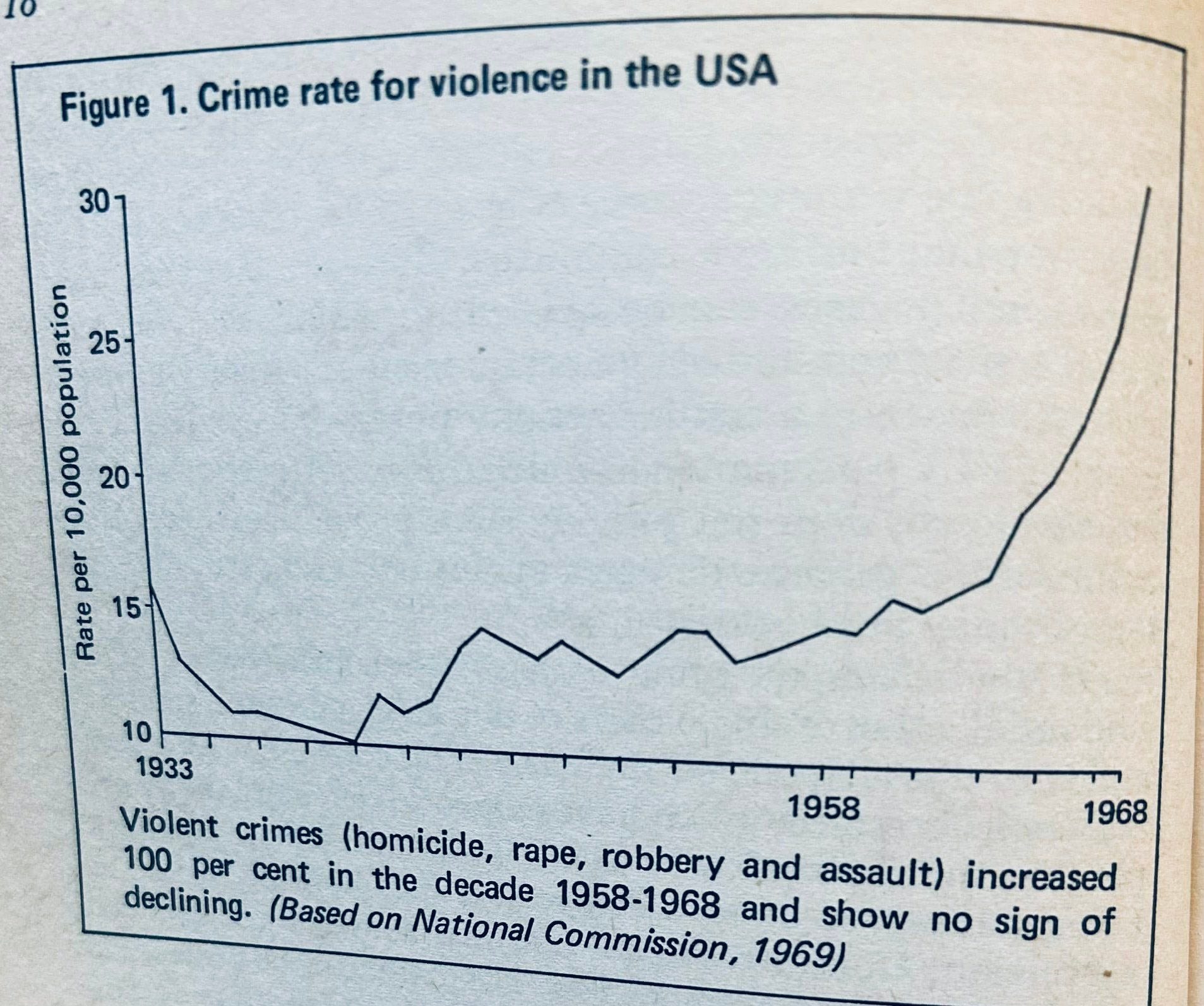
That was what Civil Rights achieved. Before it, you could rely on the state to use your tax dollars to provide services that worked, or trust that other forms of shared amenities—neighborhood pools, local parks and gyms, etc.—would be relatively pleasant and civilized. The Commons existed, was an organic way of sharing the cost burden of such amenities without anyone bearing undue expense, and it worked quite well.
And then that came to a screeching halt. Now, it was unlikely that the Formerly Undervalued American kleptocrats running a city would much care about making sure the public parks were nice, well-maintained, and usable by normal, law-abiding people, for there’s more money to steal if everything is allowed to just fall into ruin.
Further, most of the ways of keeping amenities nice became illegal. The police are forbidden from proactively enforcing law and order, and often from even punishing criminals. Private citizens are harshly punished if they try to stand up for their community, as seen by the cases of Kyle Rittenhouse and Daniel Penny. Neighborhoods couldn’t be kept safe from “newcomers”, and so blockbusting and the like destroyed generations of accumulated capital in cities like Detroit.
And so there are weeds growing through the needle-strewn sidewalks that used to surround nice public parks and now surround wastelands full of fentanyl zombies, for to restore order would require the infliction of force against problem-causing demographics, which has long been generally illegal to do at any scale. Bye-bye, civilization…it was nice knowing you.

Generally, then, we have had a breakdown of the commons areas that make civil society worth participating in. From the Greeks and Romans to the America of the 1950s, what set great civilizations apart from barbaric hells is that they could and did provide incredible amenities to their citizens. Now that is all dead, and where it is not buried already, it is dying.
Unless it is escaped with a profundity of money, that is. Ski towns, posh beaches, and Arcadian retreats in the glorious West have great amenities, after all. Houses in neighborhoods are getting larger, with more amenities like home gyms and home pools. Neighborhood parks can be nice enough.
But all of that is paid for out of pocket, on top of taxes. Unlike the baths of Diocletian, what is nice in our world comes at immense private cost, rather than as an expected service of the state. The state instead exists to tax us to fund various initiatives that are against our interests, such as investigating or harassing private clubs for being “racist”. It would never think of providing services and security of a high enough caliber to generally obviate those clubs.
South Africa
We have a glimpse at what this looks like in the near future: South Africa.
As Roman Cabanac explained when he came on my podcast, one can still live a good life in South Africa. One can live in a nice neighborhood with similar-looking and similarly minded neighbors, spend time at the pool or park with one’s kids and have a grand time, and do all the other little day-to-day things that are typical of civilized life in the Anglosphere.
But that comes at great cost. That sort of life is only possible in the gated compounds that dot South Africa, where the cost of homes is extortionately expensive and (competent but expensive) private security must be paid for on top of taxes because the police force is generally incompetent. But life in those compounds is nice. There is shopping, there are restaurants, there are maid services, there are safe sidewalks on which to walk, and all the rest. The good life, or at least what passes for it in our materialistic world, can still be lived…at great financial cost.
Or one can live in the boonies, where the troublemakers aren’t. That too is costly, given the private well, solar power, security systems, and so on that are required. But it is a bit freer than life in the safe pen.
Or one can live in a poor area, face unspeakable horrors inflicted by the criminal underclass, and then die or watch one’s kids die in the cruelest ways imaginable.
Such is life in South Africa, where the commons has also been made illegal by egalitarianism. The choices are going to great expense to live the precarious and penned-in life of a human cow, expensive and somewhat dangerous homesteading, or misery and death. One of the first two is preferable, I guess, but requires means out of reach of most.
That is our future. In fact, it’s increasingly our present.
Resisting the Death of the Commons
One of the greatest things that Trump is doing is publicly rejecting and reversing the death of the commons in any way he can.
Take DC. There, he has deployed the National Guard to shut down crime, has cleaned up the vagrant camps to make the parks and squares nice, and has engaged in a clean-up campaign to remove the muck and mire that coated everything, as recently seen with the Columbus Circle initiative.
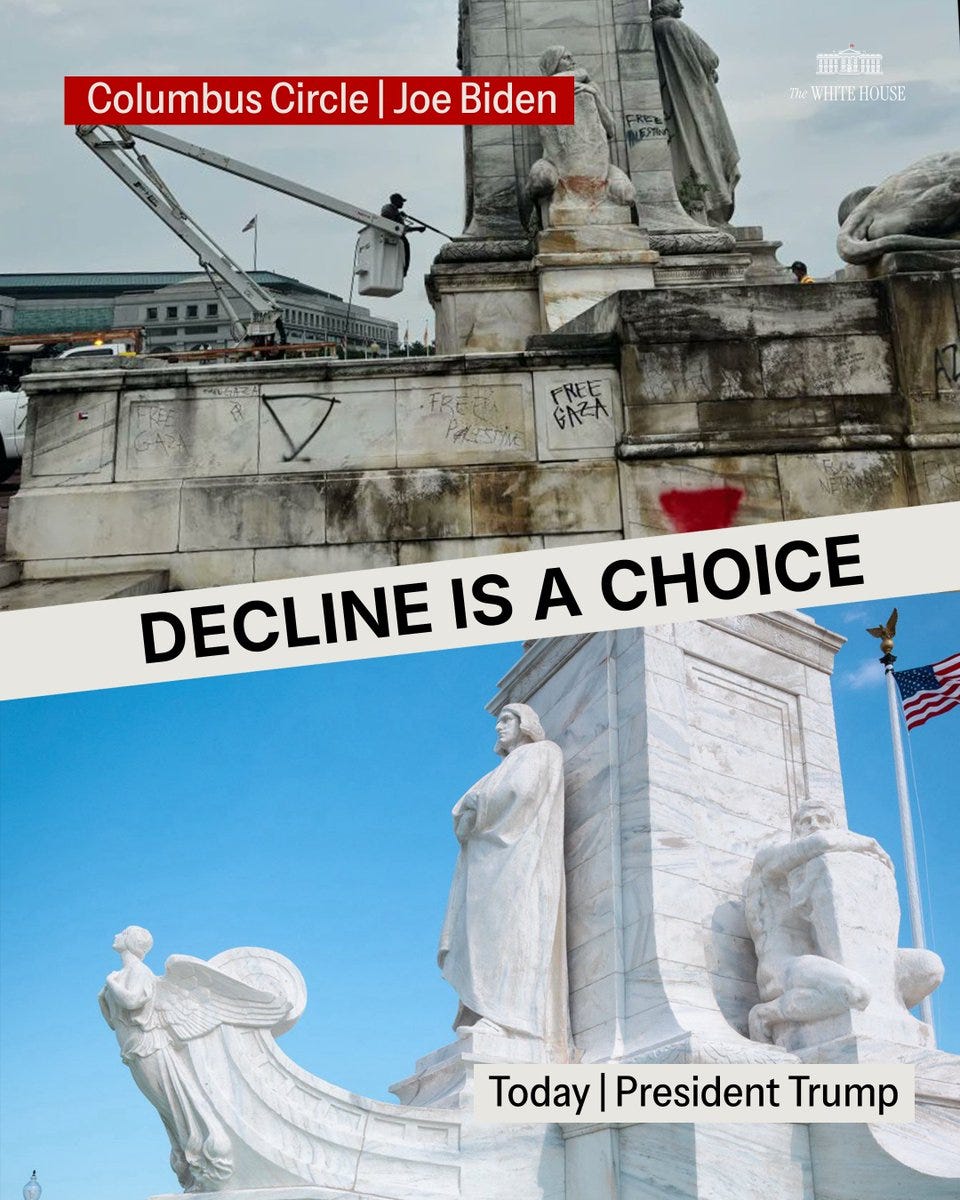
These are baby steps, of course, and far from enough. However, when paired with moves like a reversal of disparate impact law, they’re steps in the right direction—particularly since the Guard deployments to crack down on crime are happening across the nation, and appear to be working even in cities like Memphis.
Our public life should be nice, and uplifting. Our public amenities should be nice. The state should be able to provide such things, and use force to keep them nice.
That is what civilization is: much as standards and the enforcement of them at the individual level, with things like manners and dress, matter, so too does public decorum, decency, and pleasantness matter.
The Commons should be restored, and “clothed with marble,” as Augustus called his restoration of Rome. That sort of thing is important. It reflects upon a people, and determines the quality of life for all but the richest. The alternative is to end up like South Africa, as we increasingly are.
If you found value in this article, please consider liking it using the button below, and upgrading to become a paid subscriber. That subscriber revenue supports the project and aids my attempts to share these important stories, and what they mean for you.
Also, consider checking out my history channel, such as this video on Captain John Smith, the first great American adventurer, and one who understood how the Indians needed to be treated:
He notes:
Conditions were said to be generally more peacetul in rural regions than in the cities, even where the black population was large. In preponderantly black Surry County there was no disorder, but white parents simply refused to send their children to the public schools. All six hundred of them were enrolled in private academies or taken out of school entirely. Government tuition grants, which had helped to sustain many private schools in the 1950s and 1960s, had been outlawed by the federal courts in 1968. Yet privately financed centers of instruction, usually day schools, continued to proliferate across Virginia. The number of Virginia pupils in such centers, inside and outside the state, totaled about 56,000, an increase of around 10 per cent for the session of 1970-71 over the previous session, while in Richmond the increase was nearly 20 per cent, according to the State Department of Education. Compulsory education laws were beginning to be enforced in this confused situation, but no one could be certain concerning the final outcome of all this until the U.S. Supreme Court had spoken.
The old, established preparatory schools, such as Norfolk Academy, which goes back to 1728; Episcopal High School, founded in 1839; Woodberry Forest, established after the Civil War; St. Christopher’s, St, Catherine’s and Collegiate in Richmond, all high-ranking centers of instruction, and others of almost comparable reputation, were having to turn away many applicants who were pounding on their doors in view of the unsettled conditions in the public schools.
To add onto this piece, as a zoomer something that has always driven me insane is when older generations make comments like "Oh, the kids these days, all they do is sit inside on their phones! Why dont they go outside and spend time together in real life like we used to!"
Well, primarily because every single activity you wish to do is either A.) Prohibatively expensive beyond what a teenager could reasonably be expected to afford. Or B.) Just flat out illegal. I wont say exactly where I live as I dont want to doxx myself, but suffice to say its a VERY blue state, and in this state basically every single common area has been completely destroyed by the behavior of the bottom quintile of society.
You are not allowed to be in any mall past 8 p.m. if you are under 18 without the presence of an adult. The same rule also applies for the 3 biggest local amusement parks (this rule STILL wasnt enough to curb the relative rate of mass alterations breaking out so just last month they doubled the cost of admissions in another futile attempt to stop huge brawls from breaking out in the center of the park).
One of the lesser talked about effects of the loss of the Commons and increasing price-segregation in the country is that it leaves teenagers, who tend to lack a great deal of disposable income, with basically nothing to do except sit inside in their goon caves on discord. Unironically, I believe a major contributing factor in the relative loneliness and isolation of the younger generations is the complete destruction of common spaces where you used to be able to spend time relatively cheaply with other people your age.
If you have watched The Sopranos you saw the Italian-American community begin to distance itself from the crime ridden Mafia. When does the apparent tolerance for crime within the black community along with the acceptance by black school administrators of the disruption of classrooms by out of control individuals begin to end? When will black fathers who fail to care for and love their children and especially their boy children be openly censured by black leadership? The young Chris Rock joked about these issues but he clearly now censors himself.
On X, now without censorship thanks to Elon Musk, out of control violence has become standard fodder for ridicule with blacks typically being the most violent group depicted. Unfortunately, the stereotype of black violence is rooted in reality.
Where white people decide to live, shop, vacation and even if they are willing to use public transit (especially women) has been for decades largely based on avoiding large groups of black people because of their perceived and actual tendency to engage in violence. The term white flight has always been used as a slur when, in truth, it means white common sense.
Why do the Democrats always appear to be on their back foot on the issue of black violent crime? Why do they allow Trump to take the lead on this issue while they hem and haw? Why not make fighting murderers, car jackers and rapists a top priority of the Democratic Party and especially of Democratic mayors? There is simply no political logic to being seen as soft on crime when the majority of crime victims are the very minorities the Democrats are supposed to champion. The single most important thing Democrats could do to save the lives of young black men would be to reinstitute the police policy of “stop and frisk” in black neighborhoods to stop the carrying of illegal guns. This would stem the tide of murders of blacks that fill the nightly news in every major city in America and yet is hidden in plain sight. These kids would quickly get the message and quit carrying illegally. Young black men (15-34) are just 2% of the population and yet commit about half of the nation’s homicides. A rate an astounding 50 times higher than the average American. They are the nation’s gun violence problem. They are also the primary victims of these murders with about 6,000 killed every year. We need to save their lives in spite of the insane ACLU and its bullshit niceties.