


Today’s article is a guest article by my friend A J Rees, who publishes the Energy Trends Japan Substack. He is of British ancestry, and his family, once deeply involved in the British Empire, has longstanding ties to Hong Kong, as covered in this article. Listen to the audio version here:

The 1st of July 2026 will mark the 29th anniversary of the handover of the Crown Colony of Hong Kong to the People’s Republic of China. It brings an end to 156 years of British colonial administration of the Island of Hong Kong and surrounding territories. The handover took place with all the pomp and circumstance one would expect of Britain and her armed forces. You can watch the full version on YouTube. I strongly recommend you do so, as it is an incredible time capsule of a lost world.
However, for me, it is far more personal. I was there.
The handover of Hong Kong represented in many ways the end of my childhood. It also marked the end of the only life I had really known until that point.
In today’s article, I would like to give a personal account of life in the Crown Colony in the fading days of the End of Empire. I also want to raise a cautionary tale on the matter of Birthright Citizenship and the threat it poses to the United States.
In at the beginning, and at the death.
Hong Kong was ceded in perpetuity by the Qing Dynasty to the British in 1842. This happened in exchange for the British stopping their attacks on the Chinese navy and armies in the First Opium War. It gave the British Empire a foothold at China’s southern doorstep, on the mouth of the Pearl River, and a safe harbour for her fleets.
Hong Kong at the time was a barren island. It was home to a few thousand Chinese fishermen and was swamp-ridden. It was hardly a jewel in Victoria’s crown. It was not even a paste gem on her little finger.
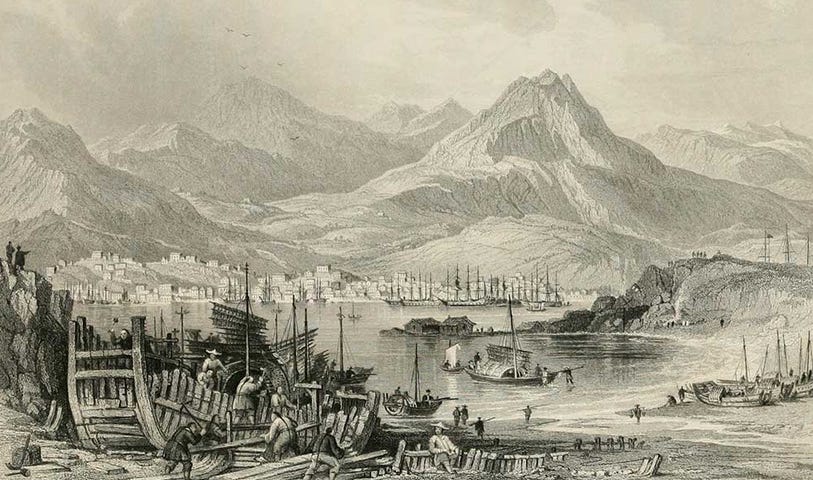
Indeed, there were complaints raised in Parliament. Lord Palmerston asked why Hong Kong had been chosen over the far more attractive land of Chusan Island. That island was near Shanghai and far more prime real estate at the time.
I mention this because Hong Kong was taken by the Royal Navy in January 1841. Captain Edward Belcher recorded the moment: “We landed on Monday, the 25th, 1841, at fifteen minutes past eight a.m. Being the bona fide first possessors, Her Majesty’s health was drunk with three cheers on Possession Mount.”
Amongst the men of the Royal Navy and British Army were the merchants and traders.
The First Opium War had been fought for them. It kept Britannia’s balance of silver payments in the black. From these men came many grand trading houses, such as Jardine Matheson.
One of their number was also a junior trader named William Morgan. He could not have imagined that 156 years later his great-great-great-great-great-granddaughter would fuss over her own children as she made them presentable to attend the handover of the colony where he had watched the flag being raised.
With William Morgan it began. With my family, nearly 156 years of permanent Hong Kong habitation came to an end.
The 1997 line
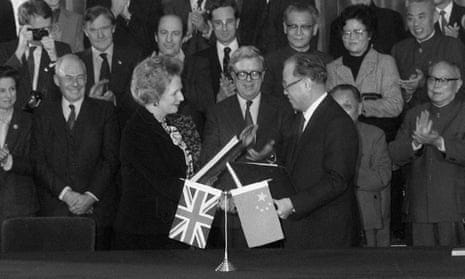
When I was born, Margaret Thatcher had already signed the compact between Great Britain and the People’s Republic of China. It covered the handover of the New Territories on their 99-year lease. It also covered Hong Kong Island itself, which in theory need not have been handed back, as it had been originally handed over in perpetuity.
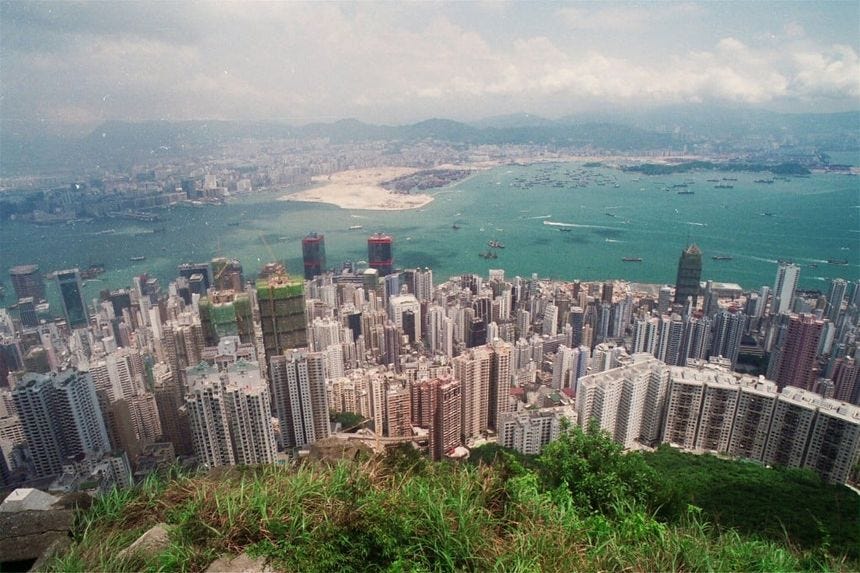
It was into this world in 1989, having just turned four years old, that I, my mother, father and little sister landed at Kai Tak Airport. This remains one of my strongest memories. We landed amongst the high-rises and were so close that I remember a lady hanging out towels or bedding to dry in the heat.
Of course, being a child, I had no idea I was on a ticking clock. The Hong Kong I knew consisted mostly of school, social functions, pineapple fritters with ice cream, and pineapple buns.
Still, looking back, it was a good childhood, one where children were taught a curriculum somewhat sheltered from the reforms of various governments in the post-war era. A childhood spent being taught in English in the classroom and speaking broken Cantonese at playtime with your classmates. And one where no one believed it would actually come to an end.
In later years, I spoke with my parents, family, and friends who were linked to Hong Kong. The general takeaway was that “1997 is a long way away, and the handover might not even happen.” My mother told me that after the Tiananmen Square massacres, many people said, “Right, that’s it then. Handover is off.”
Of course, it was not to be.
The Chinese Communist Party was going to get Hong Kong and Macau back by hook or by crook. They did not mind sacrificing tens of thousands to achieve it. As Deng Xiaoping put it, “I could walk in and take the whole lot this afternoon.”
So, a deal was made. On the 1st of July 1997, Hong Kong would be handed over to China. For 50 years, there would be a “one country, two systems” policy.
In the words of Captain Edmund Blackadder, “it was bollocks”.
The Migration Pressure Cooker
Anyone who seriously expected the CCP to honour an agreement with an overseas power, especially Britain, was fooling themselves. The Chinese have always meddled in Hong Kong’s affairs since the island was founded.
Mass immigration waves were a favoured tactic of theirs, particularly when it came to Hong Kong.
After the return of Hong Kong to the British following the Japanese occupation in the Second World War, the China at the border was very different. Battles between the Communists and Nationalists sent waves of migration into Hong Kong. Neither side was overly friendly to British or Portuguese interests. This led to the 1956 riots, followed by the 1967 riots with heavy underhanded backing from the CCP.
The method was clear: send in the migrants to keep pressure on the British for housing and infrastructure in an increasingly crowded Hong Kong and New Territories, and pack Hong Kong with malcontents who could be useful pawns in the future. This should be sounding somewhat familiar to anyone reading this in, well, anywhere in the Western bloc.
This policy ratcheted up tremendously after 1997, and throngs of migrants began to crowd into Hong Kong. It got even worse in 2001, when a court ruling sent birth tourism into overdrive.
The Coming of the Locusts
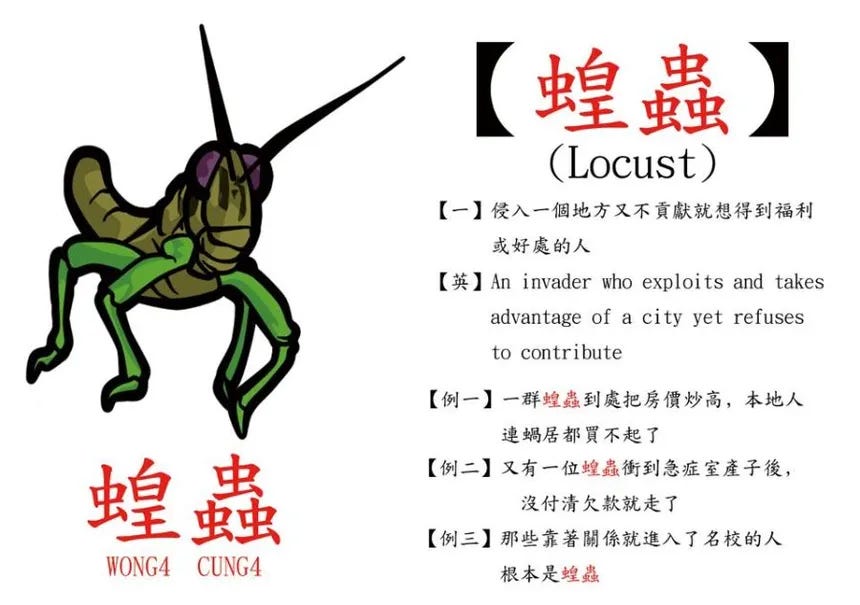
“Locusts”, known to many as one of the plagues of Egypt, is the name Hong Kongers gave to Chinese mainlanders. Many Hong Kongers were themselves mainlanders two or three generations earlier. The idea was simple. Pregnant mainland Chinese women would travel to Hong Kong to give birth. Their child received Hong Kong paperwork. This allowed the child access to social services, from which the parents could then benefit.
But why would women from mainland China do this? The answer is simple – it makes economic sense.
In China, people do not have the freedom to live and move where they please. They cannot freely access schools and hospitals. People are registered to a specific city under the hukou system and tied to it.
Reforms have long been discussed, especially with demographic change. For a long time, the easiest option for a Chinese woman was to have her child in Hong Kong to bypass the system.
Hong Kong authorities have made efforts to curb this. They have shown progress through policies favouring locals, rising wealth, and reforms in China. But, still, many locusts poured into Hong Kong, and gave birth to yet more locusts, all of whom gave birth to children who would be raised by mainland parents in mainland ways and more importantly, those who had not been raised under the education system or under the rule of the British.
Birth by birth, family by family, the demographics of British Hong Kongers were edged and aged out by post-handover Hong Kongers. Elections swayed, one by one, to party mainlanders or at least sympathetic patsies who would heed Peking’s orders. There had always been dual loyalties in Hong Kong, an oath to the Crown, and loyalty to family. Now the oath is to the Chinese Communist Party above all.
This may sound familiar. The Chinese, Somalis, Indians, and so on, have been doing the same thing to the United States.
Birthright Citizenship Delenda Est!
There has been a great deal of attention lately. Thanks to the United States’ rules on birthright citizenship, it is suspected that millions of women from China and elsewhere have given birth in Guam and other American territories. This secures US citizenship for those children, despite their parents not being American citizens and the antagonistic US-PRC relationship.
This raises the risk of a potential “time bomb”. Millions of children around the world are growing up in other countries, many of which are hostile to the United States—as the PRC was to Hong Kong, before the coming of the handoffs and the arrival of the locusts. Thanks to birthright citizenship, they are dual American citizens. They hold just as much claim to the wheels of power as someone whose family came over with the Mayflower, built Jamestown, or fought in the Civil War.
Arguments exist on both sides of the aisle. Some defend birthright citizenship. Others oppose it. There is no need for hypotheticals: Recent developments in New York show the dangers. Hong Kong too is a real-world example of the dangers of birth tourism and anchor babies, and how they can serve as a biological weapon. Unrestricted immigration combined with granting the franchise to fresh-off-the-boat immigrants is a ludicrous idea, and creates a dangerous reality.
Imagine if you will, Mr and Mrs Lee travel to Guam and give birth to a healthy baby. They return to China with baby Lee, and then when the child turns 18, they ship him or her off to an American college, which they are fully allowed to do under US law. Their child is, after all, an American citizen. Citizen Lee then graduates, gets a job, and some years later decides to run for local or state office. By the time they are 35, Citizen Lee can run for the presidency. Is it an outside chance, absolutely, but might I point to an AOC, or thank God she’s too old, Mazzy Hirono?
Birthright Citizenship Transformed Hong Kong
Hong Kong was British for 156 years. When it was established, the children of the Signers of the Declaration of Independence were still alive. America will soon celebrate its 250th anniversary since the Declaration.
Hong Kong had a separate feel and identity from mainland China. It was long a glistening jewel on the outer reaches of the British Empire, and felt like it. Its culture, traditions, and feel were connected to that fabulous history. That unique spirit and culture is being eroded birth by birth as the CCP and mainland Chinese locusts pour in.
Hong Kong was once special. It was a gateway, a shimmering British outpost between the empire and the Chinese mainland.
Will Tanner made a name for himself writing about the fall of Rhodesia and how Rhodesians were, in many ways, more British than the British. I would say the same for Hong Kong. The British in Hong Kong were not the stroll-in-the-park or tour-the-estate British, like those in Rhodesia. Hong Kong was not settled by farmers; it was settled by traders. Hong Kong represented the pure embodiment of British trade.
From the Taipans to the stock brokers, Hong Kong was the zenith of British trade that saw a small island in the North Atlantic reach out and discover, to no greater shock than their own, that they were damned good at this trade business, and off they went to India under the name of Queen Elizabeth I. Sadly, under Queen Elizabeth II it all came crashing down.
Now the flood tide of births is turning it back into China, a place little different than the rest of the mainland. The star that Britain made rise is beginning to fade away under Shanghai and other financial hubs.
In America, the original reasons for birthright citizenship were sound enough. It gave citizenship to freed slaves. It helped fill the interior with Homestead Act settlers during Manifest Destiny. At that time, birth certificates and social services barely existed beyond parish registers and the church poor box. It made sense then; it does not now.
That need has now passed. The only slaves in America today are those brought in by cartels and traffickers – the polite name for modern-day slavers. There is no one left to emancipate. The housing crisis in the United States shows there is no need to open America’s borders to all and sundry. The Loophole needs to be closed.
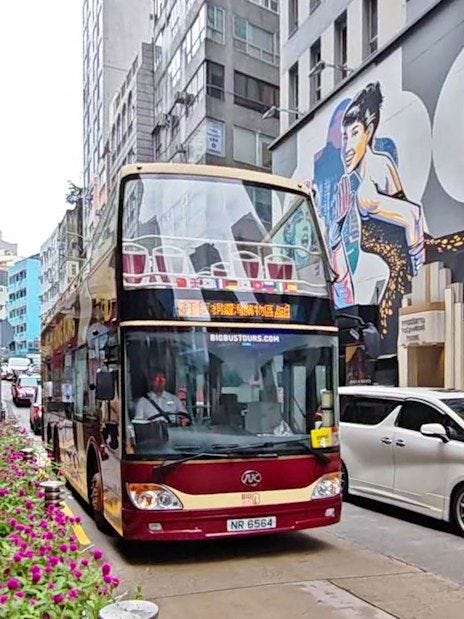
They say you can never return home. For me, that is doubly true. The Hong Kong of my childhood is gone. That little British outpost at the gateway to China is no more. Yes, the post boxes, double-deckers and other remnants persist.
But it’s just window dressing. Germany has Roman ruins, but no one would say Germany is Roman.
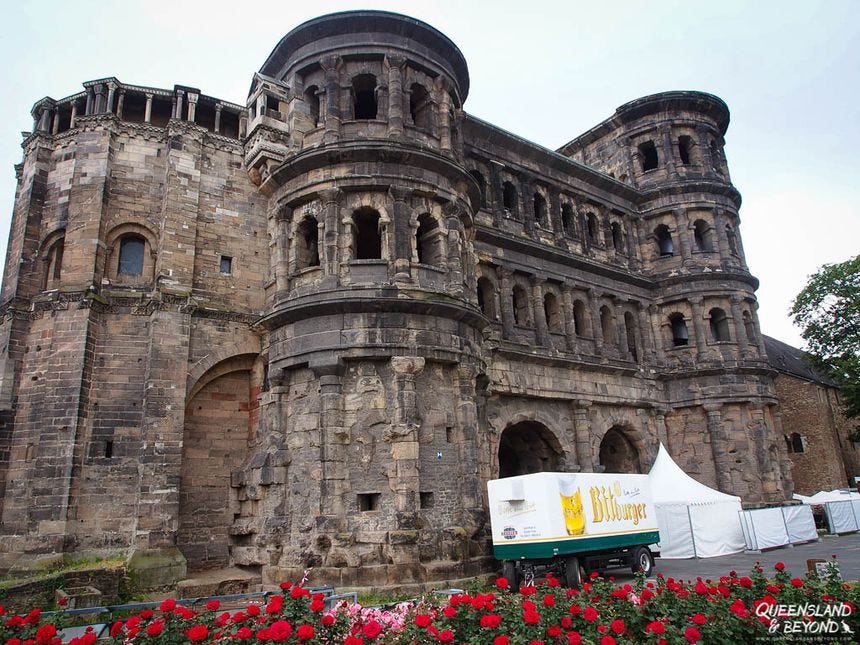
Do not let that happen to America. Do not let your nation be swamped so that all that remains are blue mailboxes and yellow taxis.
Do not let the Locusts from around the world eat at the verdant plains of America that were planted and tilled by generations of farmers whose families toiled and bled both at home and abroad for their lands.
All that remains of Hong Kong is a shell of its formerly great self. Little aesthetics like the buses remain, but the British soul is gone
America was settled much like Hong Kong. In Hong Kong, the British took an underutilized and swampy rock and turned it into a major trading centre. In America, the British, French, Dutch, German, and other settlers turned what had been a continent of primordial forest, the inhabitants of which had never invented the wheel, into the largest power the world has ever seen.
I have no idea what my ancestor, William Morgan, was thinking when that flag was raised at Possession Point. He worked hard and built a respectable fortune for his future generations. It lasted until the very last day of the colony.
Following the rout of the Nationalists and the debacle of the Korean War, it was clear that Hong Kong as a British land was on borrowed time. It had to come to an end someday. I would just have rather it happened much further down the road. That it did not last as long as it might have was largely because of the locusts, and the change the birthright citizens brought and wrought.
I witnessed the end of my Empire on the 1st of July 1997. I do not wish for any American to see the death of their nation in their lifetime. Not when there is still time to legislate by the stroke of a pen what in future decades may only be resolved by the sword. Birthright citizenship delenda est.
By: A.J. Rees
A. J. Rees has been involved in the energy field for over 15 years and has worked in Europe, the Middle East, East Asia and Australia during this time. Located in Japan, he continues his work in the energy field with projects in nuclear decommissioning, recommissioning, renewable energy and building R&D connections between Japan and the rest of the world. He has previously had works published in energy, energy security and international relations journals as well as by the Lotus Eaters.
He had begun pushing musing and articles on energy matters on X @EnergyTrendsJPN or on Substack at Energy Trends JPN
'Millions of children around the world are growing up in other countries, many of which are hostile to the United States"
Heck, millions of children in the US are being educated to be hostile to the United States at the behest of the DNC.
Thanks for letting me submit another article! just terrible to wake up to the news on the SCOTUS ruling.
When Japan is the sane one in the room, you know something is askew