


As promised, my first Old World Show episode on Virginia came out this Saturday, covering the rise of the Virginia plantation system and how tobacco fueled it. Please check it out if you haven’t done so already! You can listen to the audio version of this article here:
![[AUDIO] Slavery, Deconstructed History, and Our Collapsing Civilization](https://substackcdn.com/image/fetch/$s_!rvOc!,w_140,h_140,c_fill,f_webp,q_auto:good,fl_progressive:steep,g_auto/https%3A%2F%2Fsubstack-video.s3.amazonaws.com%2Fvideo_upload%2Fpost%2F194200958%2F3de6190b-7c39-46ee-8514-cf96b19b30cc%2Ftranscoded-1776182033.png)
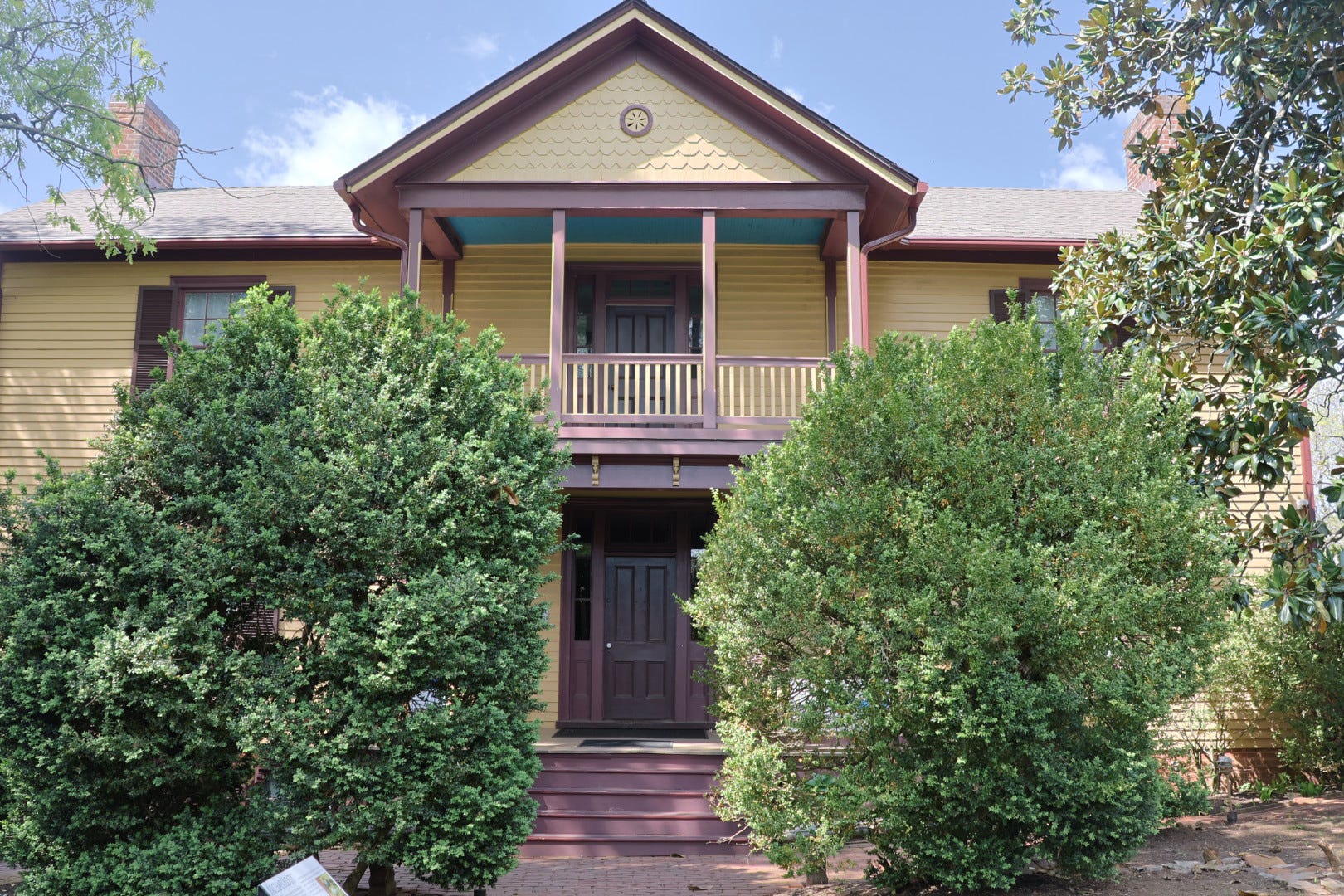
This weekend, I had the pleasure of visiting James Monroe’s former estate near Charlottesville, called Highland (it used to be called Ash Lawn, but that name has faded from use). While there, I learned a few interesting things, most of which are fun and inconsequential, but one of which is of supreme importance to those interested in history. I’ll discuss it after getting the fun bits out of the way.
One is that the quite attractive country house that sits on the property was mostly built in the 1870s. A fire broke out a few years after Monroe sold the house to pay off debts incurred in a lifetime of public service,1 and destroyed the original Highland house—the one he built in 1799 and that Jefferson, whose Monticello estate is just a few miles away, visited frequently. All that remains of the original Monroe estate is an unassuming guest house (now a wing of the 1870 home), with a beautiful interior.
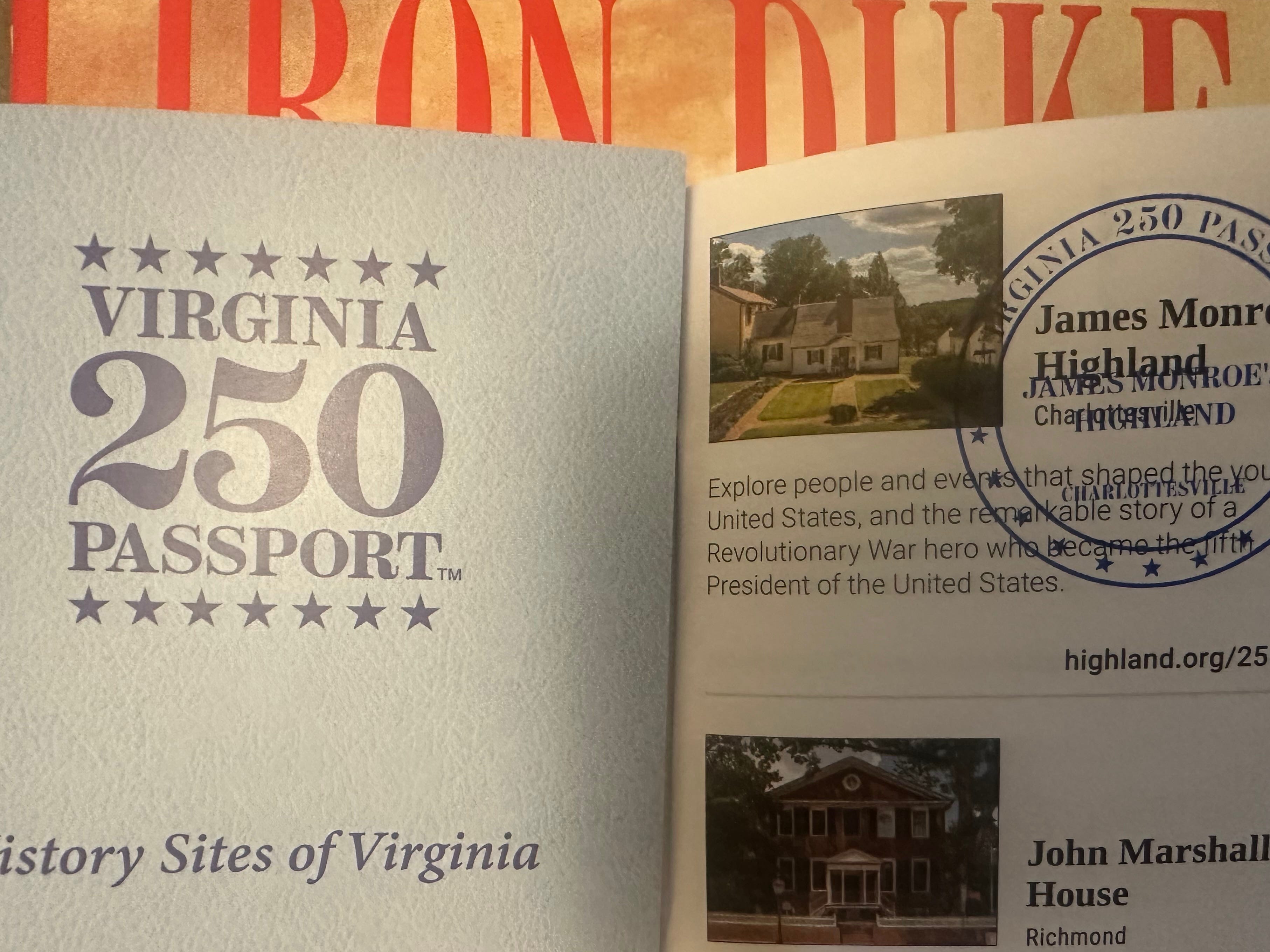
Secondly, I learned that Virginia, despite its rotten governor, is doing a really cool program this year called the Virginia 250 Passport. These little passport books are available at pretty much all of the Revolutionary War-connected sites, and getting it stamped at one gets you discounts at all the others. The books contain dozens of sites of interest, are attractively produced, and seem like a good way of trying to encourage people to learn about the state’s history. If you live in the state, I’d recommend checking them out.
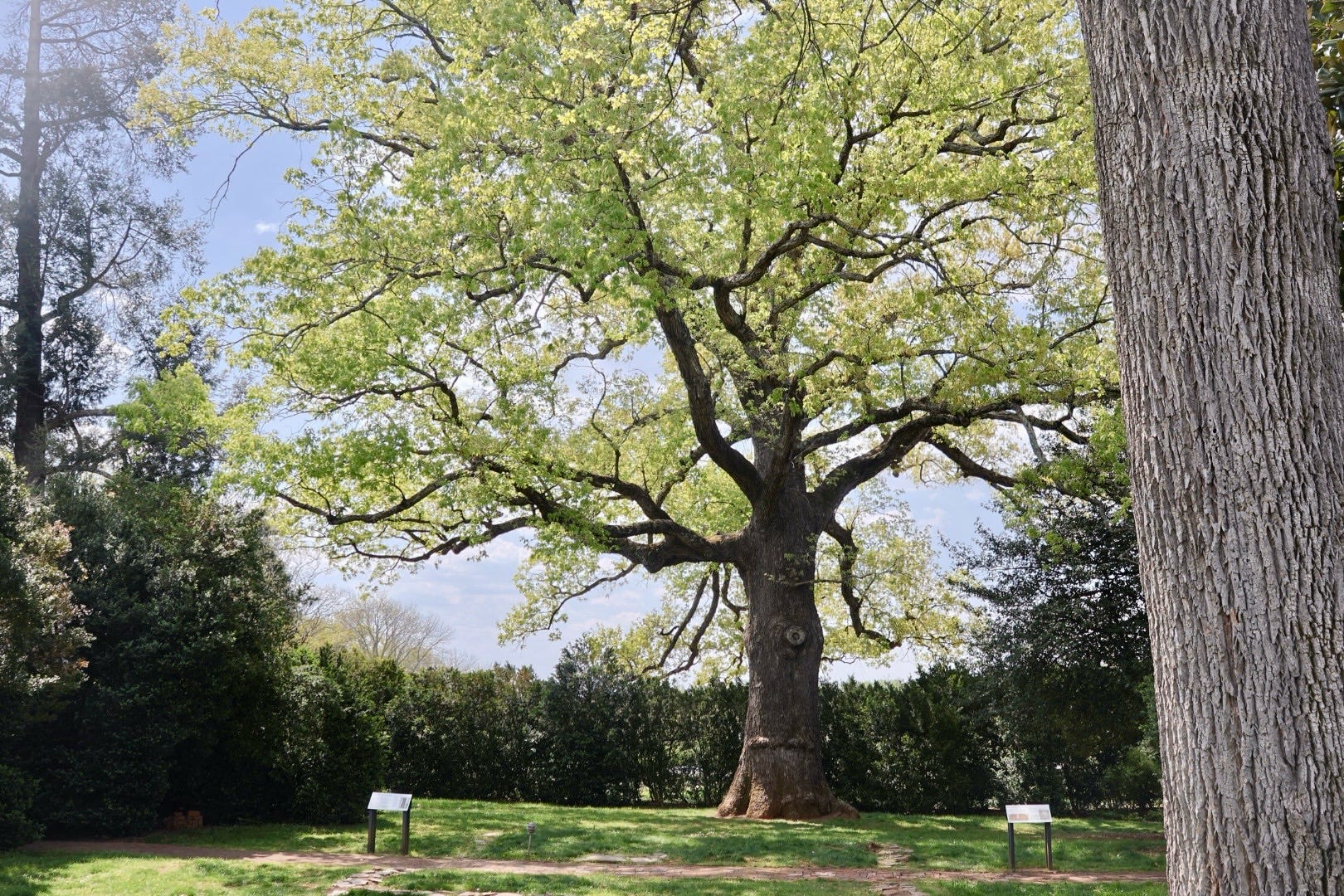
As a side note, the coolest thing at Highland is a massive white oak tree that dates to before the settlers arrived. It towers above the estate and is incredible to look at. It’s impossible to do it justice in pictures, but here are a few:
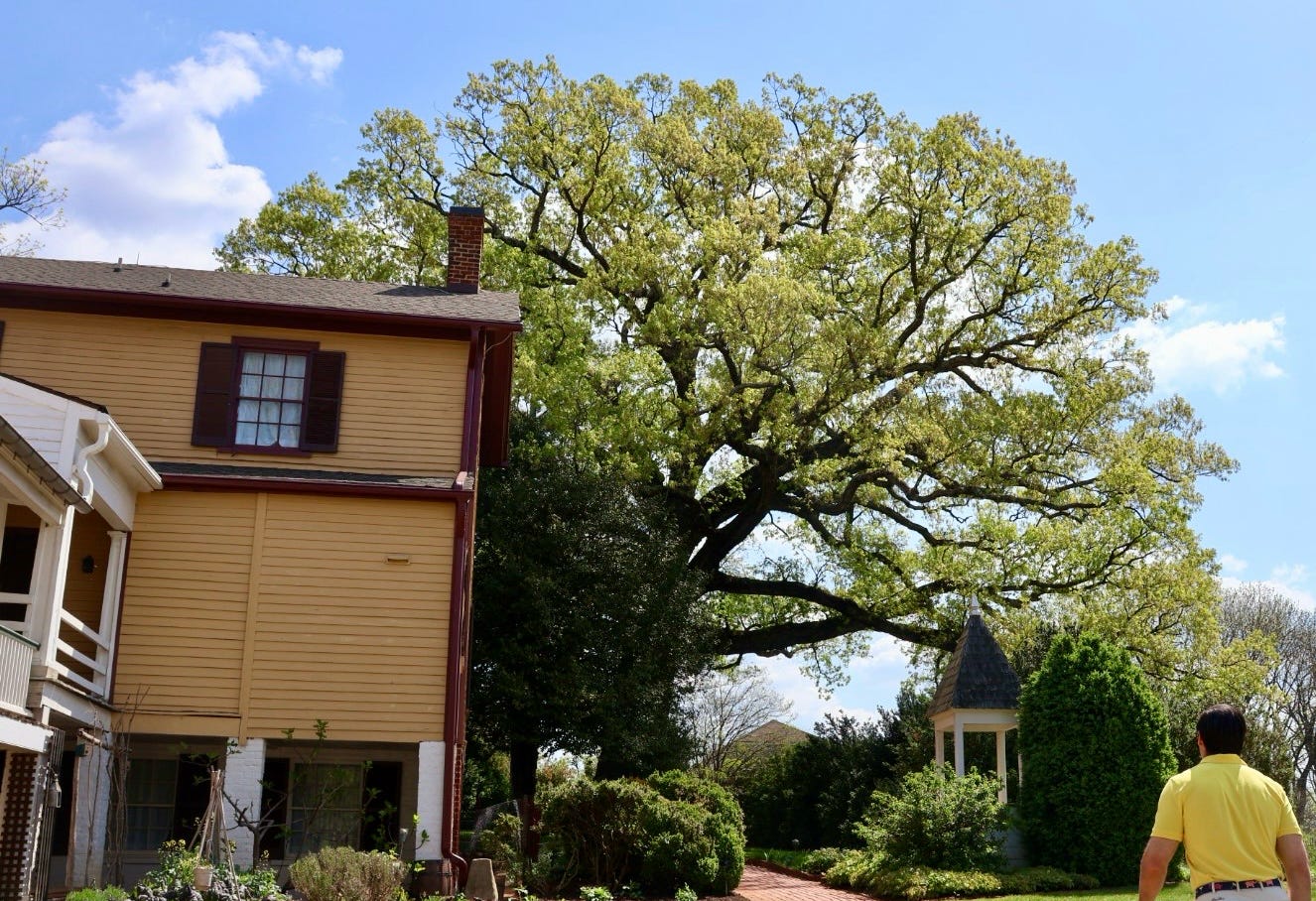
Also, there are a number of fun trails on the property that, altogether, add up to 6 or 7 miles. These are free to access, gorgeous, and much less crowded than those at Monticello. There’s also an inexpensive vineyard about a mile down the road if you need refreshments after a walk.
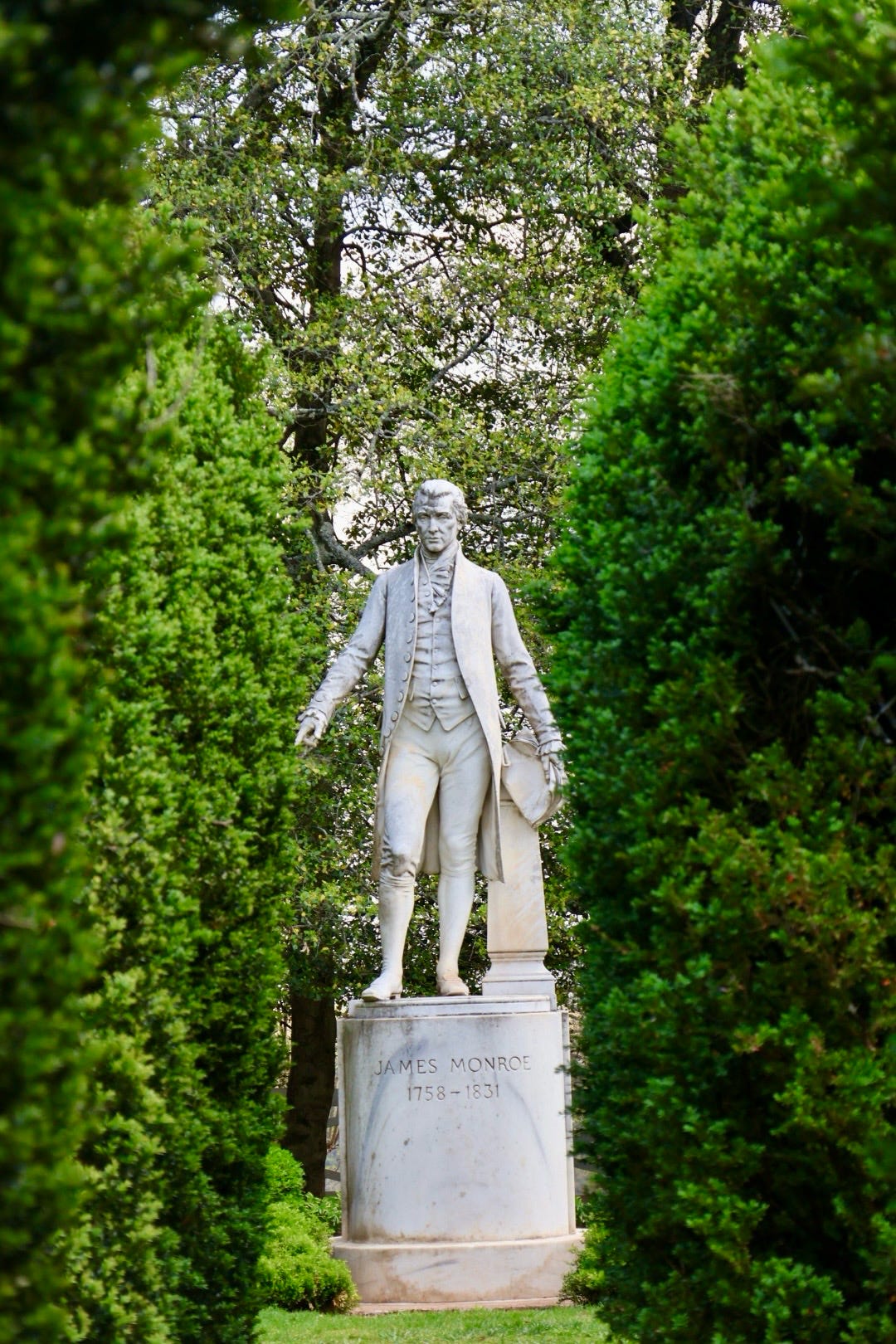
So, those are the fun parts. All in all, it’s a fun trip if you’re not too far away, and the lady at the front desk was super pleasant and informative. They also had a shockingly good book selection, and most of the furniture in the house was once owned by the Monroe family, which adds some great insight into the furnishings of a plantation home in the early Republic.
The downside is that the site is controlled by William & Mary University, and as such is utterly and completely controlled by rabid leftist ideologues who both make the overwhelming majority of the tour about the “enslaved population” of Highland, and even use that slavery connection to justify an almost murderous slave rebellion not unlike the Nat Turner debacle that helped eventually precipitate the War Between the States.
The way the property is laid out, this comes as a shock. The gift shop/entryway is relatively normal, and mainly has books about Monroe’s military service and the Monroe Doctrine. Then there is a garden, with a stunning view of the magnificent white oak. Nearby is the small house in which the overseer lived, and it is largely devoid of moralizing, instead focusing on the hard work necessary to ensure production of wheat and tobacco on such an estate. That comes as a breath of fresh air to those of us who visit such sites, and holds out the tantalizing hope that the whole thing won’t be about the “enslaved population” (it being considered demeaning to say “slaves” now, they always used the ridiculous “enslaved population” term).
Then one enters the slave quarters (though it’s not immediately clear that’s what they were, unless you study the map closely). The building is well built, seemingly healthful, multiple stories, and—even with multiple families in it—little more cramped than that of the overseer. Naturally, such positive observations go unobserved. Instead, the entire building is full of little placards that are not even tangentially about slavery on the estate, and are instead diatribes against slavery and race relations in the United States. Little pamphlets about gender relations are bizarrely included in here as well.
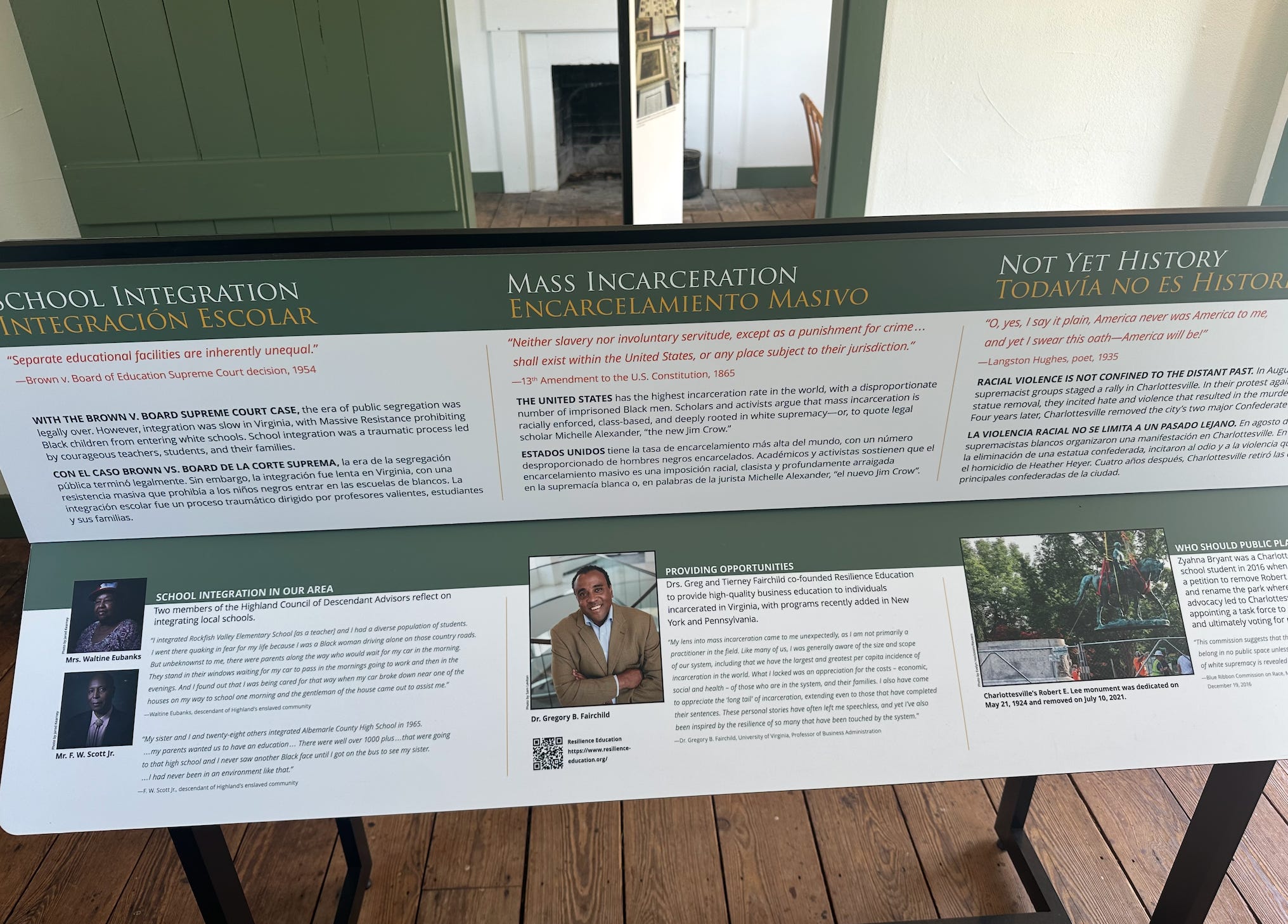
Also, everything is half in Spanish, as if it is critical that non-English speakers (none of whom have any idea what Highland is) desperately need to read the placards about slave revolts and George Floyd that are bizarrely included in what should be an exhibit about the operations of a Virginia Piedmont estate in the early 19th century.
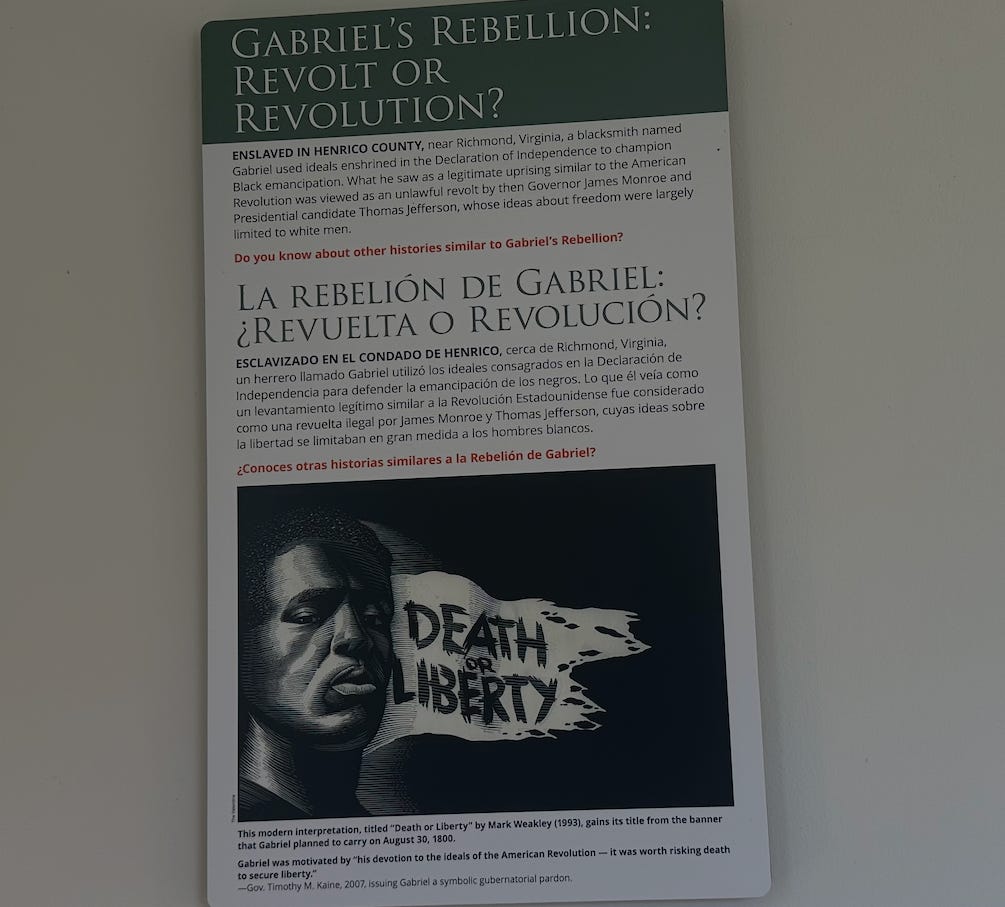
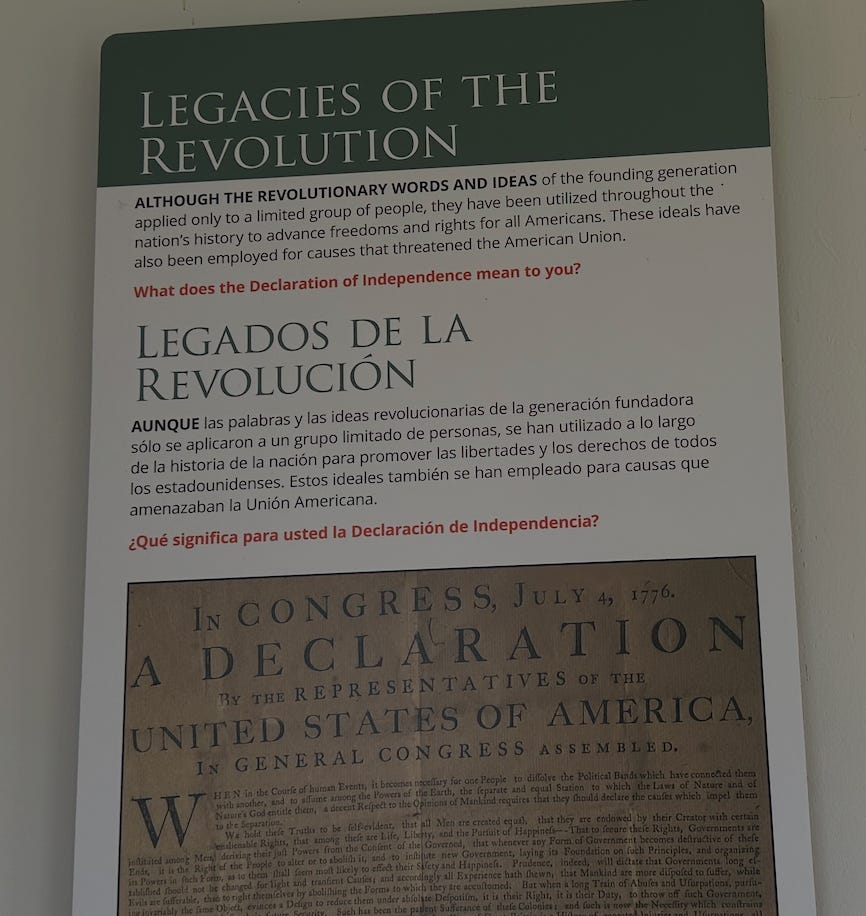
So, what could have been an interesting history lesson on how slavery functioned in that time and place is instead a diatribe about how terrible white people are and always have been. The site could have discussed how slavery worked on the estate, how it compared to the slave islands or Deep South, what Monroe thought about slavery, or anything even remotely relevant.
Instead, there’s a placard about the removal of Robert E Lee statues because George Floyd overdosed, and why “mass incarceration” of violent felons is basically slavery…or something. As with the rest of the exhibit, the half-English/half-Spanish exhibits are just screeds against a functioning society that have absolutely nothing to do with James Monroe, or even the “enslaved population” of Highland, other than that those who wrote them would banish Monroe to the depths of Tartarus if they could.
Unfortunately, it gets yet more absurd from there. One then proceeds around the house and to the interior, and can do so either with a tour guide or alone. We did both. The experience is the same either way: about half or more of the tour and information presented via placards is not about James Monroe, how he ran the estate, what life was like on it, or anything else, but rather “the enslaved population”.
Particularly, there are two slaves, one named George and the other named Peter, that the placards inside the house and the tour guides themselves do not stop talking about. Presumably, they’re the only two whose names are known or who did anything of note, for they are mentioned endlessly and pretty much exclusively as the named members of “the enslaved population”. Both were carpenters whom Monroe either bought or taught to do the carpentry work on the guest house, for reasons of cost of the sort I have written about in a past article.
By all appearances, they did a good job; the woodwork in there now is the same as when it was built, and isn’t ornate or decorous but is attractive in a frontier sort of way. And it is brought up again, and again, and again. Every other sentence from the guides, both outside and inside the house, is about George or Peter. Nearly all of the signs and placards inside the guest house have some reference (also in Spanish, of course) about whatever George and Peter are believed to have been up to at X or Y time in Highland history. Practically every mention Monroe makes of the estate, in the information presented, includes reference to the work…giving a reason to bring George and Peter back into it and explain what they might have done at that time. It’s endless.
Fortunately, that’s just in the guest house; the 1870s house has much more information on Monroe and his times, despite being mostly irrelevant to them. But most of the guest house exhibits are not about President James Monroe and the handling of his estate, or time as a Virginia delegate, member of Congress, officer in the Revolutionary War, multi-term Governor of Virginia, Secretary of State, Secretary of War, or President. Instead, it’s about two carpenters who did a good enough job in their role, just because they were slaves, and thus present an opportunity to chastise the great man of history for owning slaves.
This gets to a much more fundamental problem than just the tour of James Monroe’s Highland being an aggravating bore in some respects: it shows why we can’t get anything done as a civilization, and indeed are declining in most metrics that matter.
The remainder of this article is paywalled. If you can afford a few dollars a month (if you can’t, let me know), I’d really appreciate you supporting my work by becoming a paid subscriber. That subscription gets you access not just to the paywalled articles—about a third of the content, and much of my best work—but also audio versions of each episode. Thank you for your time and support!
