


There are two books every American should take the time to read right now. The first is A Disease in the Public Mind: A New Understanding of Why We Fought the Civil War by Thomas Fleming. The second is Days of Rage: America’s Radical Underground, the FBI, and the Forgotten Age of Revolutionary Violence by Bryan Burrough. I have written about both of these before.


These two works are incredibly important because they show what the American left is all about, intends on doing, and will do if given the opportunity. This is something we have now seen repeatedly with the various sorts of deranged freaks who have tried to assassinate President Trump.
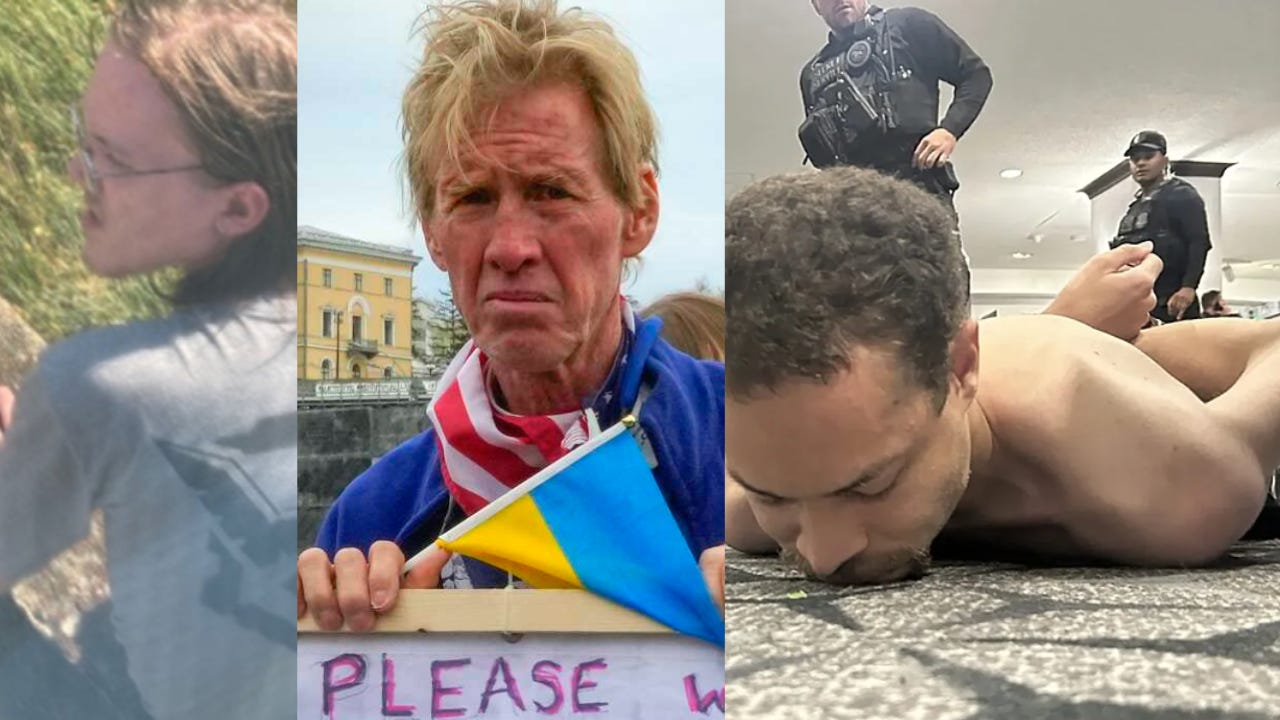
This is something the Antifa crowd epitomizes as well. They’re all freaks. Life’s losers with nothing going for them. As Thomas Carlyle wrote of Philippe Egalité, a leader of the French Revolution, they have every deadly sin written upon their execrable faces. They burn with a savage hatred of the world because it dares to exist, and to do so in a better way than they. As true believers in equality, they wish to drag all down to their squalid level of an execrable existence little better than that of yeast, and with an added dose of bitterness, and will use whatever bomb, gun, or crowbar they can get their hands on to make that happen.
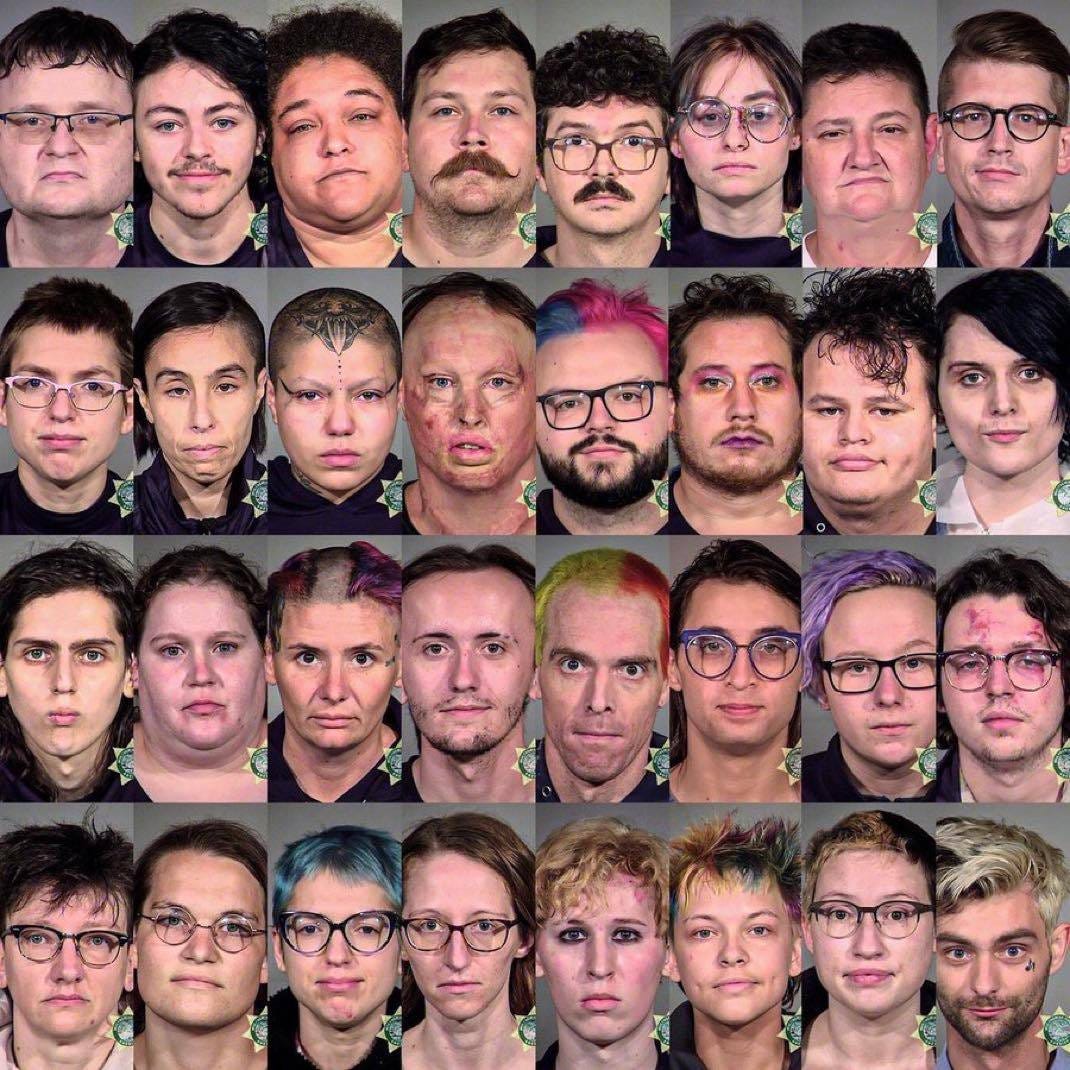
What is important to recognize is that this is nothing new, and that’s why those two books are incredibly eye-opening and helpful. There is a direct throughline between John Brown’s rise out of the blood-drenched rhetoric of the radical abolitionist movement, and the murderous, race communist left of today, which is trying to end America for good. That shows what’s in store if we don’t crush them.
As a reminder, one benefit of becoming a paid subscriber is that you get audio versions I record of every article. You can listen to this one here:
![[Audio] The John Brown Left Must Be Crushed Or It Will Kill Us](https://substackcdn.com/image/fetch/$s_!q2kU!,w_140,h_140,c_fill,f_webp,q_auto:good,fl_progressive:steep,g_auto/https%3A%2F%2Fsubstack-video.s3.amazonaws.com%2Fvideo_upload%2Fpost%2F195770143%2Fa1c64f53-390d-41d2-9cc0-708f11c9f63f%2Ftranscoded-1777393636.png)
The John Brown Left’s Rise
As Fleming shows, the American Civil War didn’t begin because a collection of white linen-bedecked Southern oligarchs wanted to remain such. That might have been part of it, particularly in places like Mississippi, but it isn’t why states like Virginia and North Carolina gave their all for the Southern cause. No, they had been convinced by years of leftist behavior of the sort epitomized by John Brown that to allow the abolitionists in Massachusetts to have their way would be to allow their beloved homes to turn into Haiti.
This was no idle worry. Nat Turner’s rebellion lit the fire of it. Turner was a slave in Virginia who had been treated as well as could be hoped by the family that owned him,1 by all accounts. He nevertheless led a rebellion, and he began it by butchering the family that owned him in a horrifically bloody way. He then went on to lead a brandy-drinking body of slaves on a murder spree targeting women and children in his corner of Virginia. As Virginius Dabney tells it in his Virginia: The New Dominion:
Turner, a part-time preacher who thought he saw visions, had gathered up a group of about sixty other slaves and embarked on an orgy of indiscriminate slaughter, beginning with his master and mistress and their baby. A hatchet and an ax were used in dispatching this gentle couple as they lay in their bed, after which the child's brains were bashed out against the brick fireplace. Guns, daggers, swords and razors also were employed in killing some fifty-five others, mostly women and children.
It was put down, eventually, but horrified the South. Still, a slave rebellion can be understood. None would wish to be a slave. What can not and could not be understood is the way in which the abolitionists cheered the murder of women and children, savagely gloating over the corpses of infants with their brains bashed out and women who had been cut to pieces. Yet such is exactly what the abolitionists, led by the much-despised William Lloyd Garrison, did, as Fleming notes:
Did Garrison express even a hint of sympathy or pity for these stunned, grieving families and their terrified neighbors? Did he confess that his immediate emancipation slogan was wrong, or at least in need of amendment? The only emotion Garrison permitted himself was thinly disguised gloating— and a call for sympathy for the slaves.
This continued on to the point that even abolitionists in Virginia were savagely attacked by a rabid press that was baying for their blood, expressing what those at the time called a “morbid hatred of the southern white man” with the clear goal of provoking a race war that would turn the whole South, including Virginia, into Haiti.2 And Garrison was no outlier. Joining him were a panoply of other radical leftists who bayed for the blood of southerners and called for slaves to “at least try to cut your master’s throat.”3
It was out of such a milieu that John Brown came. A lifelong loser who was characterized by his lack of personal success and his religious fervor, he adopted the fierce hatred of the South and Southern civilization that was preached by such types as Garrison, and then used the conflict in Kansas to put it into action. Namely, he butchered the Doyle family by cleaving them to pieces with his broadsword. The Doyles were poor farmers who had nothing to do with slavery, but who also weren’t abolitionists, and he murdered them in cold blood.
And it wasn’t just that he murdered them. He was praised for it. Sorts like Garrison, men who were too scared to get their hands dirty but who hated the hierarchy of the South with a burning passion, funded Brown’s endeavors as he murdered civilians across Kansas in the name of abolition.
Those same sorts then funded Brown as he attempted to start a Haitian-style slave revolt in Virginia with his Harper’s Ferry raid, a debacle characterized primarily by his incompetence and thirst for blood. During the raid, Brown robbed George Washington’s grand-nephew of a ceremonial sword, murdered a free black man, and brought along thousands of pikes on which those who rallied to his banner were to spit women and children. And for that, he was praised by the spiritual heirs of Garrison, who framed the man who would delight in bloodily massacring women and children as a Christ-like figure.4
That did not go unrecognized in the South, where firebreathers asked, as Fleming notes, “Could the South stay in the same country with people who could complacently look forward to seeing these weapons thrust into the bodies of helpless women and children?”
They decided they could not, a decision made in part because the government refused to punish the “Secret Six” who had enabled Brown, or the media hacks who glorified his bloody deeds.
As Thomas Nelson Page notes in his The Old Dominion: Her Making and Her Manners, “the John Brown raid shocked [Virginia] from the Potomac to the North Carolina line. It was 'a fire-bell in the night.' Every man sprang to attention, and 'every mother clutched her babe closer to her bosom.’” The raid, and more importantly, the praise of it from the abolitionist press, had roused them to fury and fear.5 And so came war. Even those who had no wish for secession—as most of Virginia, including men like Robert E Lee, did not—could not stand by and watch their state be invaded by those legions who sang “John Brown’s Body”,6 revelled in the theft of southern property,7 and had shown such a decided intent to target women and children.
And though Union soldiers grew disgusted with the lies and antics of the abolitionists as the war wore on,8 what came with9 and followed it—particularly following the ill-considered assassination of Lincoln, a relative moderate—did nothing to allay Southern fears. Reconstruction, in particular, brought much of what they had desperately fought to stave off.
Civilization-Rending Reconstruction
For example, Reconstruction-era Virginia politician James Hunnicutt, who modelled his physical appearance after John Brown, rallied a crowd with positively Radio Rwanda-style rhetoric in which he called on freed blacks to burn the homes of their former masters, declaring: "The white race have houses and lands. Some of you are old and feeble and cannot carry the musket but can apply the torch to the dwellings of your enemies. There are none too young-the boy of ten and the girl of twelve can apply the torch."10
Such harangues and policies reflective of the attitude behind them destroyed Southern civilization;11 it was not for nothing that the Civil War-era US had finally recognized Haiti,12 which had long been the beau ideal of abolitionist radicals.
Eventually, Reconstruction ended, and states like Virginia could rebuild themselves somewhat. Such took many decades, with Virginia never regaining her former glory and much of the South muddling on through agricultural depression and the like until the post-World War II era.
The Days of Rage Destroy America
By then, the abolitionist sorts were back, with an even firmer intention to wage war on civilization.
These are the radicals about whom Burrough writes. The Weather Underground. The Black Liberation Army. The Black Panthers. They Symbionese Liberation Army.
These groups explicitly saw themselves as following in the traditions and footsteps of John Brown, as Burrough notes: “Every white revolutionary, [John Jacobs] argued, was duty-bound to become 1969's version of John Brown, the Civil War-era antislavery zealot. ‘John Brown! Live like him!’ became JJ's rallying cry.”
And they did so with an added dose of revolutionary fervor and violence that added to the unslakeable bloodthirst of their urban guerrilla campaign against normal America, all with the goal of a Haitian or Congolese Crisis-style13 remaking of America in mind.
Such came the chaos of the 60s and 70s. Black Panthers and Black Liberation Army guerrillas murdered cops. The Weather Underground and FALN blew up bankers, police stations, and skyscrapers. All robbed banks and armored cars. They rioted in the streets and smashed the cars, windows, and storefronts of productive people. It was a vast rising of the disenchanted losers against the normal, of the disaffected bottom against the content and industrious.
It raged for years, and only ended because America became so awful in the process that no one cared anymore about bombings or occassional shootouts; the guerrillas had effectively won, and America was a trainwreck.14
Eventually, Reagan’s tax cuts and deregulation pulled America somewhat out of that deep malaise, and mayors like Rudy Giuliani made the crime problem go away enough that people stopped caring as much.
But the radicals never faced their comeuppance. They weren’t even imprisoned, by and large, much less hanged. Instead, the cowards in charge over the course of the Revolutionary Terror—Nixon, Ford, Carter, and Reagan—let them get away with it while punishing the FBI for investigating them.15 Most of the murderous leftist terrorists didn’t even get a slap on the wrist.
And so they have sat in the halls of power ever since. They have become professors, authors, media personalities, and NGO administrators.16 They have poisoned the minds of America’s youths yet further, demanding decolonization and dramatic change, while also serving as a reminder by their very existence that leftists are allowed to get away with terror in America.
They can cause mayhem, carry out terror campaigns, commit horrid crimes, and even murder people…and face no real consequences for it. Such is the legacy of the Days of Rage generation.
The Revolution Returns
And now the Revolution has returned.
Antifa is attempting to assassinate ICE agents. Gangs of leftist terrorists who call themselves John Brown Gun Clubs are armed and organized with the explicit goal of terrorizing and killing normal Americans so as to bring about some sort of Bioleninist, race communist revolution from the rubble when it’s all over. Crime rages out of control, and is not just allowed but encouraged by leftist judges, DAs, public defenders, and pro-crime NGOs.
Most of those involved in such operations are tied directly in with the radicals of the 1960s—the pro-crime Wren Collective has been pushed along by Chesa Boudin, son of Weather Underground terrorist Kathy Boudin, for example—or were influenced by what they taught, wrote, and said. And so now our cities are more violent than active war zones.
That constellation of leftist terror groups and their hangers-on is the modern incarnation of John Brown, much as the Weather Underground types were the John Browns of their day. It is a collection of life’s losers organized with the explicit goal of murdering whites to achieve some sort of egalitarian revolution, and it is being funded by the same collection of bleeding-heart leftist interests that put equality before everything else.
Take the latest would-be Trump assassin, for instance. He explicitly left Kash Patel off his list of targets, as he only wanted to kill white people.17 As my friend Kaiser Von Lohengramm put it, “Kash Patel was deliberately excluded as not a target. He was also the only one that wasn’t White. That makes this a racially motivated attack and that should be obvious. What unifies the Left is nothing more than hatred of White civilization. The left-right divide is existential.”
And noted anti-white bigot Jimmy Kimmel has been joking about it, referring to Melania as an expectant widow. So too have been others. Like John Brown, they want us, our women, and our children dead, spitted on pikes. And they think it’s funny. So too did the freakish French Revolutionaries, and the Bolsheviks.
Indeed, this threat is existential.
Either this latest permutation of the John Brown spirit can be crushed, or it will kill us as it attempts to bring about the egalitarian revolution it so dearly wants. Haiti is its goal; it says as much, openly cheering the white genocide in Haiti. So too does it praise the Congo Crisis, Reconstruction, the worst atrocities of the Civil Rights Era, the Days of Rage era, and more. It wants to destroy us, and destroy our civilization. That is its explicit goal.
And as the recurrent attacks on Trump’s life show, as the recurrent Antifa attacks on ICE and conservatives show, as the murder of Charlie Kirk showed, it is not only armed but is actually willing to use violence to bring about what it wants. These cells of terrorists are serious threats. Their backers in the media, the courts, and the NGO complex are serious threats. They must all be treated as such, and crushed with the full force of the law.
Such is what wasn’t done to Brown until it was too late, and the result was the Civil War and the destruction of Southern civilization. Such is what was never done to the radicals of the 70s, and the result is that they largely won, and their spiritual heirs are now attempting a new revolution far more bloodly than which they attempted.
No compromise is possible. Either we will win, or they will have our heads. Such is what they have made clear in word and deed.
If you found value in this article, please consider liking it using the button below, and upgrading to become a paid subscriber. That subscriber revenue supports the project and aids my attempts to share these important stories, and what they mean for you.
As Virginius Dabney notes in Virginia: The New Dominion :
[I]f so seemingly contented and well-treated a slave as Nat Turner could lead such an uprising, what assurance was there that similar rebellions would not occur at almost any time and almost anywhere?
As Fleming notes:
Thomas Jefferson Randolph went back to Albemarle County, determined to continue his fight for gradual abolition in his grandfather's name. He stood for the legislature again and defeated a former U.S. congressman who ran against him on a proslavery platform. But Randolph soon grew discouraged and abandoned his campaign. Forty-two years later, in a bitter letter written after the Civil War had reduced him and his family to poverty, Randolph told how Virginia had been inundated with an avalanche of abolitionist propaganda that revealed a "morbid hatred of the southern white man" and blackened his character "with obscene malignity." Before long, enraged Virginians would not tolerate a discussion of how to eliminate slavery because abolitionism had become synonymous with hatred and contempt for their way of life, as well as a word that stirred their deepest fear -- a race war.
Fleming notes:
Watching from the sidelines was a young Boston aristocrat named Wendell Phillips. Harvard educated, he had shared the low opinion most of the Boston establishment had toward Garrison. A combination of sympathy for the menaced reformer and disdain for the mostly lower class mob that attacked him worked a transformation in Phillips. From that day in 1835, he became an abolitionist with a taste for violent solutions. In a few years he was urging slaves to "at least try to cut your master's throat."
As Dabney notes:
[A] small coterie of articulate extremists not only defended [John Brown] but compared him to Christ. Ralph Waldo Emerson referred to Brown before his execution as a "new saint awaiting his martyrdom, and who, if he shall suffer, will make the gallows glorious like the cross." Louisa May Alcott called him "Saint John the Just," and Henry David Thoreau saw him as "an angel of light." The Springfield, Massachusetts, Republican, in sharp dissent from most of the northem press, declared on the day after he was hanged:
"John Brown still lives... A Christian man, hung by Christians for acting upon his convictions of duty—a brave man hung for a chivalrous and self-sacrificing deed of humanity, a philanthropist hung for seeking the liberty of oppressed men. No outcry about violated law can cover up the essential enormity of a deed like this."
Dabney notes:
The John Brown Raid on Harpers Ferry in 1859 provided an ominous foretaste of coming events. Brown's announced plan to free the slaves, by organizing them into military units to fight their masters, and establish a Negro republic in western Virginia, roused the people of the Old Dominion to terror and fury and alarmed the entire South.
Fleming notes that Regiments from Massachusetts made "John Brown's Body" a rallying cry for the Union Army.
Fleming notes, “Another distraction was the way some [Union] soldiers wandered off to steal chickens and other edible animals from nearby farms, and in some cases loot the houses. They apparently felt slave owners could be abused with impunity.”
Fleming notes, “There was a saying in the army General William Tecumseh Sherman led through Georgia that most men were more inclined to shoot an abolitionist than a rebel. They learned on that march that only a small minority of Southerners owned slaves. For the rest of the Confederate soldiers, it was "a rich man's war and a poor man's fight." But very few understood why the southern poor men were fighting so ferociously: their fear that black emancipation would be a prelude to a race war.”
As Dabney notes, the Union troops showed no willingness to avoid targeting civilians in cities like Fredericksburg:
Federal guns opened up, indiscriminately destroying homes, stores and other structures, irrespective of the women and children inside. A substantial part of Fredericksburg was reduced to rubble.
This comes from Dabney
As Thomas Page Nelson notes:
The old life at the South passed away in the flame of war and in the yet more fiery ordeal of Reconstruction. So complete was this devastation that now unless one knows where to go he may search in vain for its reality. Its remnants lie scattered in far-off neighborhoods; its fragments almost overgrown with the tangles of a new life.
He also notes:
Then came the Reconstruction period. The Negroes were enrolled by the carpet-bag leaders in what was known as the Union League, and were drilled in political antagonism to the whites. And pandemonium came.
The six or eight years of carpet-bag rule were the worst that the South has ever known. It is the writer's belief based on serious study of the facts that the Southern States were poorer when these years ended than when the war closed. However theorists may regard it, it was an object-lesson which the Southern States can never forget.
As Gordon Wood notes in Empire of Liberty:
Although the United States was usually eager to encourage revolutions and during the nineteenth century was often the first state in the world to extend diplomatic recognition to new republics, in the case of the Haitian republic the nation behaved differently. Not until the Civil War did the United States recognize the Haitian Republic.
Burrough notes:
Malcolm, Robert Williams, and the Cuban Revolution "helped create a new generation of black nationalists who studied local organizing, the politics of armed self-defense, and global upheavals with equal fervor," Peniel E. Joseph writes in his history of black militancy, Waiting til the Midnight Hour, but it was "the 1961 assassination of Congo leader Patrice Lumumba [that) transformed them into radicals." Coming four months after Castro's visit, Lumumba's death at the hands of a white Belgian firing squad prompted unprecedented outrage among New York's new black nationalists. Harlem's Amsterdam News termed it an "international lynching" carried out "on the altar of white supremacy." On February 15, 1961, crowds of angry black nationalists stormed the United Nations, igniting melees with guards and days of protests. One group of demonstrators told reporters that Negroes were henceforth to be called "Afro-Americans."
"Who died for the black man?" someone yelled.
"Lumumba!"
"Who died for freedom?"
"Lumumba!"
This was something altogether new in America
Burrough notes:
Out in the streets, no one cared. Inflation was rising, cocaine and other drugs were rampant, crime was out of control; on the radar of an American's daily worries in 1977, the FALN registered not at all. Among workaday Americans, few gave a whit about Puerto Rico, much less its independence.
Bombs had been exploding in the United States for a decade now and would probably be exploding for decades more: Who cared whether they were planted by crazy Puerto Ricans, crazy blacks, crazy hippies, or crazy aliens from outer space? They were just bombs, a new fact of American life.
Burrough notes:
The excruciating irony that Bernardine Dohn, the most-wanted underground figure of the era, could walk away virtually scot-free just weeks after two of her top FBI pursuers had been convicted of crimes against her was not lost on anyone involved. "The Weather Underground had done like a hundred bombings, and she was never prosecuted for one of them," recalls Lou Vizi, the FALN investigator. "That's amazing. I mean, absolutely amazing. You know who got prosecuted? Us. The FBI."
"What really galls me," says Don Strickland of Squad 47, "is we did all this stuff, risking our lives every day, putting our lives on the line. And we end up being the villains! And these Weatherman scumbags end up being the fucking Robin Hoods!"
Burrough notes:
One of the few positive legacies of the underground struggle, some of its adherents argue, is the example its leading figures set for young radical activists today, such as those in the "Occupy" movement. Young radicals today may not agree with, or be able to make sense of, the idea of protest bombings, but many clearly admire the passion and extreme commitment people like Bill Ayers devoted to trying to change America for the better. Ayers, who remains perhaps the most visible veteran of the underground struggle, is today an active author and lecturer; at bookstores and shopping malls young activists line up to get him to sign their books. The irony is lost on few of his peers. Ray Levasseur, who has completed his own memoir, wryly notes that articles he publishes on the Internet receive exponentially more exposure than any of the communiqués he issued after his many bombings.
What matters most about the underground, people like Cathy Wilkerson insist, is simply that it existed, that it demonstrated the lengths to which passionate Americans would go to confront what are now viewed, correctly, as Richard Nixon's corrupt government, an unjust war, and rampant racism at large in America.
He also notes:
Most veterans of the BLA melted into obscurity. Among the few to attract publicity in later years was Dhoruba bin-Wahad. After his first two trials ended in a hung jury and a mistrial, he was sentenced to twenty-five years to life for his alleged involvement in the shootings of patrolmen Curry and Binetti in 1971. In 1975 he sued to overturn his conviction, arguing that the government hadn't shared all it knew about his case. His litigation forced the FBI to divulge thousands of pages of documents about its notorious COINTELPRO harassment campaign, enough evidence that a judge finally freed bin-Wahad in 1990. After living for a time in West Africa, he resides today outside Atlanta. He turned seventy in 2015. Eldridge Cleaver died in 1998.
Donald Cox died in 2013.
He further notes:
Several Weather alumni have risen to respected positions in their professions with very few knowing what they did in the 1970s. After attending law school, Paul Bradley, the pseudonym for one of Dohn’s right-hand men, went on to a twenty-five-year career at one of the nation’s most prominent law firms. Today he lives in the Bay Area, where he advises a small start-up company or two; no one outside his family and other alumni has any clue that he spent years placing bombs in San Francisco-area buildings. Leonard Handelsman, a Weatherman in the Cleveland collective, went on to a distinguished career in psychiatry, becoming a full professor at Duke University, where he was medical director of the Duke Addictions Program. According to his longtime friend Howard Machtinger, who gave a eulogy when Han-delsman died in 2005, no one outside his family knew of his life in the underground. Obituaries celebrated him only as a noted psychiatrist. Another Weatherman mentioned in this book became an accountant at a Big Four accounting firm in Vancouver. Today he is retired and active in local charities; he is not named here because of legal concerns. Another alumnus heads a children’s charity in Ohio, where an Internet biography indicates he has been appointed by three governors to sit on state task forces.
Bernardine Dohn has been a clinical associate professor of law at Northwestern University for more than twenty years. She has been active in efforts to reform the Chicago public schools and in international human rights activities. She has never disavowed her years as a Weatherman.
He adds:
Jeff Jones and Eleanor Stein were finally arrested in Yonkers, New York, in 1981 after the FBI received a tip on their whereabouts during the Brink's investigations. Jones received probation on old explosives charges and became an environmental writer and activist in upstate New York, where he and Stein live today. Stein received a law degree from Queens College in 1986 and is today an administrative law judge with the New York State Public Service Commission. Michael Kennedy, who represented certain of Weather's leaders, is today one of the most prominent attorneys in New York.


Umm, these are not the history lessons I received in school, and that was well before the leftist radicalization had taken over.
Thank you for making all the bloody entrails visible; we've seen the future now, and brother, it is murder (with apologies to Leonard Cohen).
Thank you. They’ve really educated me, although some make my brain hurt. 🙂